
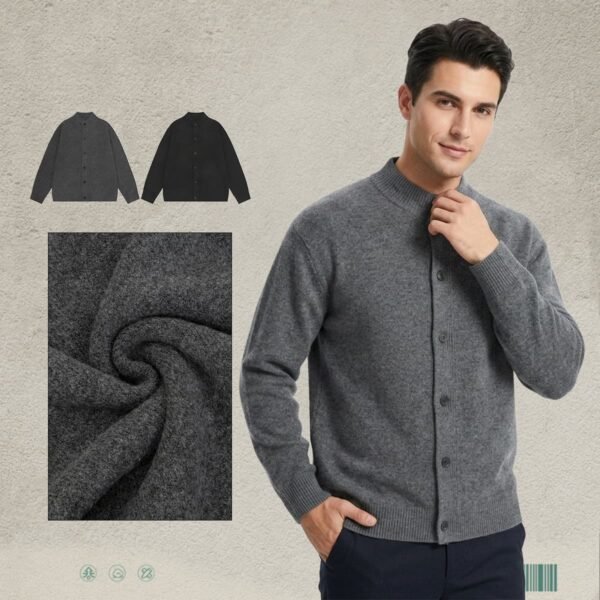


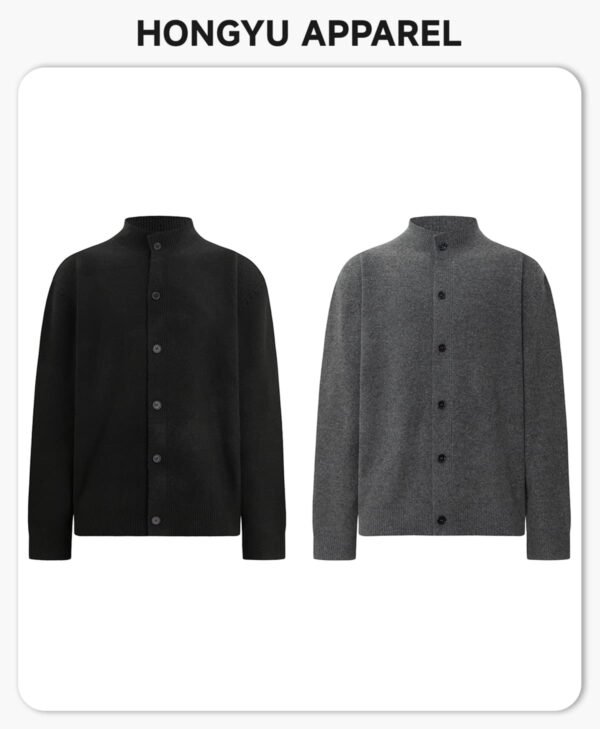

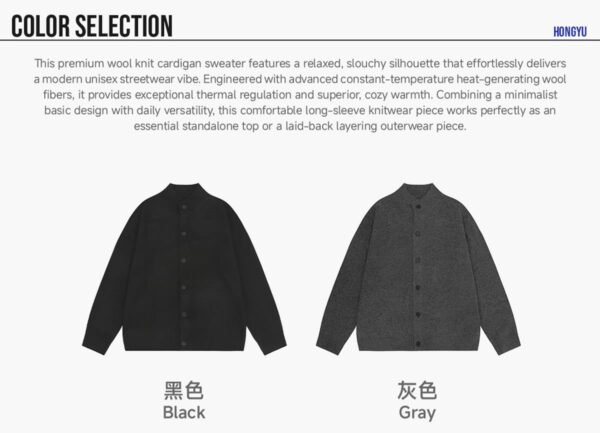


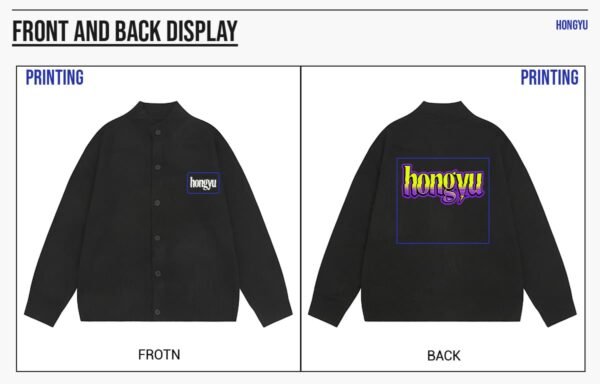
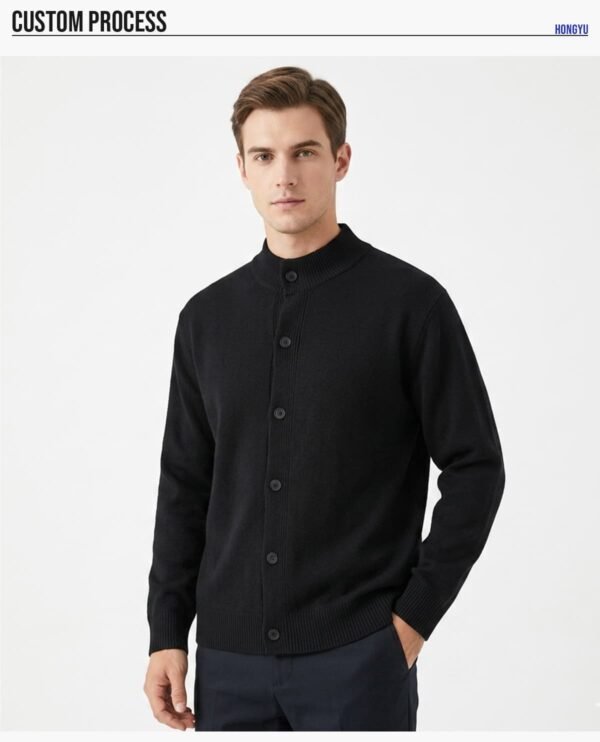

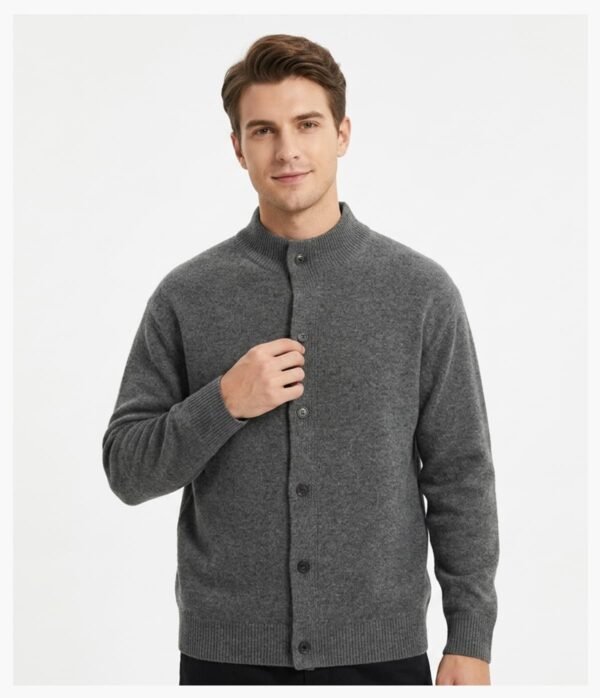
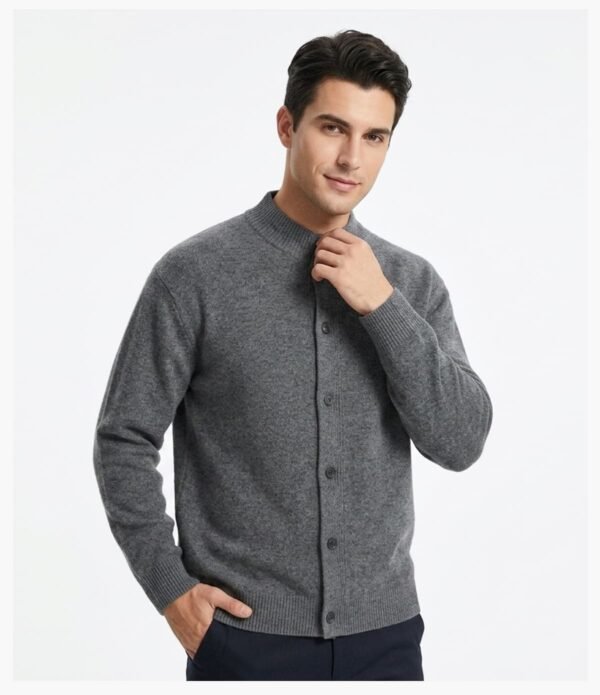




This custom sweater jacket is governed by neckline geometry rather than weight alone. The supplied image shows a close ribbed stand collar, buttoned front, and oversized knit body; the development task is balancing stand height and collar roll so substantial fabric remains wearable and composed.
Collar Stand Controls the Jacket's Character
The collar rises visibly above the front neckline and creates a clean transition from body to neck. In a heavy knit, that stand can add warmth and structure, but too much height may feel restrictive or make the oversized jacket appear top-heavy.
Development should establish collar height, rib width, neckline circumference, and finished recovery as linked measurements. The buyer's first approval is the intended character: a softly rolled stand for relaxed layering or a firmer upright profile for a more tailored outer-layer impression.
Roll Behavior Depends on Rib Structure
The image shows ribbing at the collar, cuffs, and hem, while the body appears smoother and denser. That contrast suggests the collar must recover enough to hold its shape without pulling the shoulder line inward or creating an abrupt ridge around the neck.
VeeWen should review the collar on the body block, not as an isolated component. Trade-offs include a wider rib that improves visual stability but increases bulk, or a narrower rib that feels lighter but may lose the intended stand after repeated wear.
Oversized Proportions Increase Neckline Risk
An oversized body changes how the collar is perceived because additional shoulder and sleeve volume can make the neckline look smaller by comparison. The supplied image illustrates this relationship through relaxed sleeves and a close, compact collar framing the model's face.
The pattern review should compare collar stand height with shoulder width, armhole depth, and front placket placement. Approval should cover both open and fully buttoned positions, since the collar may roll differently when the jacket is worn as a cardigan or closed layer.
Button Placement Supports Layering Clearance
The visible button front gives the garment jacket utility, but each button position influences how the collar settles. A top button placed too close to the stand can force the neckline upward, while excessive spacing may allow gaping and weaken the clean front line.
The buyer should approve the top closure, placket width, and neckline overlap together. Test the jacket over a shirt and a thin sweater to confirm the collar remains comfortable, the front closes smoothly, and the oversized fit does not create unnecessary strain.
VeeWen Workflow Converts Collar Evidence
VeeWen's product-development workflow should begin with a collar specification that records stand height, roll direction, rib dimensions, neckline circumference, and closure position. This exact axis gives the sample room a focused set of controls before broader knit appearance and color decisions are locked.
The fitting review should use front, side, and seated views, including the collar open and closed. Once the buyer confirms the neckline behavior, VeeWen can coordinate the approved body proportions, trim details, labeling, and MOQ of 100 pieces per style.
Approval Requires Wear Testing of the Neckline
The main trade-off is between a prominent stand that communicates structure and a softer roll that improves ease and layering. The visible image supports a defined collar, but it cannot prove comfort, recovery, warmth, or long-term dimensional stability.
Request a development sample that represents the intended knit density and rib construction, then assess neck comfort, collar return, button alignment, and layering clearance. Approve the collar only when it works in both styling positions and remains proportionate to the oversized body.
Buyer Questions
Can the collar be made lower or more relaxed?
Yes, stand height and roll can be adjusted during development, subject to neckline balance, rib recovery, closure placement, and approved fit requirements.
Is the heavy knit composition confirmed by the image?
No. The image shows substantial textured knit appearance only; fiber content, gauge, weight, and performance require technical confirmation.
Can the jacket be developed in other colors?
Yes, additional colors can be reviewed after the buyer approves the base shade, yarn direction, color standard, and production assortment.
What is the minimum commercial quantity?
MOQ: 100 pieces per style. The buyer should clarify whether colorways are grouped within one style or managed as separate approvals.
Approve Collar Height Before Knit Finalization
Share your preferred collar stand, roll softness, body measurements, color direction, and labeling brief to start focused development for a custom heavy knit sweater jacket with MOQ: 100 pieces per style.


Reviews
There are no reviews yet.