


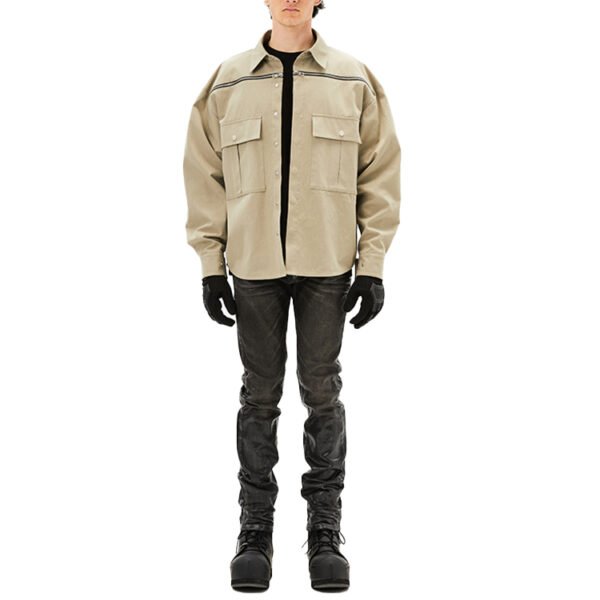



This custom cargo shirt jacket is developed around front-panel symmetry, where mirrored components influence perceived quality before a buyer notices fabric or styling details. The supplied image shows balanced pockets, a centered closure, and level chest detailing, making alignment a practical approval checkpoint for outerwear production.
Symmetry Begins With the Front Pattern
The image presents a strong vertical center through the zipper and snap-front arrangement. That centerline should anchor the front pattern, ensuring left and right edges, pocket openings, and chest details are developed from shared reference points rather than individually estimated placements.
For a buyer, symmetry is not only visual styling; it affects grading, sewing sequence, and inspection efficiency. A pattern package should identify center-front, pocket coordinates, and matching seam references so every size preserves the same balanced relationship.
Mirrored Pockets Need Controlled Placement
The two chest pockets are prominent visual anchors, each using a flap and button-like snap appearance. Their matching height and width should be specified numerically, because even small deviations become noticeable when the wearer faces the camera or stands under retail lighting.
Pocket construction also creates practical trade-offs. More structured flaps can hold their shape and sharpen symmetry, but may increase bulk at the chest. The development sample should therefore confirm flap behavior, opening access, and placement after pressing and normal garment handling.
Closures Reveal Alignment Errors
The garment combines a central dark zipper line with visible snap closures, creating multiple components that must share one front axis. If the zipper tape, placket, and snaps drift apart, the jacket can appear twisted even when individual stitching remains technically acceptable.
VeeWen's development workflow should convert this risk into a checkpoint: mark the center-front on the pattern, confirm zipper installation, then inspect snap positions against the closed garment. Approval should cover both open and closed views because each reveals different alignment relationships.
Sleeves Complete the Balanced Silhouette
The supplied image shows long sleeves with cuffs and comparable shoulder volume on both sides. Sleeve pitch, armhole depth, cuff width, and seam allowance can alter the apparent balance, especially when the wearer bends an arm or places hands near the pockets.
A buyer should review the jacket on a fit model and on a flat table. The model view checks silhouette symmetry and movement, while the flat view exposes unequal sleeve lengths, cuff openings, shoulder slopes, or side seams that may be hidden during styling.
Development Workflow for Repeatable Panels
For this style, VeeWen's product-development workflow should begin with a symmetry map attached to the tech pack. The map can identify mirrored panels, pocket coordinates, chest zipper endpoints, snap rows, and inspection views required before size grading approval.
The next checkpoint is a physical sample review focused on construction order and tolerance. Once the buyer approves the corrected sample, the same references should guide grading, marker preparation, sewing-line checks, and final inspection without relying on visual memory alone.
Approval Criteria and Trade-Offs
A highly symmetrical front creates a polished utility appearance, but it can increase pattern and sewing control requirements. Multiple pockets, snaps, and zipper details also add handling points, so production efficiency must be considered alongside the desired balanced presentation.
Approve the style when the sample demonstrates consistent center-front alignment, matching pocket geometry, level chest detailing, and comfortable movement. Record acceptable tolerances and the confirmed material specification before authorizing the 100-piece-per-style minimum production run.
Buyer Questions
What should the first sample prove?
It should prove center-front alignment, matching pocket coordinates, level chest detailing, sleeve balance, comfortable movement, and closure function before grading or production approval.
Can the cargo layout be changed?
Yes, pocket dimensions, locations, flap shapes, and hardware can be revised during development, provided the approved pattern preserves the intended front balance.
Is the shown beige color required?
No. Beige is visual reference only. Final color, shade standard, trims, and any wash or finishing treatment should be confirmed in the approved specification.
What is the commercial minimum?
The exact commercial minimum is MOQ: 100 pieces per style. Final material, color, size breakdown, and construction details remain subject to development approval.
Approve the Symmetry Map
Send your target measurements, color direction, and reference details so VeeWen can prepare a symmetry-led development brief, identify approval checkpoints, and move this cargo jacket toward a controlled production decision.



Reviews
There are no reviews yet.