






This jacket is a color-control project disguised as straightforward streetwear. Its pale-to-blue body, darker sleeve sections, and embroidered chest detail require a documented panel recipe so the first approval remains recognizable when the style is reordered.
Map the Shade Ladder Before Sampling
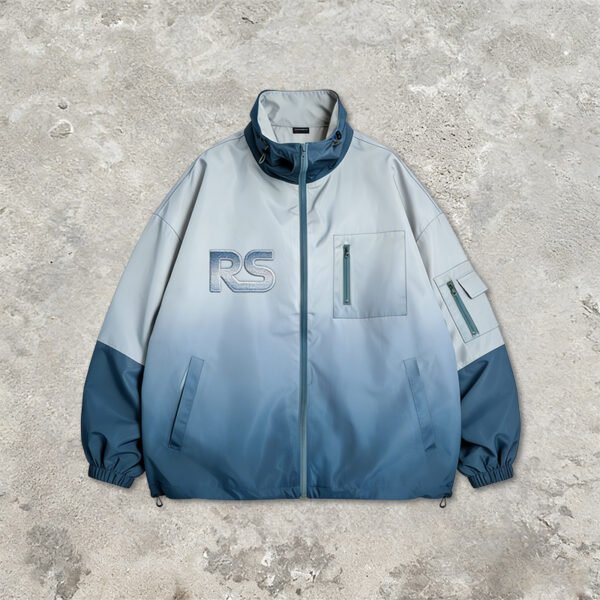
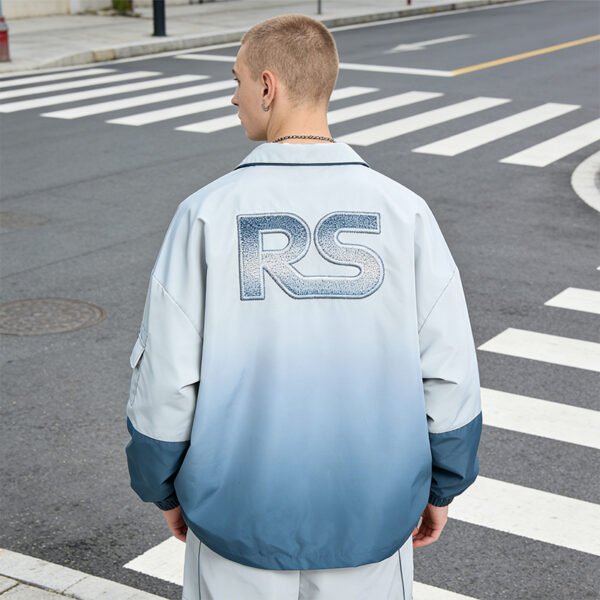
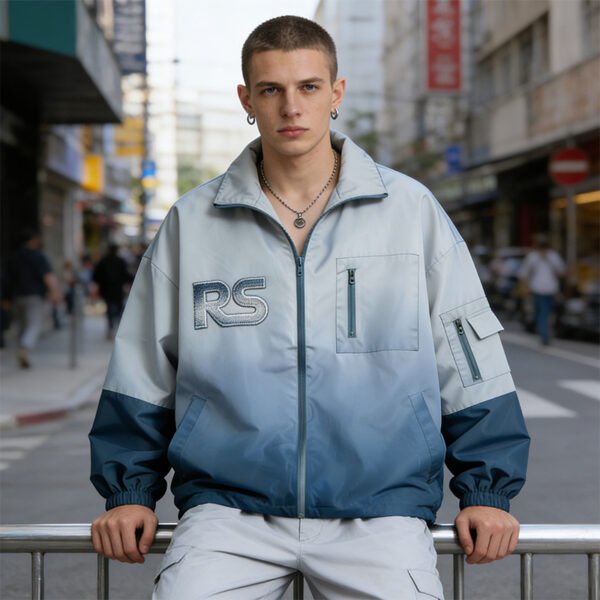
The image presents a broad tonal movement rather than a single flat color. The upper chest and shoulders are near white, while the lower torso, cuffs, and sleeve panels move into deeper blue. That hierarchy should become named shade stages in the tech pack.
A practical approval set would show the light, transitional, and dark references beside the actual panel map. The buyer should decide whether the gradient is created through piece-dyeing, printed coloration, or separately cut panels, because each route changes repeatability, hand, and cost exposure.
Control Panel Boundaries and Balance
The visual balance depends on where the pale field ends and the darker blue begins. On the supplied jacket, the transition sits around the lower torso and lower sleeves, preserving a light central body before the darker hem establishes weight and proportion.
VeeWen's development workflow should lock panel geometry alongside the shade recipe, then review a sewn sample under consistent lighting. The approval checkpoint is not simply whether blue matches; it is whether every boundary lands at the intended body and sleeve landmarks.
Protect Embroidery Against Color Movement
The textured chest embroidery is placed on the light upper body, where contrast remains legible against the gradient. Because that area may shift during washing or finishing, thread color, backing, stitch density, and placement should be reviewed after the selected color process.
The sleeve pocket and chest pocket add additional visual interruptions near the gradient field. VeeWen should place these components on the same approved pattern map used for sampling, allowing the buyer to confirm that pocket edges do not distort shade continuity or obscure artwork.
Design the Utility Details Around the Gradient
This jacket uses a center front zipper, a vertical chest pocket, a sleeve utility pocket, angled hand pockets, elastic cuffs, and a drawcord hem. These details create seams and hardware zones where color transitions can appear interrupted or visually misaligned.
The buyer should approve whether zippers, pocket bags, cord channels, and cuff materials follow the nearest panel shade or use a fixed contrast color. That decision affects trim purchasing, assembly consistency, and how easily the same style can be reproduced season after season.
Make Wash Approval Measurable
A gradient can appear acceptable on a flat garment yet lose clarity after washing, pressing, or packing. The supplied image shows a soft tonal blend, so the approval record should identify acceptable movement between adjacent shades instead of relying on an informal description such as dark blue.
For this development, VeeWen can organize approval around before-and-after measurements of key points, photographed beside the approved reference. The buyer should define tolerance for shade drift, panel contrast, embroidery position, and hem adjustment before authorizing the production sample.
Set the Reorder Gate Around Evidence
Reorder repeatability is strongest when the approved sample becomes a traceable visual standard. Record the shade references, panel files, embroidery artwork, trim selections, and photographed garment views together, while keeping composition and performance claims marked To Confirm where evidence is incomplete.
At MOQ: 100 pieces per style, the commercial decision should follow a clear gate: approve the shade ladder, construction sample, and measurement record as one package. If any element changes, the buyer should require a fresh review before cutting begins.
Buyer Questions
Can the gradient use different color families?
Yes, the panel map can be developed around another approved color family, but shade stages and transition tolerances should be revalidated before production.
Is the embroidery included in the development record?
Yes, embroidery placement is part of the visual argument, while the final artwork file, thread specification, backing, and stitch settings remain subject to approval.
How should reorders be approved?
Use the signed sample, shade ladder, pattern map, trim list, and measurement record as the reorder reference, then review any changed materials or processes.
What is the minimum order quantity?
The exact commercial minimum is MOQ: 100 pieces per style, with final terms dependent on the approved specification and production confirmation.
Approve the Gradient Development Gate
Send the target shade family, artwork, size range, and reference sample to VeeWen for a panel-specific development review. Request approval records for color transitions, embroidery placement, measurements, and reorder controls before production.



Reviews
There are no reviews yet.