

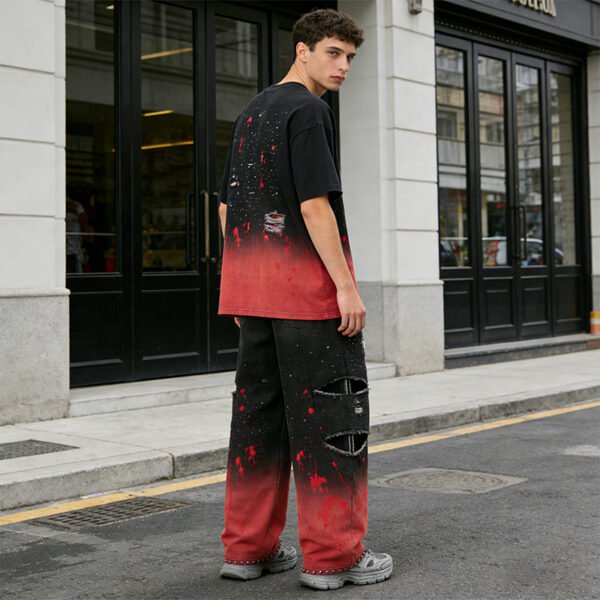
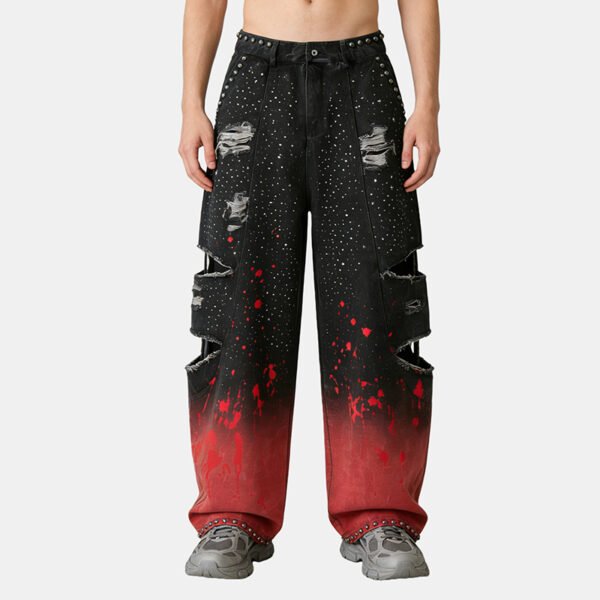
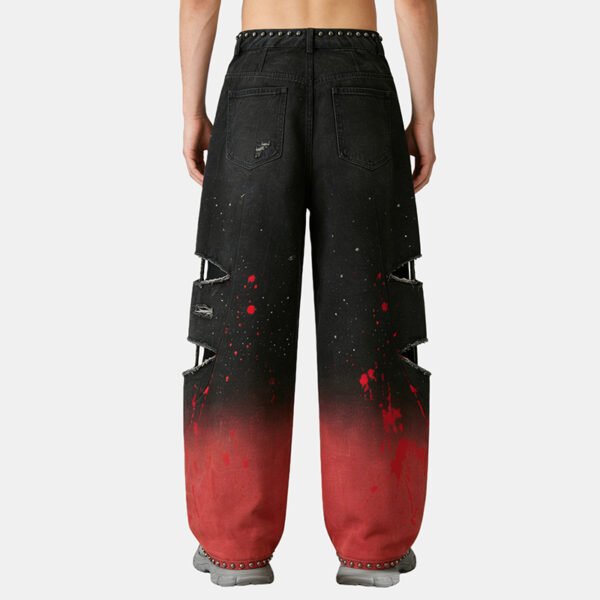
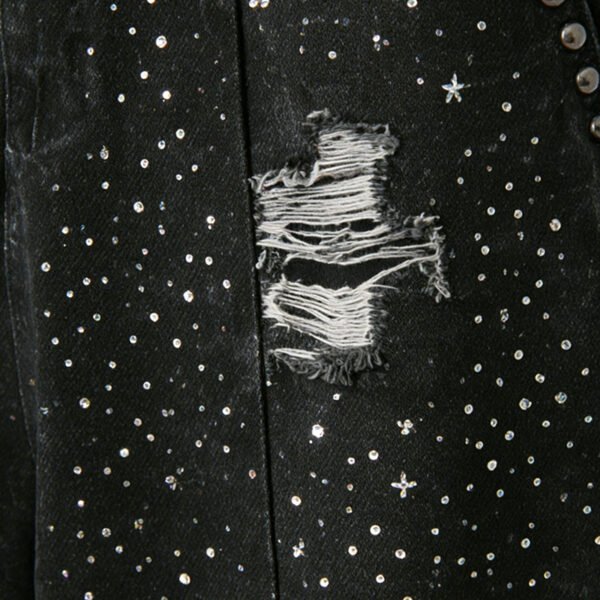
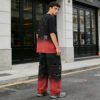
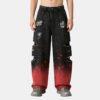

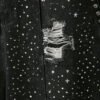
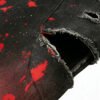
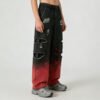
This jean concept depends on disciplined stitching beneath an intentionally damaged surface. The supplied image shows wide ripped openings, red-black coloration, splatter marks, metallic accents, and a relaxed silhouette, so topstitch gauge becomes the control point that keeps expressive distressing commercially repeatable.
Why Stitch Gauge Controls the Distressed Look
When denim is ripped, the surrounding stitch line becomes a visual boundary rather than a hidden construction detail. A consistent gauge keeps knee openings, pocket edges, and side seams legible, preventing the distressed treatment from appearing accidental or poorly controlled.
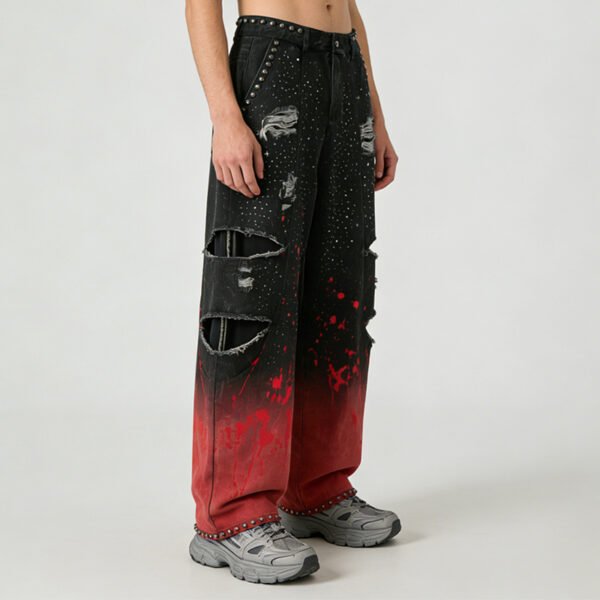
The image presents substantial openings beside red fading and scattered paint, creating several competing focal points. Even stitch spacing provides a quiet technical rhythm, allowing the irregular treatments to feel intentional while protecting the garment's overall proportion and visual balance.
Evidence From the Supplied Garment Image
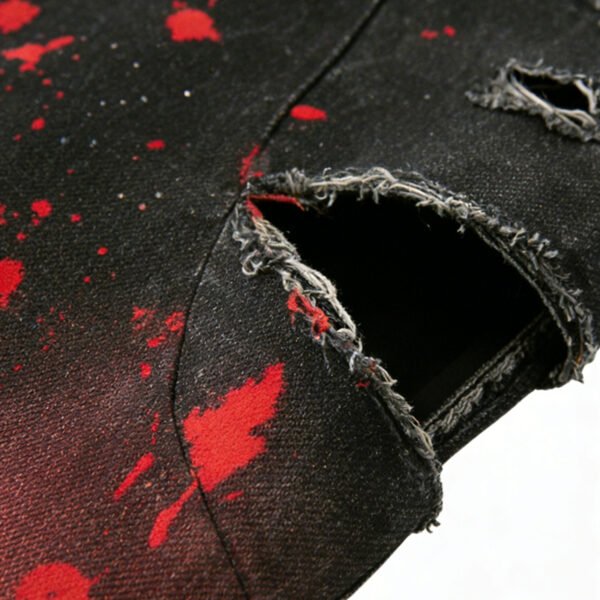
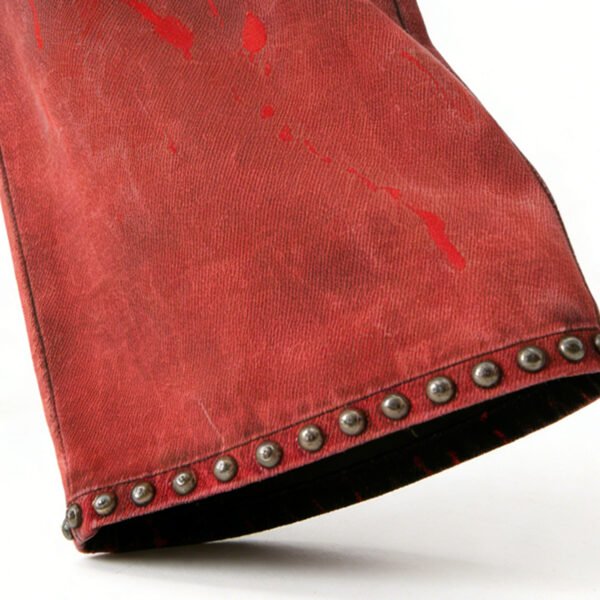
The main image shows a black-and-red jean with large horizontal knee tears, pale abrasion marks, white speckling, and metallic-looking trim near the hem. These details indicate a finish built from multiple operations, each capable of exposing inconsistency around stitched boundaries.
The relaxed leg hangs away from the body, making outer seams and hem lines easy to read. That visibility matters during approval because uneven gauge, wavering seam paths, or mismatched thread tension would remain noticeable when the garment is worn or photographed.
Construction Trade-Offs to Resolve
A tighter, more compact stitch appearance can sharpen the jean's graphic structure, but excessive density may stiffen distressed zones or concentrate stress beside cut openings. A more open gauge offers flexibility, yet it can look weak where abrasion removes surrounding fabric.
The buyer should decide whether visual regularity or a more hand-worked appearance leads the range. Either direction can work, but the approved sample must define gauge, thread appearance, reinforcement placement, and acceptable deviation before repeated distressing begins.
VeeWen Development Checkpoint
VeeWen's development workflow should translate the reference image into a marked technical package showing stitch gauge, seam locations, tear dimensions, paint zones, and decoration boundaries. This gives pattern, wash, sewing, and finishing decisions one shared visual source.
During sample review, the key checkpoint is a front-and-back inspection under normal lighting. Compare seam rhythm around every major opening, then record approved tolerances alongside the distress map so later units remain aligned with the intended graphic balance.
Approval Method for Repeatable Execution
Request a sample with the proposed topstitch gauge applied before all decorative effects are finalized. Review how the stitch reads against clean denim, faded red areas, exposed tear edges, and painted surfaces, because contrast can exaggerate small inconsistencies.
Approval should cover both close inspection and normal viewing distance. Confirm whether the buyer accepts minor handmade variation in splatter and abrasion while requiring tighter consistency for structural seams, pocket outlines, hems, and reinforcement points.
Range Positioning and Buyer Decision
This design suits a streetwear assortment that needs high visual impact without losing technical order. The combination of dark denim, red tonal change, open knee damage, and bright surface accents creates a strong statement, while controlled stitching gives buyers a dependable construction anchor.
Before moving forward, approve the stitch gauge together with the distress map and decoration placement. The commercial decision is whether the sample communicates deliberate engineered irregularity, rather than uncontrolled damage, at the intended wholesale presentation standard.
Buyer Questions
What should be approved first for this jean?
Approve the topstitch gauge and seam appearance first, because those decisions frame every ripped, painted, faded, and decorated area on the garment.
Can the distressed details vary between pieces?
Yes, controlled variation may suit abrasion and splatter, but structural seams, tear locations, reinforcement, and decoration boundaries should follow approved tolerances.
What material information is currently verified?
Only the denim appearance is supported by the supplied image. Fiber composition, fabric weight, stretch content, and wash chemistry require source confirmation.
What is the minimum order quantity?
The commercial minimum is MOQ: 100 pieces per style. Final planning remains dependent on approved specifications, grading, materials, and production arrangements.
Approve the Stitch-Controlled Distress Direction
Send the target measurements, stitch preference, distress map, and decoration references so VeeWen can prepare a focused development sample for technical and visual approval.


Reviews
There are no reviews yet.