
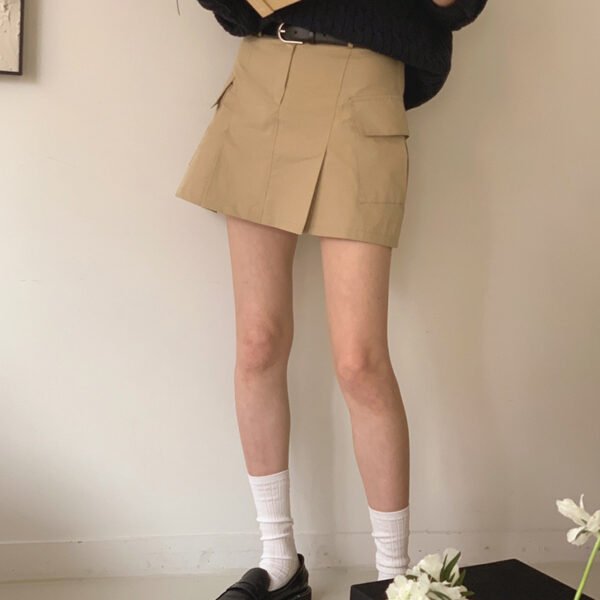


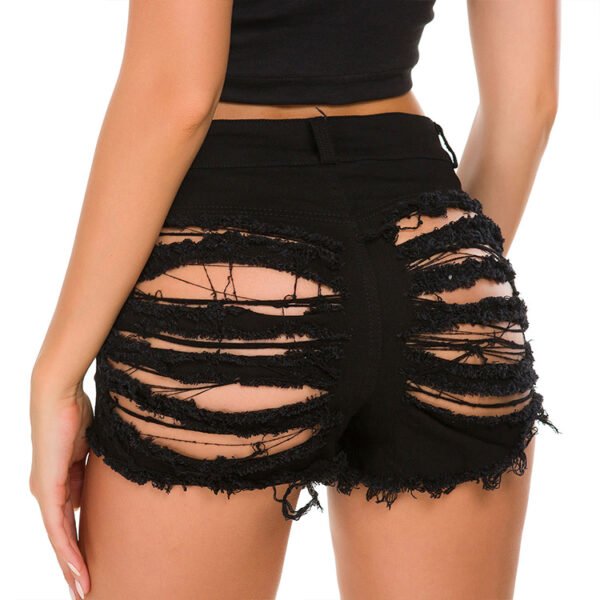


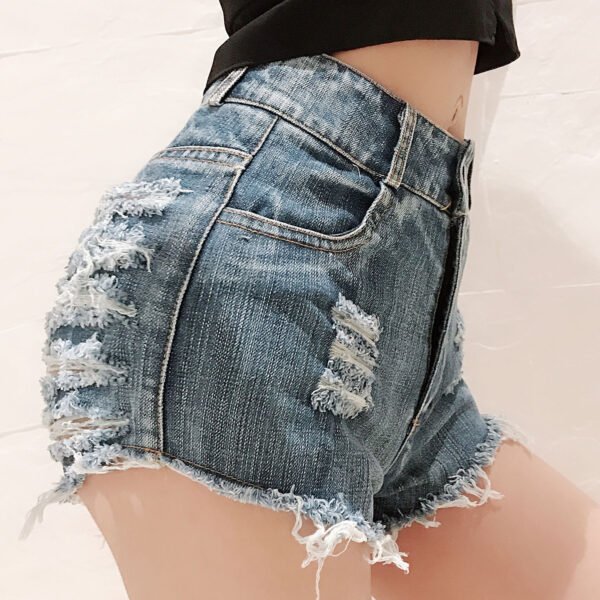






This custom high-waist cargo short requires an unusually explicit approval split. The supplied image shows structured khaki twill styling, while the assigned manufacturing axis concerns neck-rib recovery, a criterion that does not belong to shorts. Development should resolve that mismatch before sampling.
Resolve the Assigned Axis Before Sampling
Neck rib recovery and neckline shape describe knitted top openings, not the woven waistband visible in these shorts. Applying that criterion literally would create a false approval target and leave the actual high-rise fit mechanism insufficiently specified.
VeeWen should record the mismatch in the development brief, retain the supplied axis as a companion-top checkpoint only, and replace it for this style with waistband shape, closure stability, and recovery requirements that match the garment.
The Waistband Is the Functional Gate
The image shows a high-rise waistband with belt loops and a firm upper silhouette. Its behavior will determine comfort, waist security, and whether the shorts maintain their intended proportion after movement, especially because the compact leg keeps attention concentrated around the hip line.
Development should identify the waistband construction, internal support, seam allowance, and recovery expectation before grading. Confirm whether the fit relies on structured woven stability, an internal elastic element, or both; none of those details are verified by the image alone.
Pocket Placement Changes Side Balance
Two flap cargo pockets sit on the outer hip area, adding both utility and localized thickness. Their position can influence how the short hangs, particularly on a high-rise body where pocket openings, side seams, and waistband ends converge within a small visual zone.
VeeWen should sample pocket placement on the intended size set, checking flap alignment, opening access, and side-seam interaction. The buyer's checkpoint is a balanced profile: pockets must remain functional without pulling the waistband outward or distorting the leg opening.
Image and Source Description Diverge
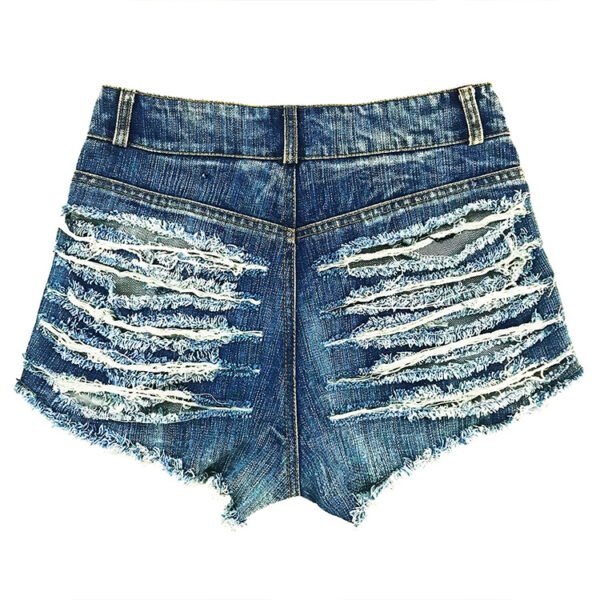
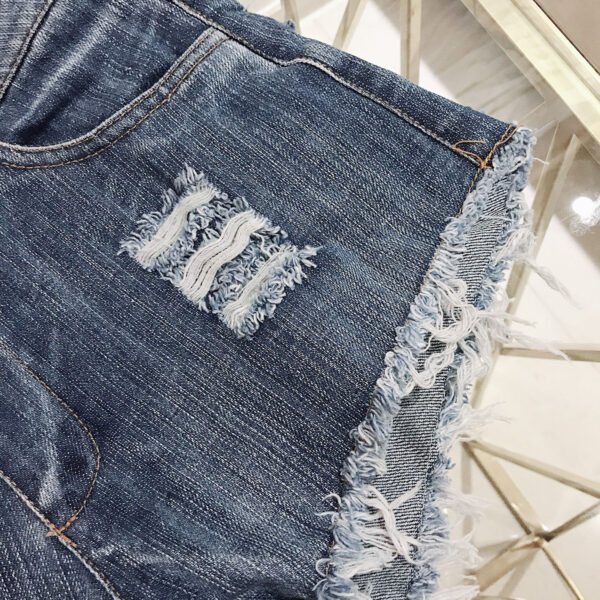
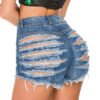
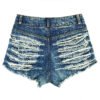
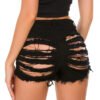
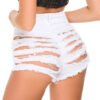
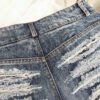
The source wording references distressed denim jean shorts, but the supplied main image presents warm khaki shorts with a clean twill-like appearance. That discrepancy affects material selection, wash planning, color approval, and the expected visual language of the finished product.
Treat the image as the current visual reference and keep denim, distressing, and wash effects unconfirmed. VeeWen should request a clarified tech pack or material direction before costing and sampling, because a twill short and distressed denim short follow different development decisions.
Fit Review Beyond the Waist
The compact short length and shaped upper body make rise depth, crotch comfort, leg opening, and hem stability important alongside the waistband. A secure waist cannot compensate for a restrictive rise or pocket placement that interrupts movement.
During VeeWen fitting, review standing, walking, sitting, and belt-wearing positions. Record rise measurements and hem behavior separately from any companion-top neckline review, ensuring the approved sample reflects the shorts' own movement and proportion requirements.
Buyer Approval Checkpoint
Approve this style only when the product brief distinguishes the non-applicable neck-rib axis from the shorts' real construction controls. The buyer should sign off on material direction, waistband behavior, pocket balance, rise comfort, and the clean or distressed surface treatment.
VeeWen's final development record should preserve the visual discrepancy as an open decision until resolved. Production can proceed after the buyer approves the corrected specification, sample fit, and MOQ: 100 pieces per style.
Buyer Questions
Why is neck-rib recovery mentioned for shorts?
It appears to be an assigned axis mismatch. Neck rib recovery applies to a top, so this short requires separate waistband recovery and fit criteria.
Are these shorts definitely denim?
No. The source wording references denim, but the supplied image appears khaki and twill-like. Confirm the material, weight, and wash direction before sampling.
Can the pockets be resized?
Yes, pocket dimensions and placement can be developed, but changes should be tested for side bulk, opening access, waistband interaction, and leg balance.
What is the minimum order?
The commercial minimum is MOQ: 100 pieces per style. Material, waistband construction, pocket details, grading, and final fit require approval first.
Clarify the Fit Gate
Share the confirmed material direction, waistband preference, and pocket measurements with VeeWen. We will separate the misplaced neck-rib axis from the short's fit approvals and MOQ: 100 pieces per style.



Reviews
There are no reviews yet.