
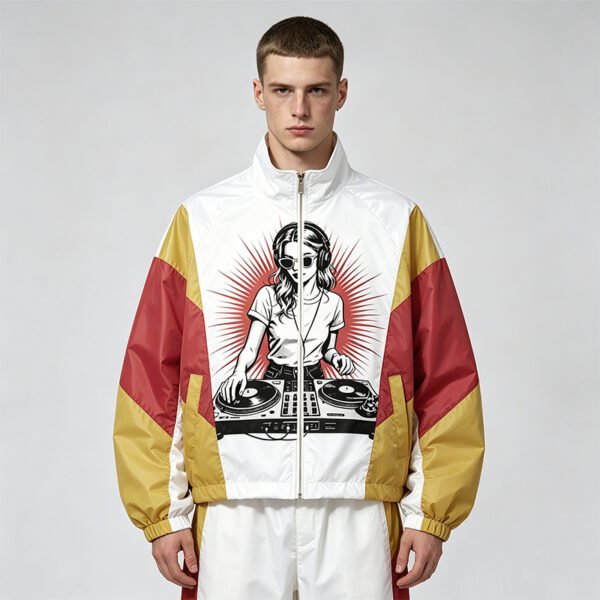
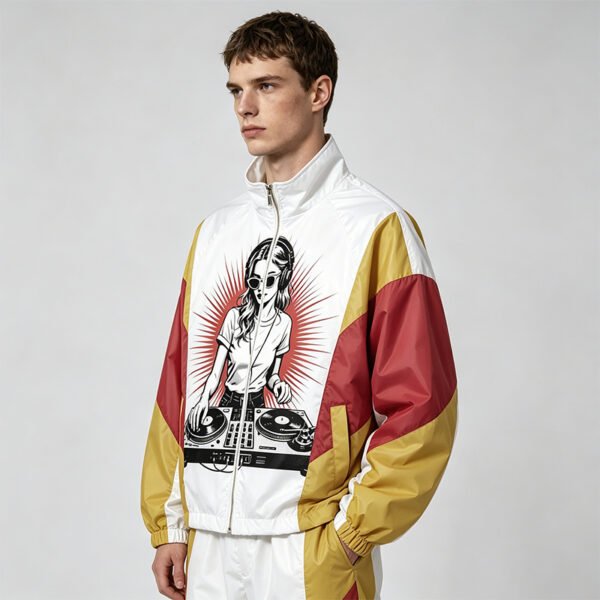
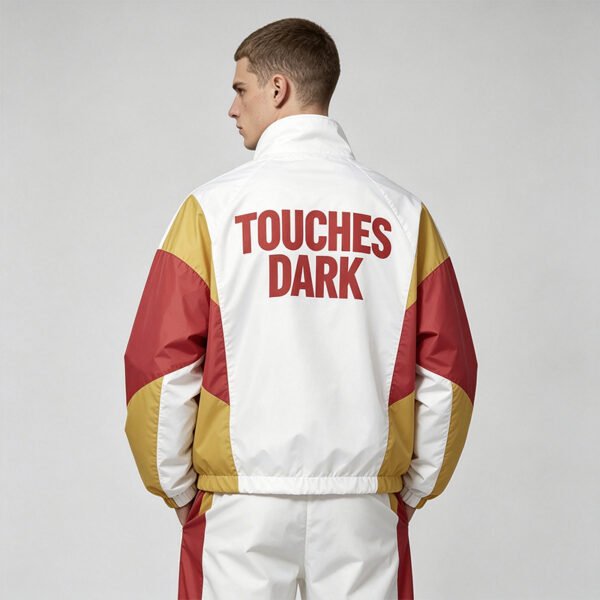



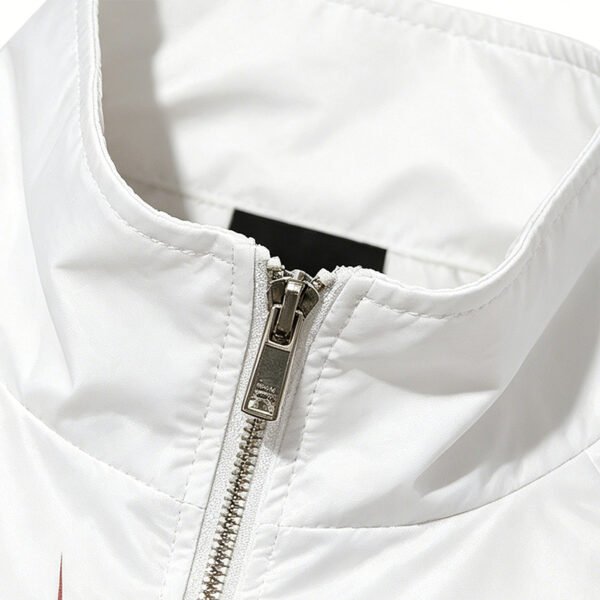
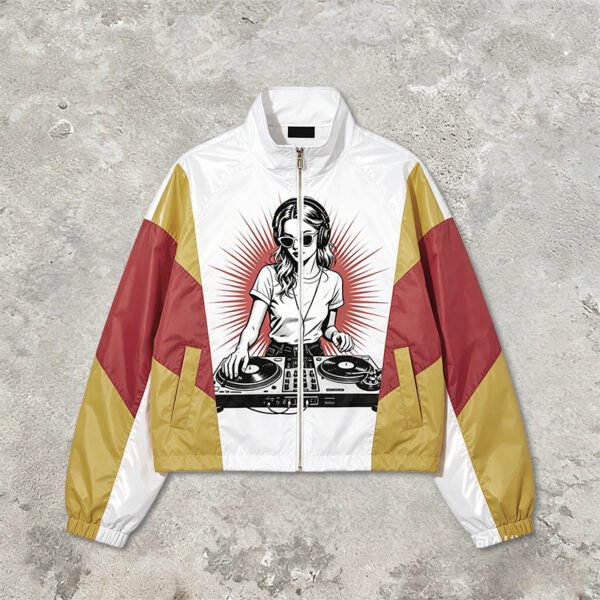








Develop a statement outer layer around the supplied jacket image: a stand-collar zip shell with contrasting sleeves, a cropped hem, and a large front DJ illustration. The critical decision is how applique boundaries and printed zones share seams without adding stiffness, rippling, or excessive interior bulk.
Applique Map
The image shows a white front body bordered by mustard and burgundy sleeve sections, with graphic artwork spanning the chest. That arrangement creates multiple handoff points, so the pattern must preserve artwork registration while keeping each applique edge smooth through zipper, armhole, cuff, and hem operations.
Use a seam plan that nests adjacent layers rather than stacking every edge at one junction. A narrow controlled turn-in, consistent topstitch allowance, and deliberate print clearance can reduce ridges, protect the illustration, and help the jacket retain a clean face after pressing and packing.
Bulk Control
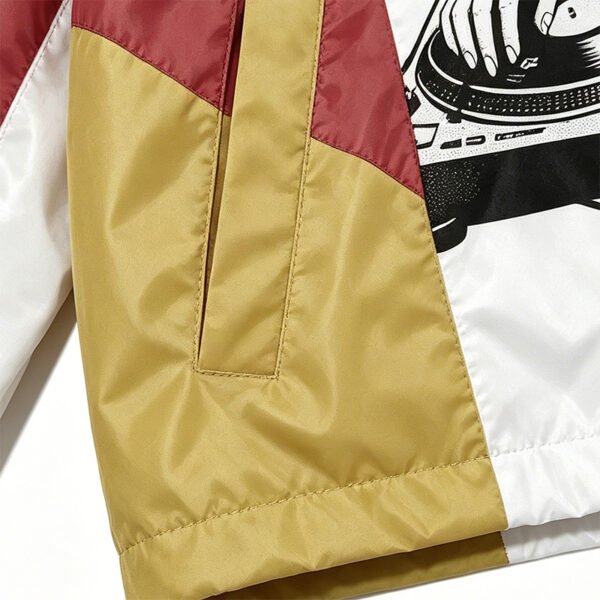
Layer bulk is most noticeable where sleeve color blocks, front panels, and elasticized cuffs converge. Limit overlapping seam allowances, avoid unnecessary reinforcement beneath printed artwork, and confirm whether the pocket bags share those junctions; these choices influence hand feel, silhouette, and packing volume.
Plan pressing and inspection around the graphic center, because heat, pressure, or seam compression can reveal ridges through a light-colored shell. A defined internal finish standard should identify acceptable edge lift, waviness, and thickness before the first production approval is issued.
Graphic Registration
Because the illustration sits across the front opening, artwork and applique should be developed as one register, not separate decorations. Establish zipper center, chest width, and sleeve join landmarks first; then position print files and panel shapes against those landmarks for repeatable visual balance.
Test the edge sequence at the collar, pocket opening, cuff, and hem, where folded materials can accumulate. A staggered construction order lets operators close one boundary before introducing the next, reducing exposed raw edges and keeping the graphic field from being distorted during assembly.
Edge Durability
The visible contrast blocks make edge consistency part of the product identity, especially along the diagonal sleeve transitions. Confirm whether exposed boundaries use turned seams, binding, or another finish, because each method changes abrasion exposure, flexibility, and the amount of material retained inside the seam.
Review the cuff and hem after repeated handling during sampling, focusing on edge migration, puckering, and panel separation. The approval sample should show whether the chosen allowance remains controlled when elastic gathers compress nearby layers and when the jacket is folded for shipment.
VeeWen Workflow
VeeWen's development workflow should begin with a layered construction board showing body, sleeve, cuff, collar, pocket, and graphic relationships. The sample room can then review seam nesting physically, recording where edges stack and which allowances need redistribution before confirming the final pattern.
For the pilot review, compare front symmetry, collar roll, cuff comfort, and hem appearance against the approved board. Record any adjustment by location rather than as a general quality note, so the next iteration addresses the actual bulk source and preserves the intended color-block rhythm.
Approval Checkpoint
Buyer approval should focus on the junction map, not only the artwork itself. Confirm which boundaries are sewn, printed, or layered; verify the acceptable interior ridge; and inspect a worn sample for shoulder mobility, zipper comfort, and cuff recovery before releasing the style.
Approve the style when the graphic remains centered, color-block edges read cleanly, and no critical junction feels overbuilt. If those conditions are not met, revise the panel order or allowance plan first, then reassess decoration placement on the corrected shell.
Buyer Questions
How should this jacket's applique construction be sampled?
Sample the body, sleeve panels, collar, cuffs, pockets, and graphic together, because isolated components cannot reveal seam stacking or registration problems at their junctions.
What should buyers inspect around the front graphic?
Inspect zipper alignment, artwork centering, edge waviness, ridge visibility, and panel symmetry from standing and worn views before approving the decoration and pattern combination.
Can the cropped silhouette be adjusted for different markets?
Yes, the body length, sleeve balance, cuff opening, and grading can be developed around the approved fit block, subject to confirmed measurements and construction limitations.
What is the commercial minimum for this development?
The commercial minimum is MOQ: 100 pieces per style, while size ratios, color allocation, packaging, and final order details remain To Confirm.
Approve the Low-Bulk Construction Direction
Send the target measurements, artwork files, and preferred edge finish so VeeWen can build a review sample around controlled applique transitions and documented bulk checkpoints.


Reviews
There are no reviews yet.