
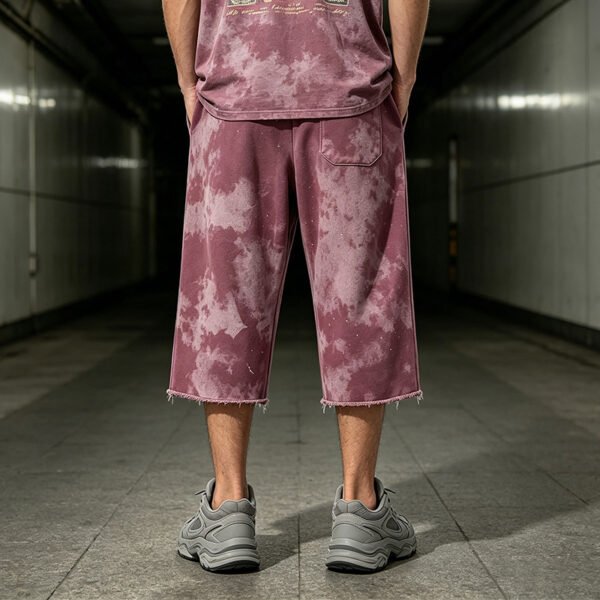
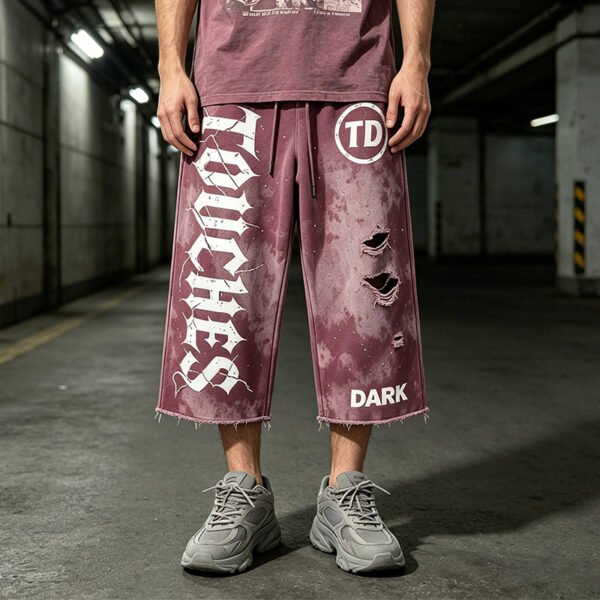

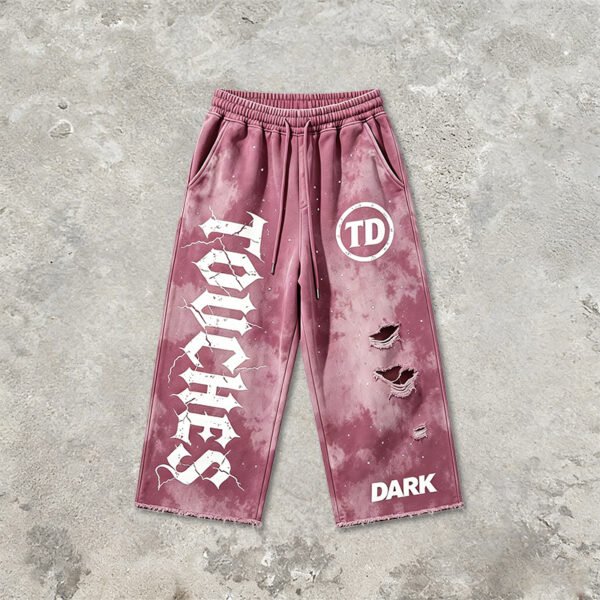


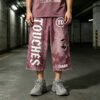
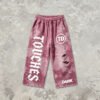
This cropped streetwear trouser is developed around front-body balance: zipper length must support the rise and graphic layout without creating a heavy vertical interruption. The visual combines mauve spray character, bold white placement, angled pockets, elastic waist comfort, raw hems, and localized leg damage.
Why Front Balance Controls This Trouser
The image presents a short, relaxed trouser with substantial front graphics and several damaged zones. Because the hem stops above the ankle, the zipper becomes a stronger vertical cue; excessive length could visually divide the front and pull attention away from the artwork.
A shorter zipper can preserve a cleaner graphic field, but it may restrict dressing ease and alter the perceived rise. A longer zipper improves access yet adds visual weight. The correct decision depends on wearer entry, rise depth, pocket placement, and final artwork scale.
Reading the Supplied Visual Evidence
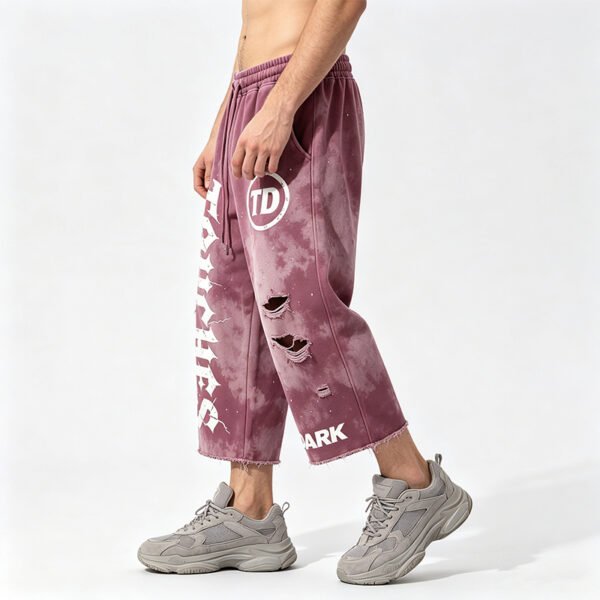
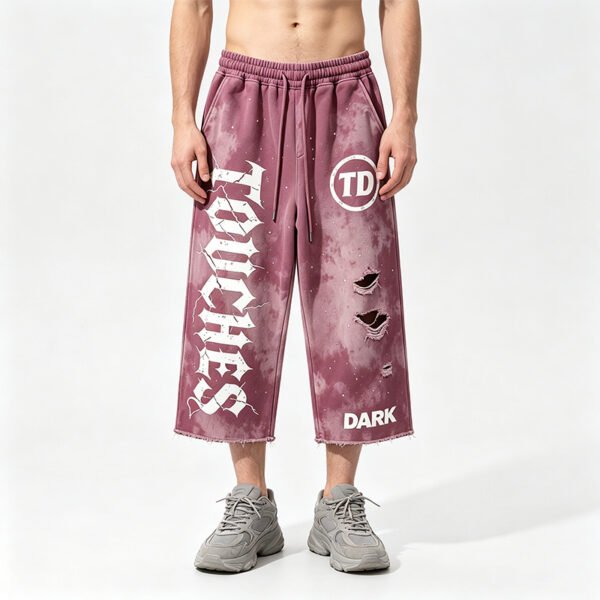
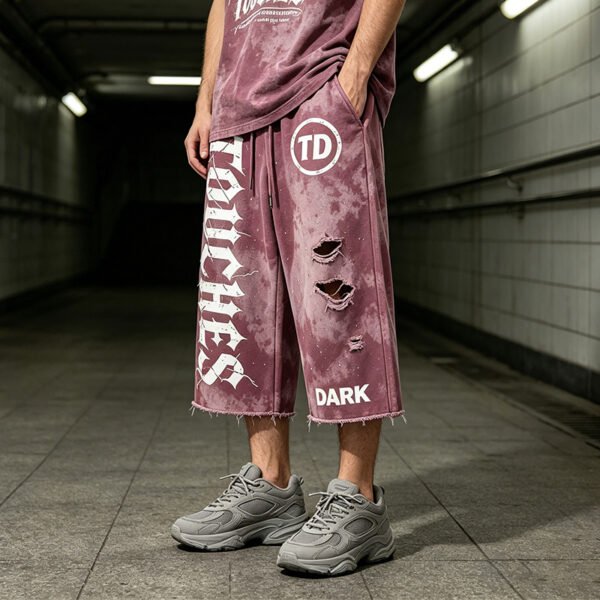
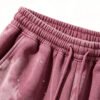
The main image shows a mauve-purple garment with an elastic waistband, central drawcord, angled pocket opening, large vertical white lettering, and a circular upper-thigh graphic. These features establish a dense front composition that needs deliberate spacing around the fly and pocket.
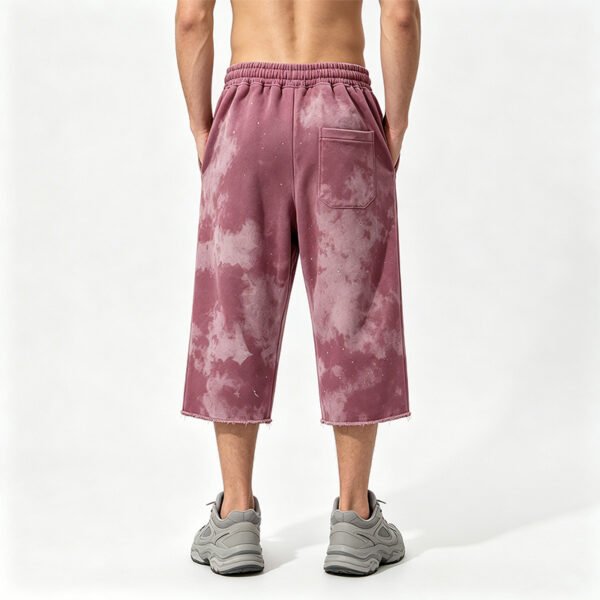
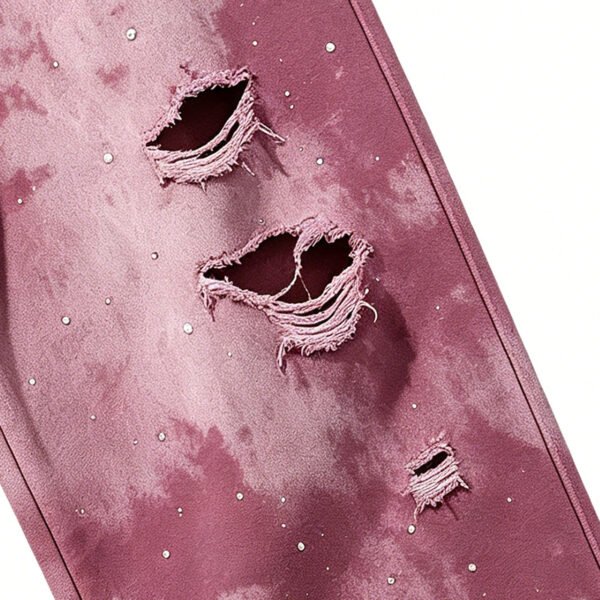
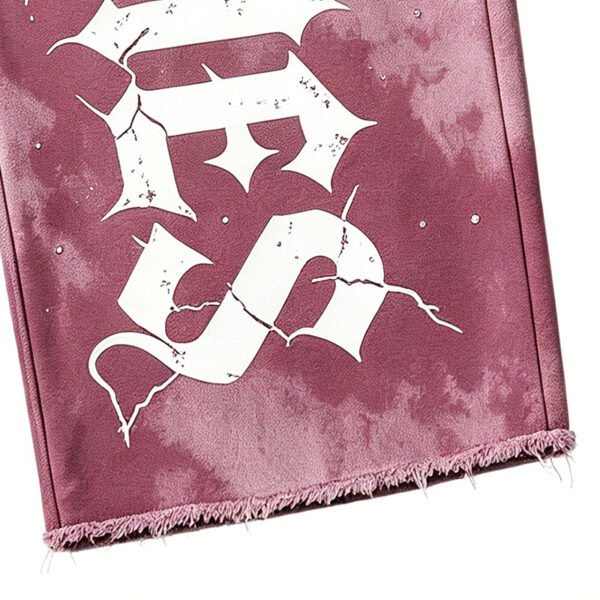
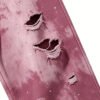
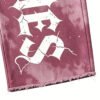
Distressed openings cluster along the outer leg, while the cropped hem uses a visibly raw edge. The image also shows a white lower-leg wordmark. Together, these details suggest that zipper, print, and damage should be approved as one coordinated front map.
Construction Mechanism and Trade-Offs
The zipper sits within a layered front system: waistband, fly, rise, pocket bag, and graphic surface must align without unnecessary thickness. A controlled fly extension can keep the zipper discreet, while a shorter opening may require more careful grading for comfort across sizes.
Distressing introduces another constraint because openings near the fly or pocket can weaken stress areas. Keeping damage concentrated farther down the leg protects the front balance and durability. Buyers should decide whether visual irregularity or repeatable placement has priority before approving production markers.
Development Checkpoint for VeeWen
VeeWen can translate this concept by locking the base block first, then mapping zipper length against the rise, pocket angle, graphic boundaries, and distress locations. The development review should treat each front element as a proportion decision rather than an isolated decoration.
For the first sample, request front and side measurement callouts, a marked artwork overlay, and a distress placement diagram. Review the garment on-body with intended sneakers, because the cropped hem and visible footwear materially change the perceived front-to-leg balance.
Sample Approval Priorities
The first approval should confirm whether the zipper disappears into the graphic composition or becomes a noticeable central line. Inspect opening comfort, waistband recovery, pocket access, and the visual distance between fly, vertical print, and upper-thigh emblem.
Also review the lower-leg print and raw hem after laundering or finishing trials are defined. The buyer should specify acceptable variation in spray appearance, edge fray, and damage shape, since these variables influence repeatability without being identical across garments.
Production Brief and Buyer Decision
A usable production brief should record zipper specification, fly extension, rise, pocket dimensions, graphic coordinates, distress limits, hem treatment, and grading rules. This makes the intended balance measurable and gives the factory a controlled sequence for sample corrections.
The approval checkpoint is simple: sign off only when the zipper length supports dressing ease while remaining subordinate to the artwork and distress map. If the front feels crowded, revise proportions before adding more surface detail.
Buyer Questions
What zipper length should this style use?
The zipper length should follow the approved rise and entry requirement, then be checked against graphic placement, pocket geometry, and the visible front-body balance.
Can the distressed details be standardized?
Yes, VeeWen can document damage coordinates, opening dimensions, reinforcement limits, and acceptable variation so the handmade appearance remains commercially repeatable.
Is the mauve color a confirmed dye specification?
No. The image shows a mauve-purple spray appearance, but the dye recipe, base color, wash process, and shade tolerance require buyer confirmation.
What is the minimum order quantity?
The commercial minimum is MOQ: 100 pieces per style, with final specifications, grading, artwork, and finishing requirements approved before production.
Approve the Front-Balance Direction
Send VeeWen your target measurements, artwork files, distress references, and intended fit notes so the first sample can validate zipper length, comfort, and front-body balance.


Reviews
There are no reviews yet.