

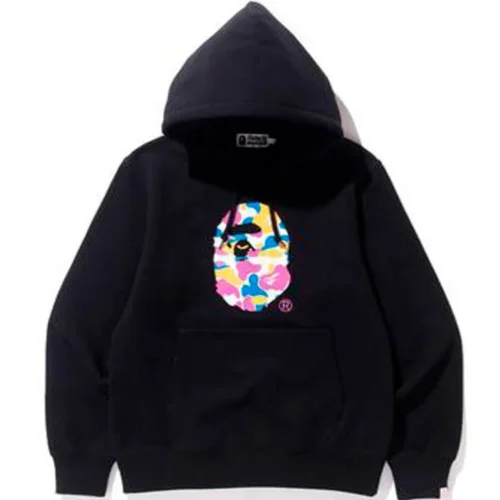
This custom lime green pullover hoodie is developed around fabric-width and consumption planning. The supplied image shows a substantial hood, full sleeves, ribbed hem, and broad back graphic, so marker efficiency must be resolved before costing and production quantities are approved.
Why Fabric Width Leads This Development
The visual reference presents a full hoodie with long sleeves, a hood, a ribbed lower hem, and a broad back graphic. Those components create a high material demand, making usable fabric width a primary planning variable rather than a secondary cutting detail.
A nominal width is not enough for a reliable consumption estimate. The team must account for usable width after edge relaxation, potential shading boundaries, cutting direction, shrinkage allowance, and panel orientation before translating the marker into a production quantity.
Marker Efficiency Across Hoodie Panels
Hoodie markers typically combine large front and back bodies with sleeves, hood pieces, cuffs, waistband sections, and smaller support components. Their different shapes can leave irregular gaps, especially when the fabric direction must remain consistent for appearance, stretch, or graphic alignment.
The broad back graphic adds another planning constraint because the back panel cannot be casually divided or rotated without changing artwork placement. Marker development should therefore test whether the selected width accommodates the key body panels first, then fits secondary pieces within remaining space.
Consumption Trade-Offs and Yield
A narrower fabric may increase the number of marker rows or force more joins between components, while an unnecessarily wide fabric can create greater selvage waste. The commercially sensible choice depends on the complete panel map, usable width, and acceptable cutting tolerance.
The buyer should review consumption as a range rather than a single optimistic figure. Compare marker yield, fabric utilization, expected cutting waste, and size assortment impact, because larger graded panels can change efficiency even when the base-size marker appears well balanced.
Graphic Scale Influences Cutting Space
The supplied image shows a large geometric graphic spanning much of the upper back. Its visual authority means the back panel should remain a clean, stable canvas, while the surrounding hood, sleeves, and rib components must be planned without compromising artwork positioning.
During development, confirm the artwork's finished width and height before locking the marker. A change in graphic scale can require different placement clearances, affect panel handling, and alter whether the back piece remains efficient within the selected fabric width.
VeeWen Development Workflow Checkpoint
VeeWen should convert the approved sketch into a panel inventory listing every shell, hood, sleeve, cuff, waistband, and reinforcement component. That inventory is then tested against candidate usable widths, with the broad back panel and graphic placement treated as fixed planning references.
At the consumption checkpoint, compare the marker estimate with the size ratio, color breakdown, cutting direction, and approved tolerance. Record the selected width assumption in the technical package so later fabric substitutions do not silently change yield, costing, or planned production quantities.
Approval Decision for Production Readiness
The buyer should approve production planning only when the fabric width is commercially available, the marker reflects the full size assortment, and the back graphic remains correctly positioned. The approval should identify the accepted consumption basis and any permitted cutting waste.
If width or yield remains uncertain, hold quantity confirmation and request a revised marker using the actual fabric specification. This protects the program from avoidable shortages, unexpected remakes, or a cost model built on an unverified material assumption.
Buyer Questions
Why is fabric width important for this hoodie?
Width determines how efficiently large body panels, sleeves, hood pieces, and rib sections fit together, directly affecting waste, consumption planning, and quantity accuracy.
Does the large back graphic change marker planning?
Yes, the graphic makes back-panel orientation and placement more controlled, limiting casual rotation or division that could disrupt the intended visual composition.
What should be confirmed before costing?
Confirm usable fabric width, panel dimensions, size ratio, cutting direction, graphic scale, expected waste tolerance, and the material specification used for the marker.
What is the minimum order quantity?
MOQ: 100 pieces per style. Final fabric, marker, color, graphic, grading, and construction approvals should precede production authorization.
Approve the Fabric Planning Basis
Send the target size ratio, confirmed material width, graphic dimensions, color breakdown, and consumption tolerance so VeeWen can prepare a measurable marker review and production planning checkpoint.



Reviews
There are no reviews yet.