
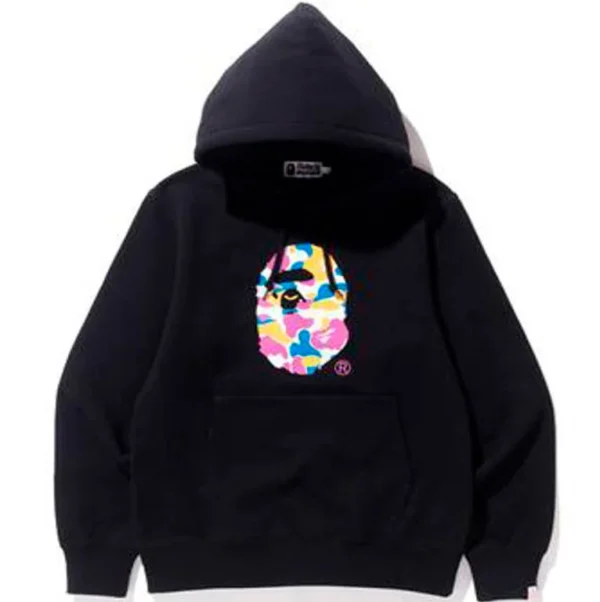
This custom black pullover hoodie is developed around label placement and wearer comfort, because the internal neck area sits beneath a hood that shifts during movement. The visible neckline label, hood overlap, ribbed edges, and kangaroo pocket define practical contact points for approval.
Why Label Placement Matters Here
A neck label sits where the hood, neckline, hair, and upper back repeatedly interact. If its position or edge finish is unsuitable, normal hood movement can increase rubbing, folding, pressure, or visual obstruction, making a small component materially affect wearer acceptance.
The supplied image shows the label inside the back neckline while the hood is raised over it. That overlap is the central evidence: the label must be evaluated in both open-neck and hood-worn positions, not only on a flat inspection table.
Mapping the Contact Zone
Before choosing dimensions, map the neckline seam, hood seam, and the area touched when the hood collapses backward. The image indicates a compact internal label near the upper center back, but exact spacing, label height, and seam allowance remain To Confirm.
The development sample should record label distance from center back and neckline, then assess whether the hood edge covers or presses it. Moving the label lower may reduce direct hood contact, but excessive displacement can affect readability and brand-navigation expectations.
Attachment and Edge Comfort
Label comfort depends on more than location. Substrate stiffness, printed surface, folded edges, stitch density, thread tails, and attachment tension can create hard or abrasive points against the wearer. These variables require physical sample review because the image cannot verify their behavior.
For this hoodie, compare at least the intended attachment method against the neckline construction while checking stretch recovery. A secure label that restricts neckline movement may feel uncomfortable, whereas a softer attachment can improve comfort but needs durability validation before approval.
Hood Movement and Fit Interaction
The hood changes the label's contact environment as it rises, falls, and shifts side to side. Fit testing should include relaxed standing, walking, reaching, and pulling the hood forward, observing whether the label bunches, catches, twists, or becomes exposed.
The surrounding kangaroo pocket, ribbed cuffs, and ribbed hem suggest a movement-oriented casual garment. Those features do not prove performance, but they support testing the label within normal active wear rather than judging comfort during a static fitting alone.
VeeWen Development Workflow
VeeWen's product-development workflow should connect label artwork and dimensions with hood patterning, neckline construction, sample fitting, and wearer-contact review. This style benefits from one coordinated checkpoint because changing label position after hood approval may require rechecking balance and internal seam relationships.
VeeWen can document alternative label placements through fit samples, contact-area notes, and inside-garment photographs. The buyer should approve the location, edge treatment, attachment, and readability together, then freeze those details before the style proceeds toward MOQ: 100 pieces per style.
Approval Trade-Offs for Commercial Use
A highly visible internal label can support product identification, but placing it too close to the neckline may increase contact with the hood and neck. A lower or smaller label may improve comfort while reducing immediate visibility when the garment is inspected.
The buyer's final checkpoint should define acceptable rubbing, folding, coverage, stitch exposure, and label movement after laundering. Because no performance result is supplied, retain approval authority until physical samples confirm comfort and construction security under realistic wear conditions.
Buyer Questions
Why is label placement important for this hoodie?
The hood overlaps the internal neck area and moves during wear. A misplaced or stiff label may rub, fold, press against the neck, or become hidden.
What should a comfort fitting include?
Test standing, walking, reaching, and hood adjustment while checking rubbing, pressure, folding, stitch exposure, readability, and label movement against the neckline.
Can the label construction be confirmed from the image?
No. The image shows approximate location only. Label substrate, dimensions, edge finish, stitch method, thread security, and laundering durability require physical sample confirmation.
What is the commercial minimum for this style?
The exact commercial minimum is MOQ: 100 pieces per style. Final costing, lead time, and production planning remain subject to the approved specification.
Approve the Comfort-Focused Label Check
Share the preferred label dimensions, artwork, substrate direction, and fit expectations. VeeWen can then evaluate placement with hood movement and neckline comfort before construction details are frozen.




Reviews
There are no reviews yet.