

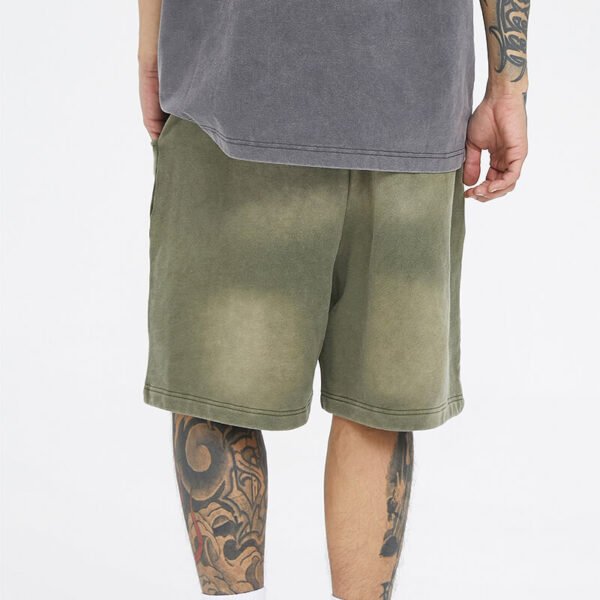
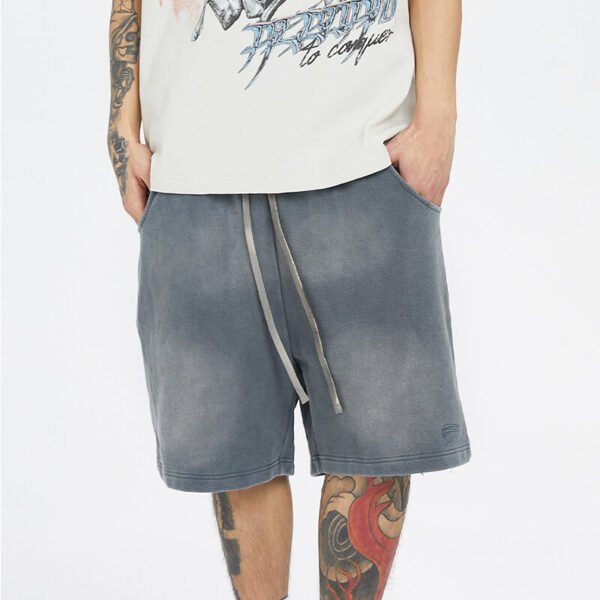
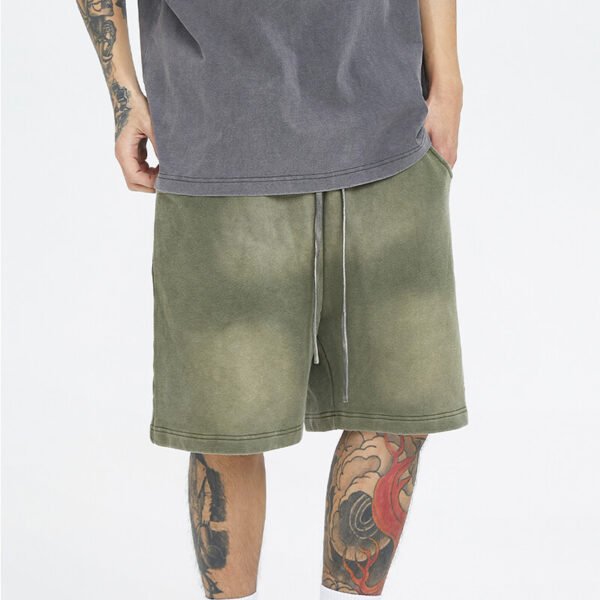
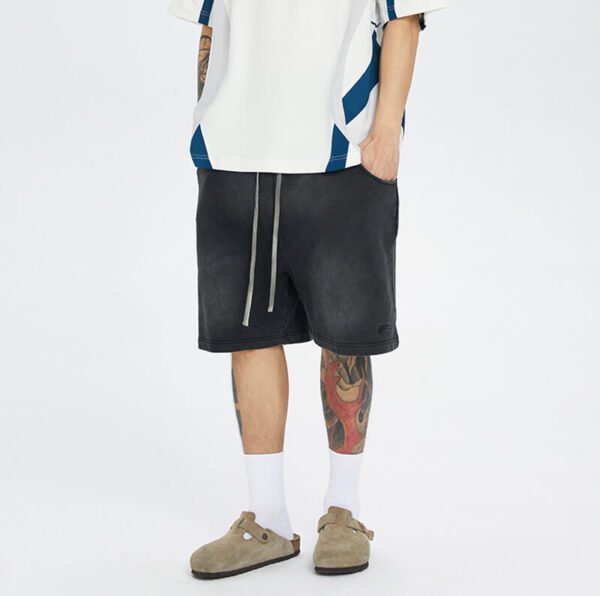
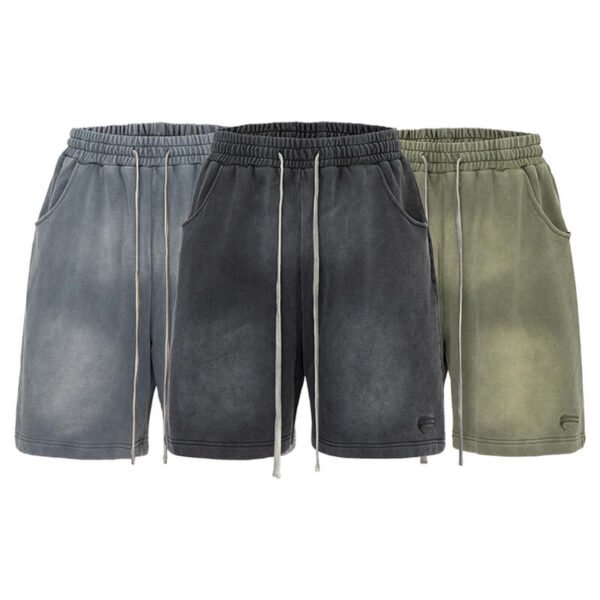
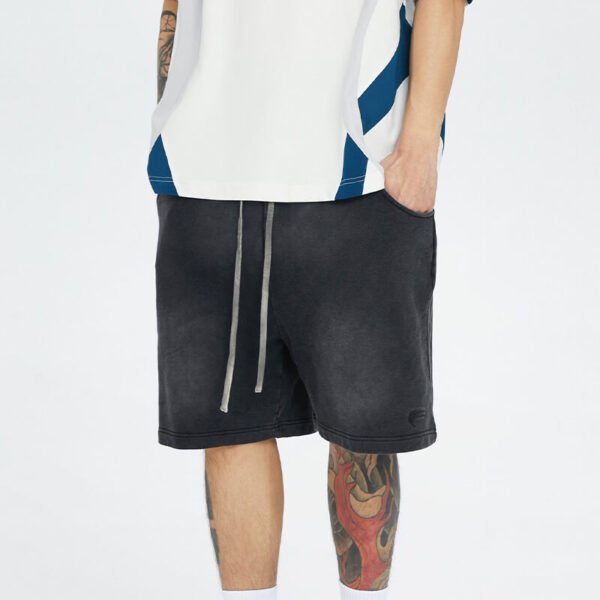
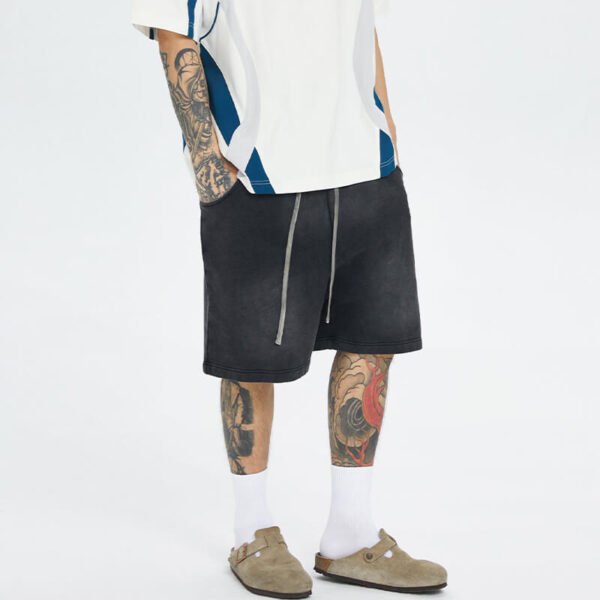
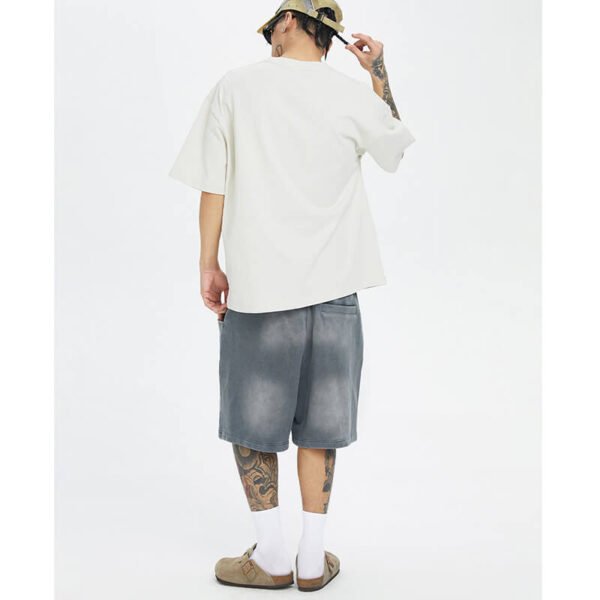
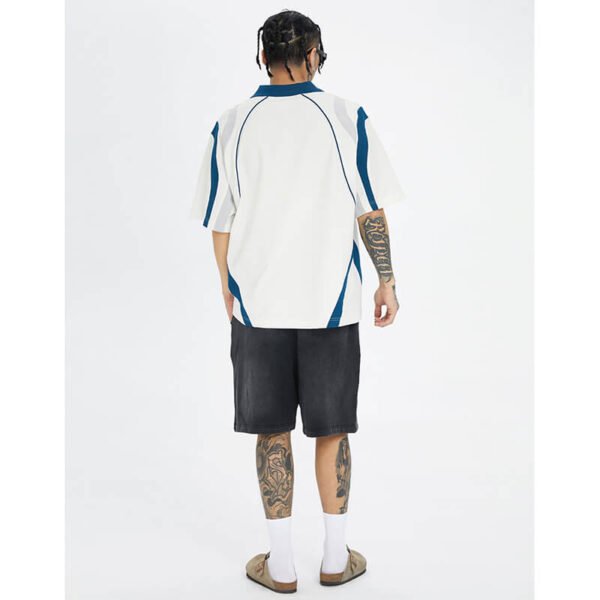
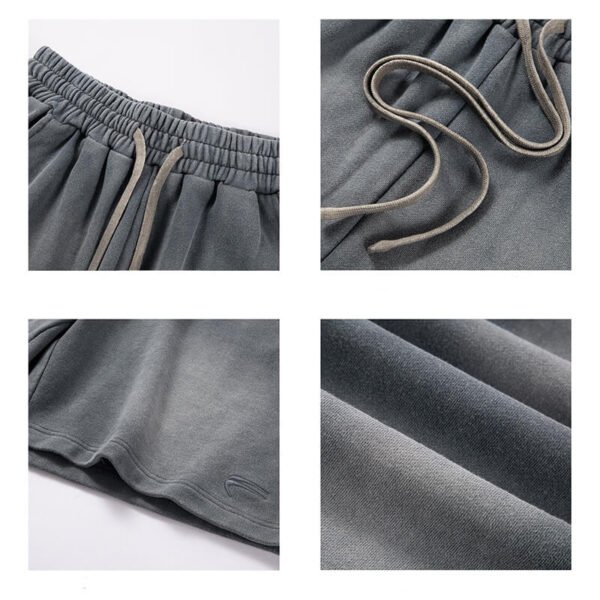


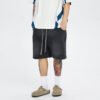
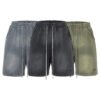
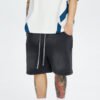
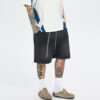
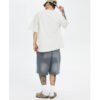
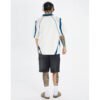

These custom straight shorts are developed around packaging fold versus presentation. The supplied image shows heavyweight structure, a long center drawcord, visible front pockets, and a nuanced olive wash; each feature can be obscured, creased, or misaligned if folding is treated as an afterthought.
Folding Is Part of Product Presentation
The supplied image shows shorts with enough body to maintain a straight silhouette, which makes the first fold important. A compressed or sharply folded package can create unwanted center marks, flatten the leg shape, and hide the washed character buyers expect to see.
A presentation-led fold should keep the waistband level, legs parallel, and key surface visible without stretching the fabric. The trade-off is package compactness: tighter folding saves space, but it can sacrifice immediate shape recognition and increase pressure creasing.
Protecting the Drawcord Arrangement
The long center drawcord is a visible functional detail in the reference and a likely source of presentation disorder. If it is trapped beneath the waistband or folded across one leg, the packed short can appear unfinished even when the sewing is correct.
Development should decide whether the drawcord lies centered on the front, is tucked inside the waistband, or is secured with a temporary presentation fold. Each option changes unpacking time, visual impact, and the risk of creating a permanent cord crease.
Heavyweight Structure Needs Fold Allowance
The source wording identifies a 380G heavyweight fabric reference, while the image shows a firm straight leg and substantial drape. Such structure may resist compact folds, so the packaging method should allow the leg panels to settle without forcing sharp compression through the hip.
A broader fold can preserve volume and reduce pressure lines, but it may require a larger polybag or carton footprint. Buyers should compare folded dimensions against the intended retail presentation before approving a packaging route that affects logistics or shelf handling.
Keeping Washed Variation Visible
The olive surface in the image contains lighter and darker tonal areas across the front, giving the short visual depth when laid flat. Folding directly across the most noticeable contrast zones may conceal the wash and make the product look flatter at first inspection.
The fold should expose enough front panel, waistband, or pocket area for the color story to remain readable. Since wash variation is not a uniform print, the approval standard should describe acceptable visibility rather than demand identical placement of every tonal mark.
Pocket and Leg Alignment
Curved front pockets and the straight outer legs provide orientation cues in the supplied image. Misaligned folds can make one pocket appear higher, twist the drawcord center, or cause the two hems to stack unevenly, weakening the clean silhouette presented to a buyer.
A simple folding board or measured folding guide may improve repeatability, but the final method must suit the garment's actual thickness. The sample review should inspect front, side, and unpacked views to separate packaging distortion from pattern or sewing issues.
VeeWen Development Checkpoint
VeeWen's workflow should connect pattern approval, wash evaluation, packing trials, and presentation review for this short. The key deliverable is a packed approval sample that is opened after handling, then compared with the intended flat product view for shape and surface visibility.
Before bulk confirmation, the buyer should approve folded dimensions, drawcord position, leg alignment, acceptable creasing, and the amount of wash visible through packaging. The production brief should include a visual folding sequence so presentation remains repeatable across the order.
Buyer Questions
Why approve packaging before bulk production?
Folding pressure can alter leg alignment, drawcord position, and visible wash presentation, so an early packed sample exposes issues that garment-only approval may miss.
Can heavyweight shorts be folded compactly?
They can, but compactness should be balanced against pressure creases and flattened structure; buyers should compare packed dimensions with the desired unpacked presentation.
How should the drawcord be presented?
Approve one repeatable position, such as centered on the front or neatly tucked inside, then document that method so packed units look consistent.
What is the minimum order for this style?
VeeWen's stated commercial minimum is MOQ: 100 pieces per style, with fabric, wash, measurements, trims, and packaging confirmed during development.
Approve the Packed Presentation
Share your packaging format, retail handling requirements, and fold preference with VeeWen for a packed-sample review covering shape retention, drawcord order, wash visibility, and alignment.



Reviews
There are no reviews yet.