


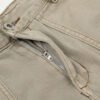
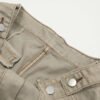
These custom cargo Bermuda shorts are defined by structured utility pockets, making pressing a surface-protection decision rather than a simple appearance step. The method must hold flap and leg-pocket shape while avoiding shine, crushing, or directional marks if the selected fabric has a raised surface.
Why Pressing Controls Cargo Pocket Shape
Cargo pockets depend on clean edges, stable flaps, and controlled fullness. Pressing can establish those shapes, but excessive pressure may flatten texture, create unwanted shine, or leave permanent impressions around layered pocket mouths and flap corners.
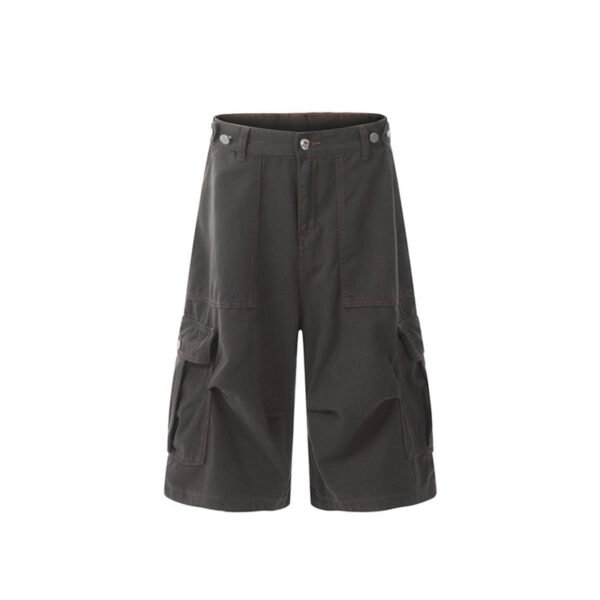
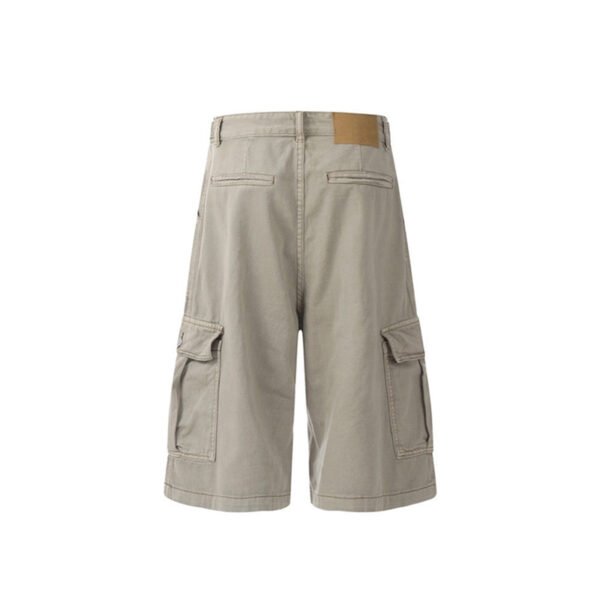
The image shows two substantial lower-leg pockets with defined flaps and dimensional panels. That visible construction means pressing should be planned component by component, keeping pocket definition consistent without treating the entire garment as one uniformly pressable surface.
Pile Protection Changes The Pressing Route
If the approved fabric contains a raised, brushed, or otherwise directional surface, direct high-pressure contact can crush the pile and create tonal differences. A protective cloth, lower contact pressure, adjusted temperature, or face-down handling may reduce those risks.
The supplied image shows tonal variation across the dark surface, although the cause is not verified. For that reason, the development route should test whether pressing changes reflection, nap direction, or hand feel before the construction method is fixed.
Layered Pocket Components Need Different Treatment
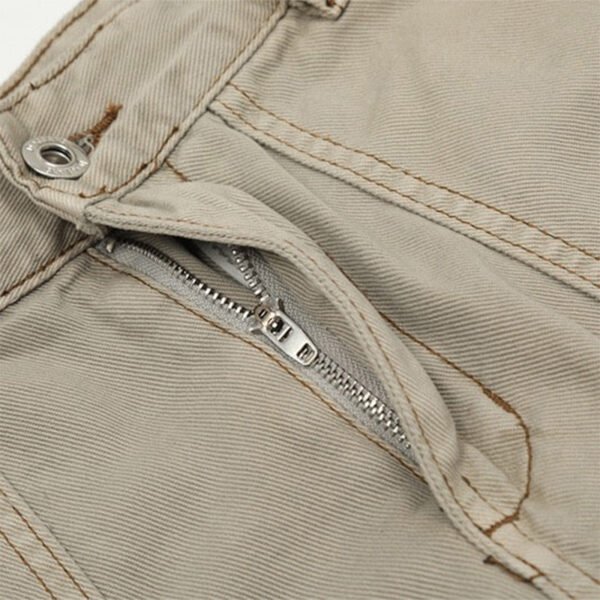
A waistband, fly, pocket bag, flap, and leg panel do not share the same thickness or seam density. Applying one pressing sequence to all areas can distort the silhouette, especially where cargo pockets overlap the leg and create several fabric layers.
The specification should separate shaping steps from final appearance pressing. Buyers can then review waistband roll, fly flatness, flap edges, and lower-pocket volume independently, identifying which operations protect the surface while preserving the intended utility structure.
Managing Utility Without Excess Bulk
Cargo pockets offer carrying capacity, but layered construction can become bulky when seams, flaps, and reinforcement accumulate. Pressing can visually organize those layers, yet over-compression may reduce usable volume or make the garment feel rigid during movement.
A controlled process should preserve the pocket's functional depth while setting a clean silhouette. Review loaded and unloaded pockets, because an empty garment may look sharply pressed while realistic contents expose strain, distortion, or insufficient recovery.
VeeWen Development Checkpoint
VeeWen's workflow should document fabric surface behavior alongside the pressing sequence, using a component test before the complete short is evaluated. The review should compare protected and direct-contact methods on waistband, flap, and leg-pocket areas.
Once the buyer approves the method, the technical record should specify contact direction, protective materials, temperature guidance, pressure limits, and visual acceptance points. This links pattern, sewing, finishing, and quality review to the product's actual surface-protection argument.
Trade-Offs Before Production Approval
Gentler pressing may protect a raised surface but leave less crisp pocket edges. Stronger shaping may improve presentation while increasing the risk of flattening, shine, or seam impressions. The correct balance depends on confirmed fabric behavior and the buyer's acceptable appearance standard.
Before production approval, inspect the shorts under consistent lighting, turn pockets inside out, and compare pressed zones with untouched fabric. Confirm that structure, recovery, and surface direction remain acceptable, then authorize MOQ: 100 pieces per style.
Buyer Questions
Does the fabric definitely have a raised pile?
No. The image shows tonal surface variation, but pile or brushing is not verified; confirm surface construction and behavior through fabric selection and testing.
Can pressing be specified before fabric approval?
Only provisionally. The pressing route should remain adjustable until fabric thickness, surface direction, heat response, and pocket-layer behavior are reviewed on samples.
Will gentle pressing weaken pocket definition?
It may reduce sharpness on some fabrics, so compare protected methods and adjust construction, seam allowances, or flap engineering before final approval.
What is the minimum commercial quantity?
The commercial minimum is MOQ: 100 pieces per style, with final quantities, specifications, and production documents confirmed during order development.
Approve The Surface-Safe Pressing Route
Share the target fabric, pocket measurements, and desired hand feel for a VeeWen component trial. We will organize pressing approval around surface appearance, pocket definition, and realistic load review.



Reviews
There are no reviews yet.