

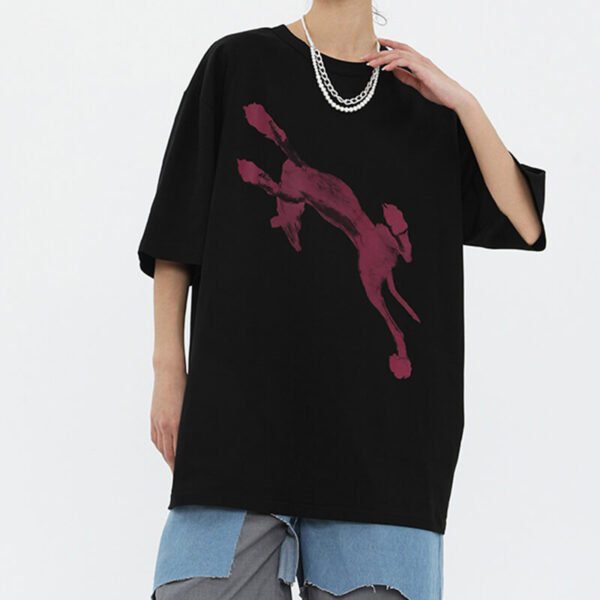


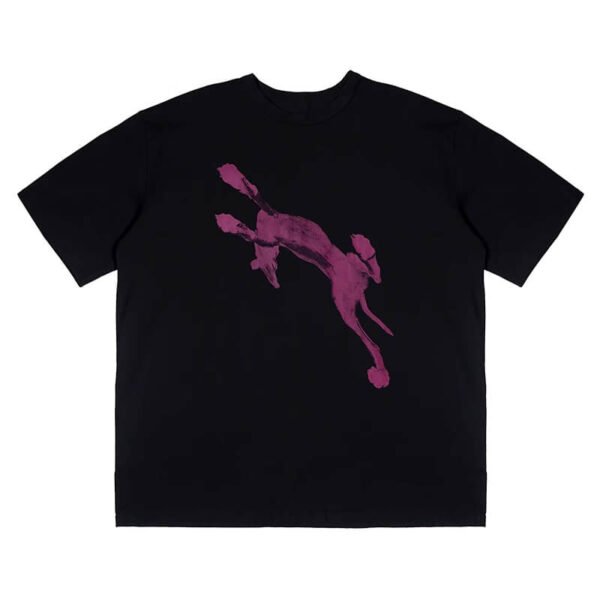
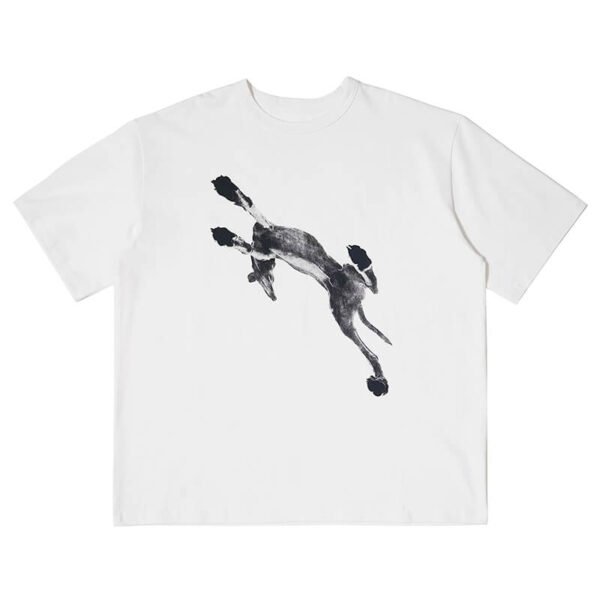


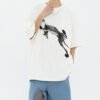

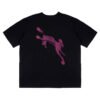
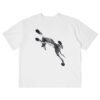
Develop this 190GSM cotton graphic T-shirt around post-process measurement recovery, using the elongated body, wide sleeves, and centered animal artwork as fixed visual controls for finishing trials, grading, and production approval before bulk cutting across the intended size range.
Treat Recovery as the Primary Risk
The supplied wording identifies a 190 GSM cotton T-shirt, while the image shows an elongated oversized body and wide sleeves. Those proportions amplify dimensional change: small length or width shifts can alter the intended balance and graphic position after finishing.
VeeWen should establish a pre-process measurement sheet covering body length, chest width, sleeve length, and opening. The buyer then compares post-process results against those checkpoints, deciding whether the recovered silhouette still matches the approved oversized direction.
Separate Fabric Change from Block Intent
Cotton jersey can change during wet or dry finishing, but the supplied evidence does not define fiber blend, knit structure, treatment recipe, or shrinkage behavior. Therefore, the block must be protected by measurements rather than assumptions about a familiar fabric category.
During development, VeeWen can isolate fabric and process variables through controlled trials, recording dimensional movement before adjusting the pattern. Any correction should preserve the approved design intent instead of compensating blindly for an unverified recovery percentage.
Hold Graphic Placement to Measurements
The dark magenta animal graphic is positioned prominently on the black front, creating a clear visual anchor. If body length, width, or vertical recovery changes unevenly, the artwork may appear too high, too low, or disproportionately scaled within the finished garment.
VeeWen's workflow should confirm print coordinates from the recovered body measurements, not only from the initial pattern. The buyer should inspect a finished trial on body and flat lay, verifying artwork centering, scale, and relationship to the hem and neckline.
Protect Oversized Sleeve Proportion
The model image shows wide short sleeves extending well beyond a close-fitting upper arm, reinforcing an oversized streetwear proportion. Post-process sleeve shortening or opening reduction could make the garment appear tighter even when the body remains intentionally broad.
VeeWen should measure sleeve length, bicep width, opening, and cap relationship before and after finishing. The approval checkpoint is a complete proportion review, because correcting body recovery alone may leave the sleeves visually unbalanced or restrictive.
Define Recovery Tolerances Clearly
Measurement recovery is useful only when tolerances are specific enough to guide decisions. For this design, body length and graphic placement deserve particular attention, while sleeve dimensions and width must be reviewed together to preserve the relaxed visual ratio.
VeeWen can place the approved pre-process and post-process measurements in the technical package, with treatment notes tied to each checkpoint. The buyer should approve acceptable variance by size before production, keeping later inspection aligned with the intended finished silhouette.
Connect the Axis to VeeWen Development
For VeeWen's workflow, this style should progress from source-evidence review to material confirmation, initial block measurement, finishing trial, graphic validation, and graded recovery approval. The sequence keeps process change visible before it affects bulk pattern cutting or artwork application.
The final buyer checkpoint should combine recovered measurements, sleeve proportion, graphic position, and surface appearance in one approval record. VeeWen can then develop related colorways from the validated logic, while rechecking recovery whenever material or treatment variables change.
Buyer Questions
Why is measurement recovery important for this style?
Its elongated oversized proportions magnify dimensional changes. Recovering body, sleeve, and graphic-placement measurements helps preserve the approved silhouette after finishing and across graded sizes.
Is cotton composition fully verified?
Cotton and 190 GSM appear in the supplied source wording, but blend details, test basis, and final composition should remain To Confirm until technical documentation is approved.
Which measurements deserve priority?
Prioritize body length, chest width, sleeve length, sleeve opening, and graphic coordinates, then compare every checkpoint before and after the intended finishing process.
What is the commercial minimum?
VeeWen's exact commercial minimum is MOQ: 100 pieces per style, with final development scope, specifications, and production requirements confirmed during approval.
Approve the Recovery Record
Share the target measurements, graphic file, and finishing intent with VeeWen for a controlled recovery trial, proportion review, and documented approval before bulk production planning begins.


Reviews
There are no reviews yet.