
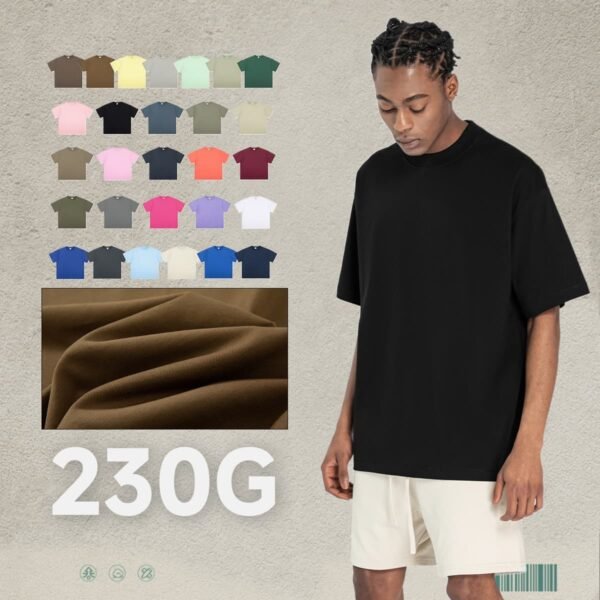



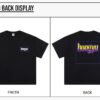
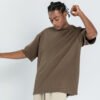
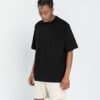
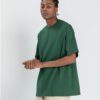
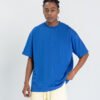
This oversized tee should be developed around surface integrity. The supplied image shows a clean black body, substantial-looking fabric, a broad color board, and no visible external hardware, creating a clear decision: select trims and garment treatment together so plating never undermines the intended hand and appearance.
A Clean Surface Gives Treatment Priority
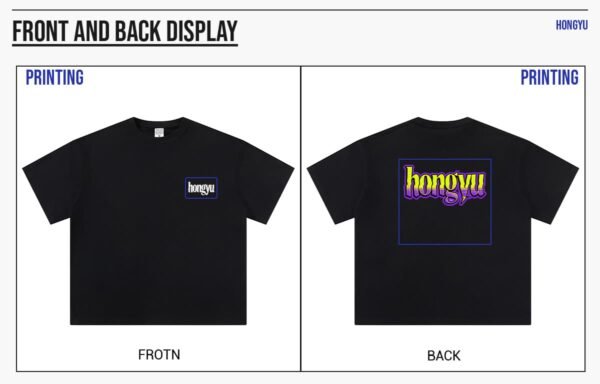
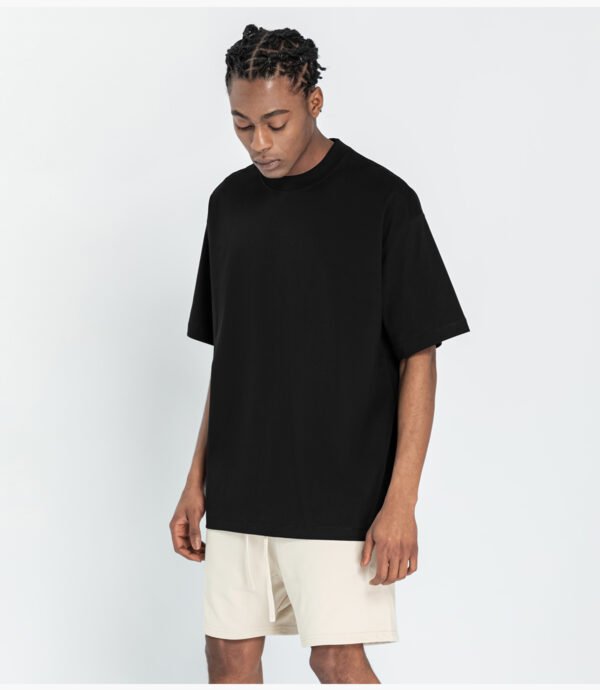
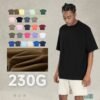
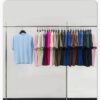
The main image presents a plain black oversized tee with an uninterrupted body and no obvious external hardware. That visual restraint makes the fabric surface and silhouette carry the product identity, leaving little room for plating marks, tarnish, or trim inconsistency.
VeeWen's development workflow should therefore define the treatment target before adding decorative components. Record the desired surface, shade movement, handfeel, and dimensional limits, then assess every proposed trim against that visual and physical standard.
Plating Can Shift the Treatment Balance
Plated metal or coated hardware introduces a separate finish system to the garment. Heat, chemicals, abrasion, and moisture used during treatment may dull, stain, scratch, or visually compete with the tee, particularly against the dark body shown in the image.
The first sample should compare a treatment-only version with any proposed hardware version. Review trim adhesion, edge cleanliness, color stability, contact staining, and tactile contrast so the buyer can approve a deliberate finish relationship rather than an accidental one.
The 230G Base Needs Controlled Handling
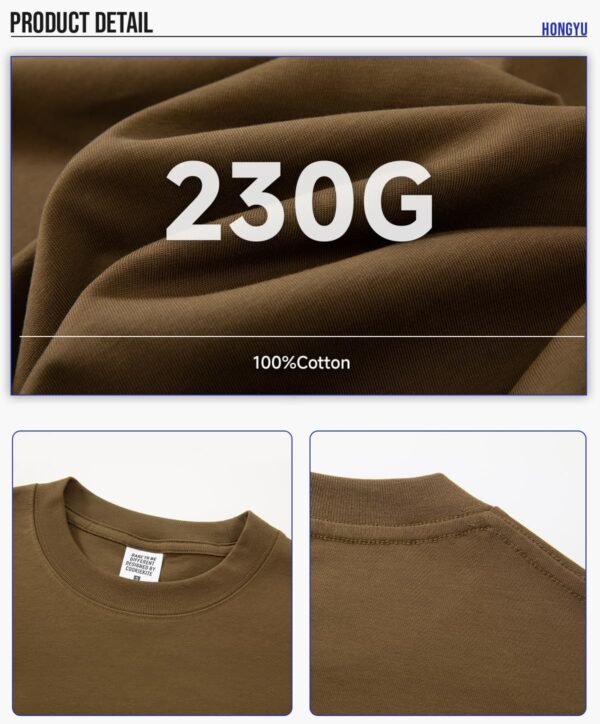
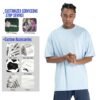
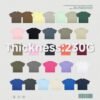
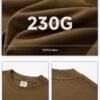
The source wording states 230G, and the inset fabric image shows a compact-looking knit with visible folds. A substantial cotton jersey can support an oversized shape, but treatment intensity may alter softness, width, length, and surface definition.
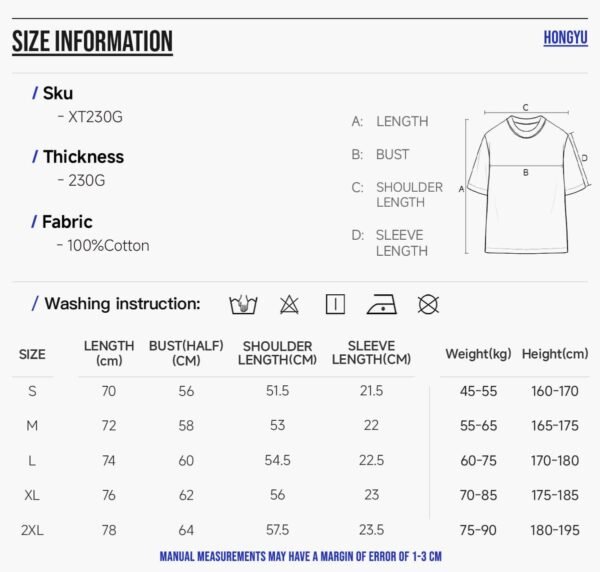
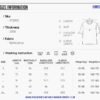
VeeWen should confirm greige and finished weights, then measure body length, chest, shoulder, sleeve, and neck opening before and after treatment. Those records connect the fabric decision to trim placement, ensuring the final silhouette remains proportional.
Oversized Proportions Magnify Small Changes
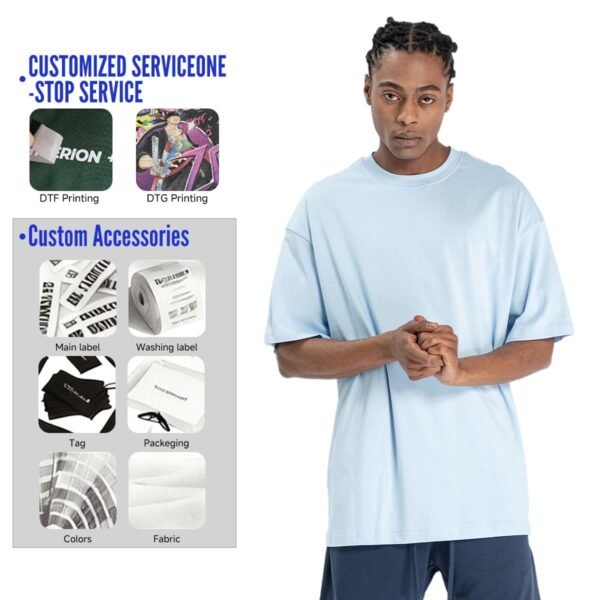
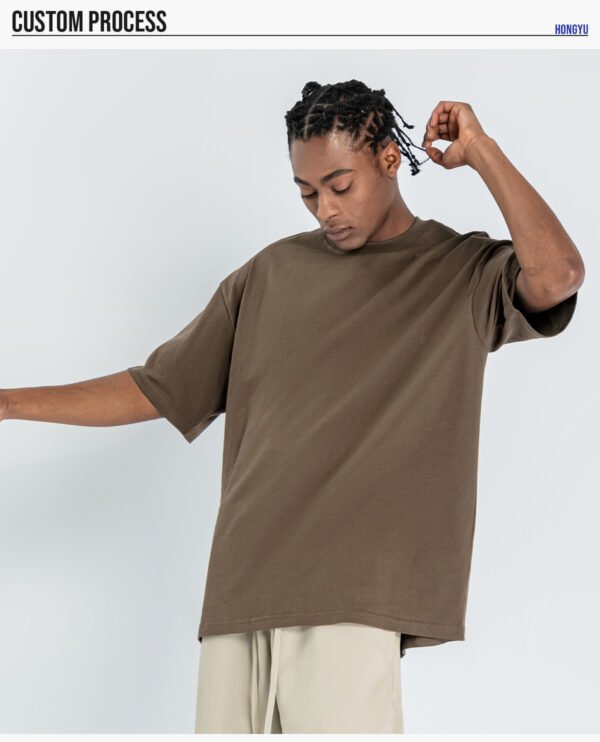
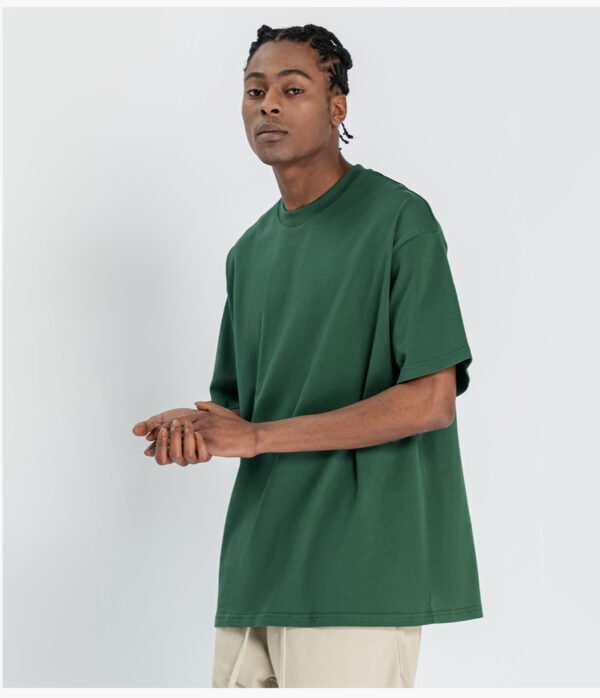
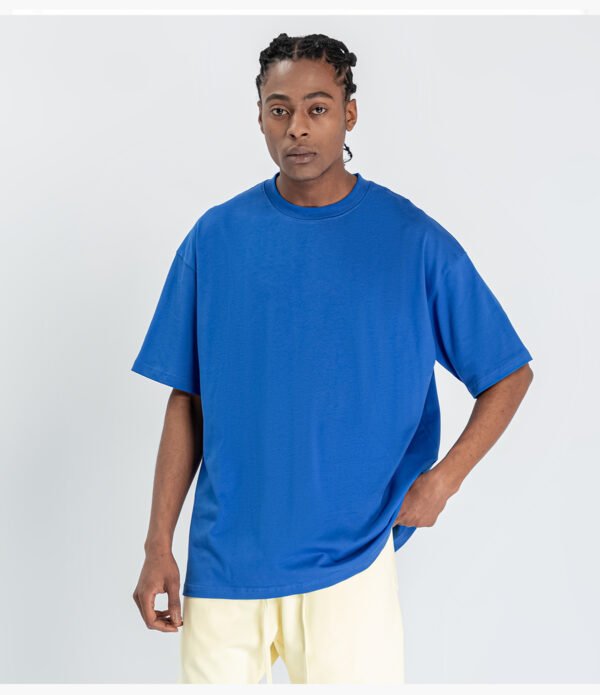
The model image shows generous body and sleeve volume, so small dimensional shifts can change the intended balance more noticeably than on a close-fitting tee. Neck opening, shoulder drop, and sleeve length should be reviewed as a connected proportion set.
During sampling, VeeWen should fit the untreated and treated versions on the same measurement framework. Compare hang, neckline recovery, sleeve angle, and side-seam position before deciding whether the treatment or pattern requires adjustment.
Color Programs Need One Finish Standard
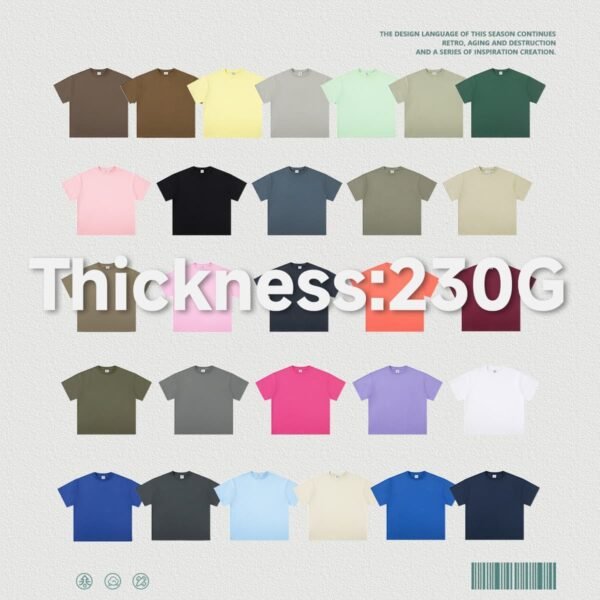
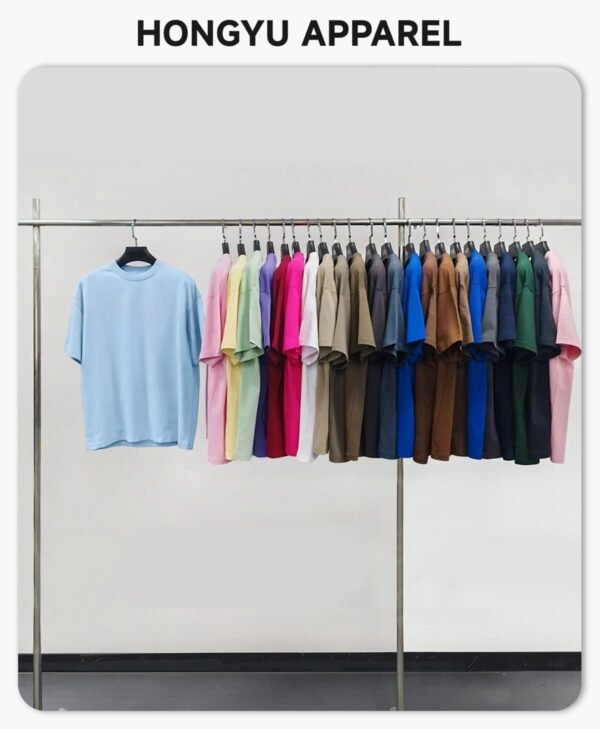
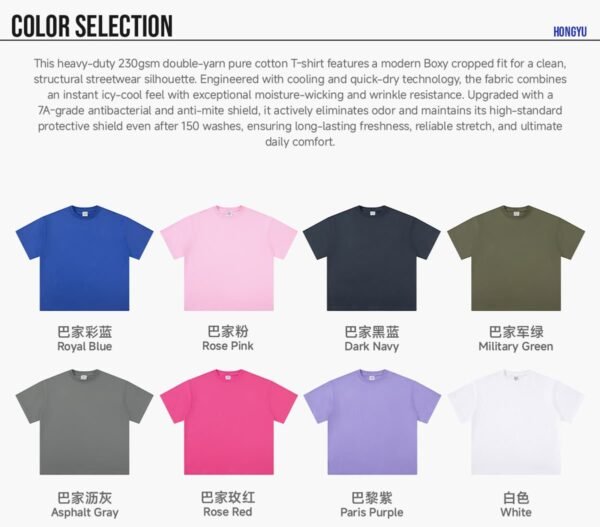
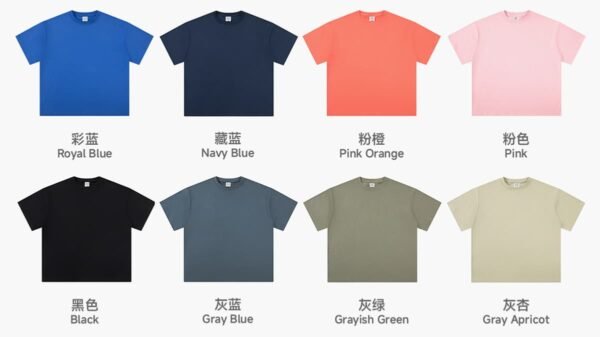
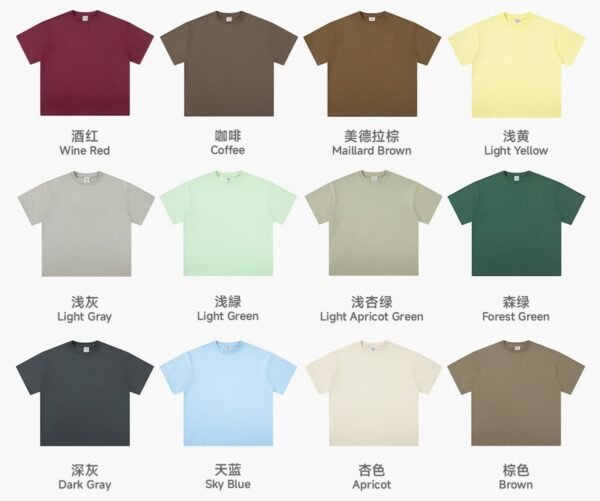
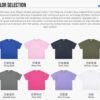
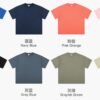
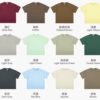
The color board includes dark, light, muted, and bright directions, while the on-body example is black. Treatments that look subtle on black may become stronger on pale or saturated shades, and plated components can create different contrast levels across the palette.
The buyer should select a finish standard using representative light, dark, and saturated colors. VeeWen can then compare shade change, surface marks, trim contrast, and handfeel across the range before confirming which colors share one treatment recipe.
The Approval Gate Is Compatibility, Not Decoration
The key approval question is whether hardware contributes value without damaging the clean surface shown. If no external trim is necessary, omitting it may protect consistency; if trim is required, its plating and placement must survive the garment treatment.
Before bulk approval, request a side-by-side review of trim-free and trimmed samples after the planned treatment. Confirm the acceptable appearance, dimensional tolerance, staining limit, and care direction with VeeWen before releasing the style.
Buyer Questions
Does the image prove the tee is 100% cotton?
No. The source wording states 100% cotton, but final verification should come from the approved fabric specification, testing documentation, and labeling review.
Should hardware be omitted from this style?
Not automatically. The clean image supports a trim-light direction, but the decision depends on branding needs and whether proposed hardware remains stable through treatment.
What should be tested after treatment?
Review dimensional change, shade movement, handfeel, surface marks, trim plating, staining, adhesion, neckline recovery, and appearance across representative light, dark, and saturated colors.
What is the minimum order quantity?
The commercial minimum is MOQ: 100 pieces per style. Confirm how selected colors, sizes, treatments, and hardware choices affect the final production allocation.
Approve the Treatment and Trim Package
Share the target handfeel, color range, branding hardware, and treatment direction with VeeWen. We will structure sampling around plating compatibility, dimensional stability, surface appearance, and oversized fit approval.


Reviews
There are no reviews yet.