
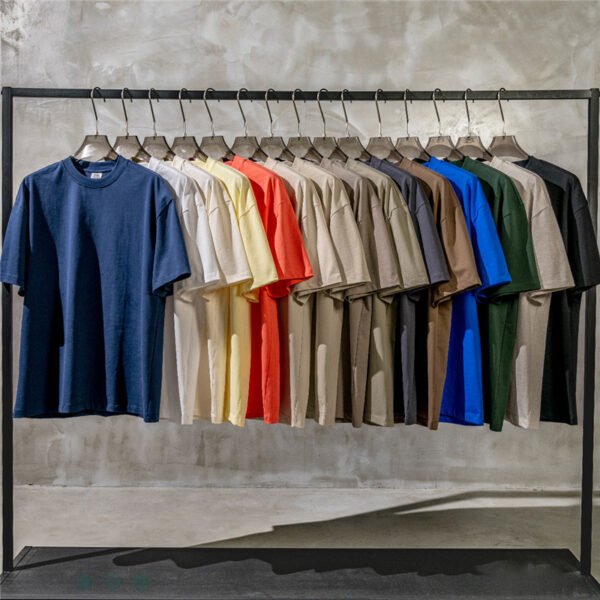


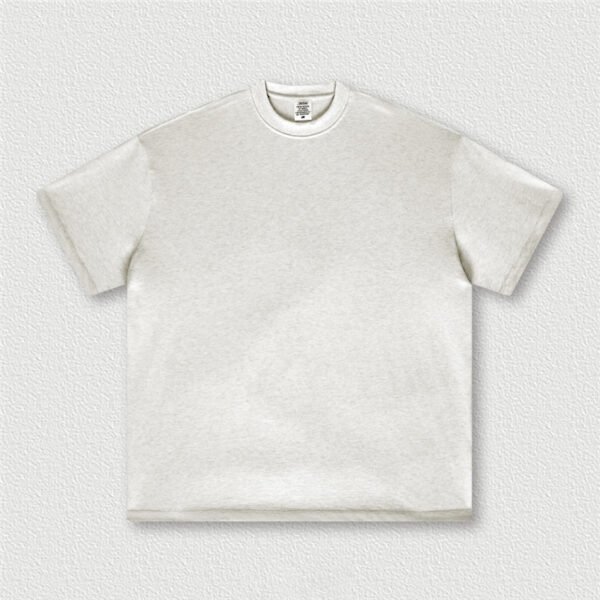


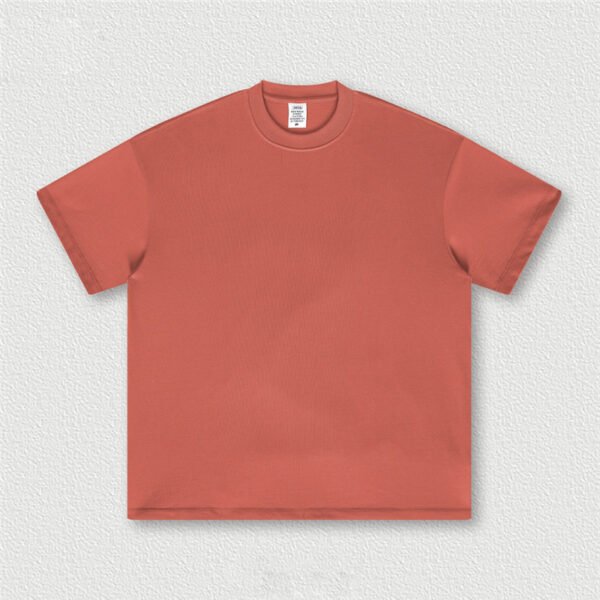

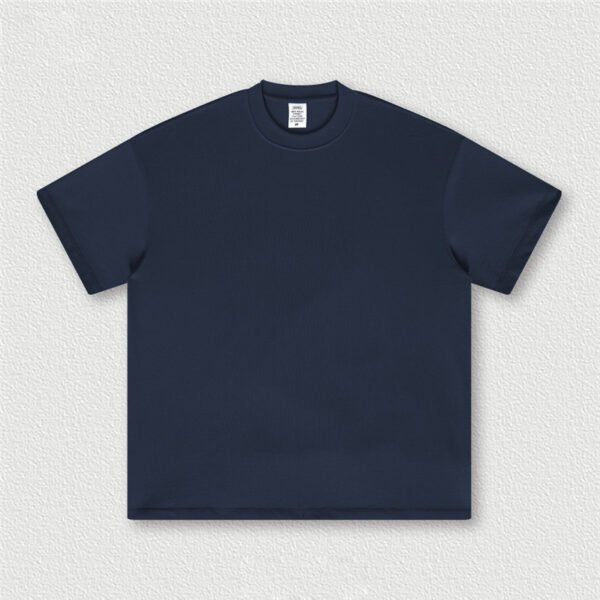


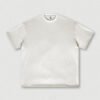
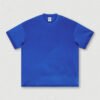


This development record defines a heavy loose-fit T-shirt for graphics that must remain visually aligned as artwork crosses front, back, sleeve, or side panels. The source identifies 305g cotton, while the supplied image confirms a repeated relaxed silhouette and broad color program rather than finished print execution.
Why Panel Registration Controls the Product
All-over graphics are judged where separate pattern pieces meet, not only at the center of a front panel. A relaxed T-shirt amplifies this issue because broad fronts, sleeves, and side seams expose misalignment over a larger visual field.
The supplied image shows a repeated silhouette in many solid colors, with clear uninterrupted bodies and sleeves. That evidence supports a scalable graphic base, but it does not prove print registration; the production brief must therefore treat alignment as a measured approval item.
Pattern Engineering Before Artwork
VeeWen should map artwork against the approved front, back, sleeve, and side pattern pieces before bulk cutting. Registration marks, seam allowances, and print-safe zones can then be coordinated so the design follows construction rather than being placed on a flat rectangle.
The loose silhouette offers usable surface area, yet each additional crossing point increases tolerance risk. Buyers should decide whether the artwork requires exact seam continuity, intentional breaks, or controlled offsets, because each choice changes sampling effort and approval criteria.
Weight, Drape, and Print Behavior
The source wording states 305g cotton, making fabric weight an explicit reference for development. A heavier jersey may provide a stable graphic canvas, but its hand, shrinkage, and dimensional change after finishing still need confirmation before registration tolerances are finalized.
The visual sample shows garments hanging with substantial-looking bodies, but appearance cannot verify composition, knit structure, or finished weight. VeeWen should confirm the fabric reference, test the selected print process on it, and record post-process measurements before approving artwork fidelity.
Colorway Planning for One Graphic System
The image presents navy, white, cream, yellow, red, taupe, blue, green, and black directions on the same apparent silhouette. That range makes color management part of registration planning, since contrast, underbase behavior, and artwork visibility may differ by ground shade.
A single placement may not translate equally across every colorway. The buyer should approve a controlled color matrix showing ground fabric, artwork colors, registration tolerance, and any required print adjustments, while keeping the garment pattern and construction consistent.
VeeWen Workflow Checkpoint
VeeWen can carry this argument into development by locking the base pattern first, then overlaying artwork on production-ready panel files. The critical handoff is a signed placement map connecting each graphic edge to a seam, hem, sleeve opening, or graded reference point.
The next approval should compare a representative sample across key sizes and at least the most contrasting color directions. That review isolates whether registration drift comes from artwork placement, cutting, sewing, or finishing, giving the buyer a practical correction path.
Bulk Approval and Trade-Offs
Exact continuity across seams can create more cutting and sewing sensitivity, while intentional breaks may simplify production and preserve a cleaner tolerance window. Neither option is universally correct; the right decision depends on the graphic's visual hierarchy and commercial price architecture.
Before release, the buyer should approve the final pattern, fabric reference, color matrix, print map, and tolerance language together. The commercial checkpoint is not merely a pleasing sample, but repeatable visual alignment under the agreed MOQ: 100 pieces per style.
Buyer Questions
Is the garment confirmed as all-over printed?
No. The supplied image shows solid-color T-shirts, and the manufacturing axis identifies registration as the development focus rather than verified finished print execution.
What does 305g confirm?
It confirms a weight reference stated in the source wording. It does not verify composition percentage, knit structure, shrinkage, hand feel, or final production tolerance.
Can the graphic cross multiple panels?
Yes, that is the intended development direction, subject to approved artwork maps, seam allowances, graded pattern references, print testing, and buyer sign-off on registration tolerance.
What is the commercial minimum?
The exact commercial minimum is MOQ: 100 pieces per style. Final size ratios, color quantities, artwork versions, and approved specifications should be confirmed before production release.
Approve the Registration Development Brief
Send the artwork, target size range, color matrix, and preferred print direction to VeeWen for a panel map, representative sample, and approval checkpoint before bulk production.



Reviews
There are no reviews yet.