


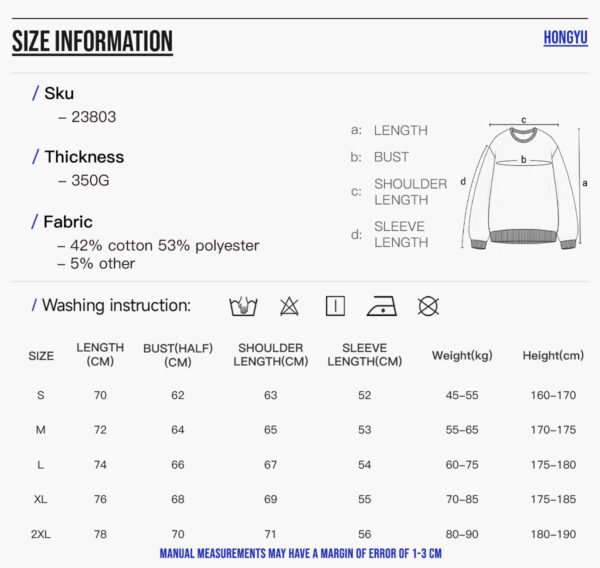


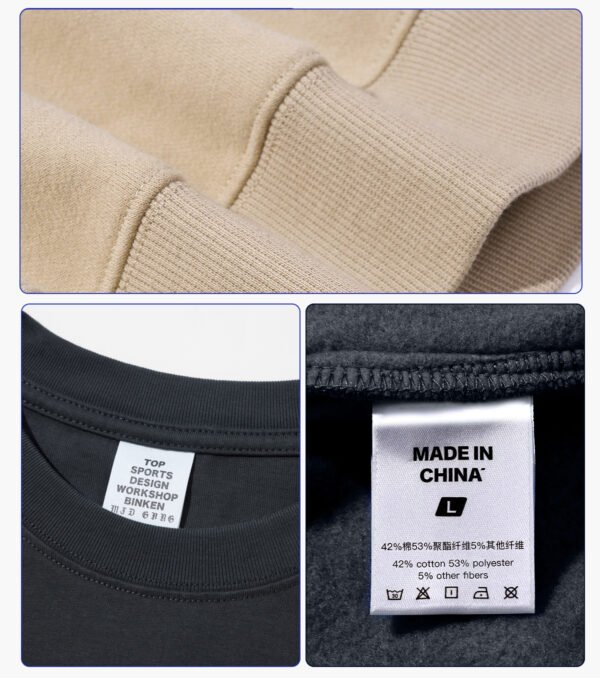
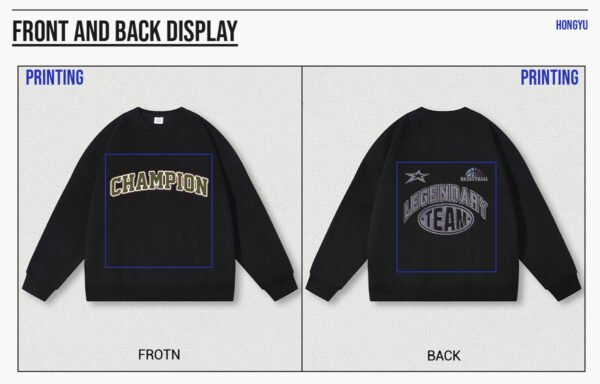


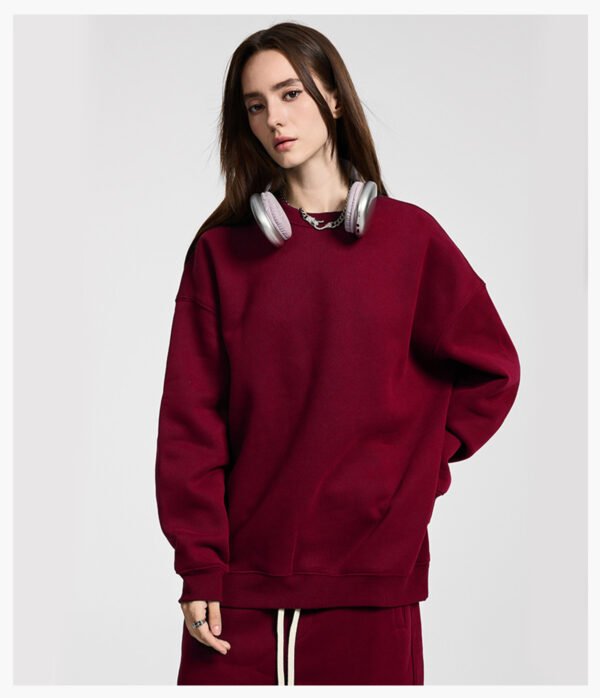


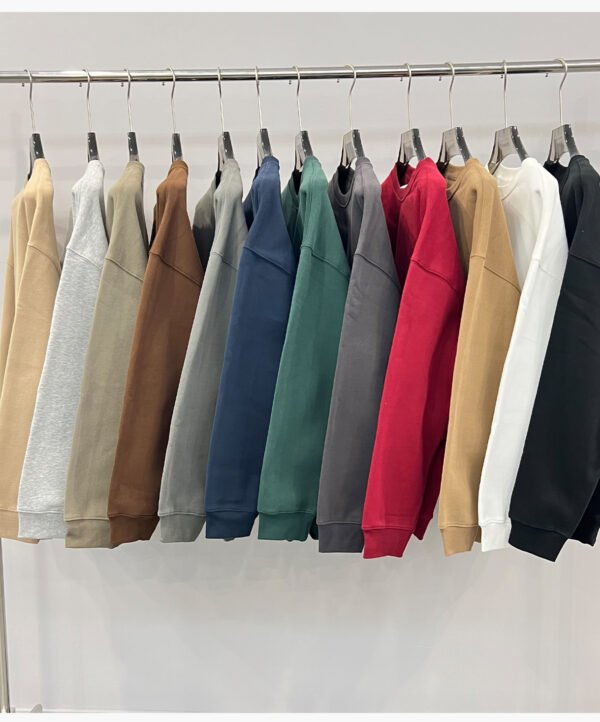




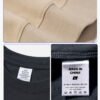




This sweatshirt program treats binding width and stretch control as the central fit variable. The supplied image identifies 350G thickness and shows an oversized crewneck across diverse colors and wearers, so neck, cuff, and waistband behavior must be approved against the heavier body and broader silhouette.
Binding Controls the Oversized Silhouette
On an oversized sweatshirt, binding defines the points where a large fleece body meets the wearer. Correct width and stretch allow the neck, cuffs, and waistband to settle cleanly; excessive compression can fight the relaxed fit, while insufficient recovery makes openings look tired.
The supplied image shows defined crewneck, sleeve, and lower-body edges despite substantial volume. Development should therefore record binding width, relaxed circumference, extension force, and return measurement at each opening, keeping the oversized proportion intentional rather than accidentally loose.
350G Fleece Creates a Heavier Edge Load
The image explicitly presents 350G thickness, which indicates a substantial fleece reference for development. A heavier body can pull against neckline and cuff bindings during wear, while thicker seam stacks may affect comfort, bulk, and the visual balance of the oversized crewneck.
VeeWen should evaluate binding and fleece as one construction system through swatch, first sample, and washed sample review. Composition, GSM tolerance, brushing, shrinkage, and dimensional change are not established by the image and must remain To Confirm.
Crewneck Opening and Wear Comfort
The crewneck opening must recover enough to preserve a stable collar without feeling difficult to pull over the head. A narrow binding can sharpen the edge but concentrate pressure; a wider binding can distribute contact while changing the neckline's visual scale.
During fitting, compare the opening on different body types and record stretch behavior at the shoulder seam. Buyer approval should address entry comfort, collar lay, rebound after wear, and whether the binding supports the intended oversized proportion after laundering.
Cuff and Waistband Coordination
Cuffs and waistband visually anchor a large sweatshirt, so their binding cannot be developed independently from the body width and sleeve volume. The image shows broad silhouettes ending in defined lower edges, making proportion and recovery visibly linked.
VeeWen's sample review should pair body measurements with cuff and waistband standards. Check relaxed width, extension, return, seam waviness, and stacking at the hem, then repeat across selected colors because dye and finishing variables may alter the appearance.
Color Range as a Construction Test
The supplied visual presents navy, white, olive, gray, burgundy, pink, black, green, brown, and cream directions. This range makes binding control a cross-color issue, since contrast between body and edge can reveal width, tension, or shrinkage differences.
Approve the palette through coordinated body-and-binding submissions rather than isolated color chips. The buyer checkpoint should confirm collar definition, cuff rebound, waistband lay, shade consistency, and acceptable surface variation before locking the production-ready color assortment.
VeeWen Workflow and Final Trade-Off
VeeWen can convert this argument into an opening-control sheet covering binding width, relaxed measurement, extension limit, rebound, and post-wash appearance. That sheet gives pattern, sewing, and finishing decisions a shared reference tied directly to the oversized fleece silhouette.
Firmer binding may improve stability but reduce comfort, while softer binding may feel easier but lose definition under the heavier body. Final approval should choose the lowest tension that maintains the silhouette, with unresolved performance and composition details marked To Confirm.
Buyer Questions
Which openings require separate approval?
Approve the crewneck, cuffs, and waistband separately because each experiences different loads, movement patterns, and comfort expectations within the oversized fleece construction.
Is 350GSM a confirmed fabric specification?
The supplied image explicitly shows 350G, so it is treated as source evidence; composition, tolerance, finishing, and final tested weight remain To Confirm.
How should binding width be selected?
Compare several widths on the same pattern, then assess entry comfort, rebound, collar lay, cuff stability, waistband appearance, and post-wash behavior before selecting one.
What is the commercial minimum?
The exact commercial minimum is MOQ: 100 pieces per style. Buyers should confirm size grading, color allocation, and final quantity within the approved production brief.
Approve Binding and Stretch Control
Share your target oversized measurements, color assortment, wear expectations, and laundering routine with VeeWen. We can build the opening-control sample and proceed toward MOQ: 100 pieces per style after approval.


Reviews
There are no reviews yet.