


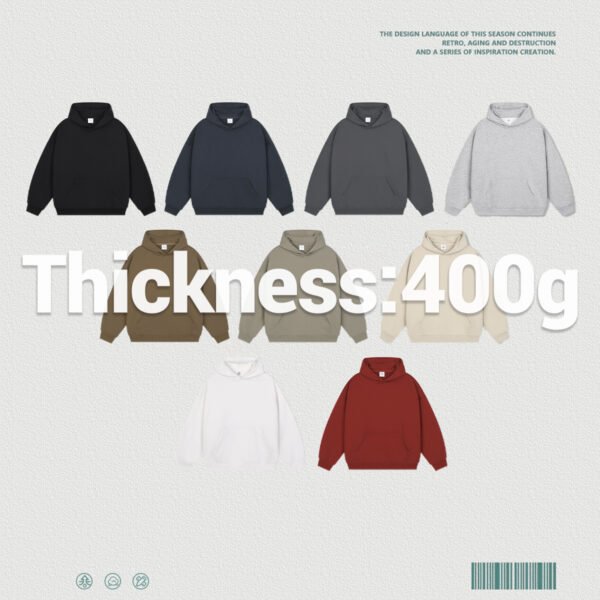
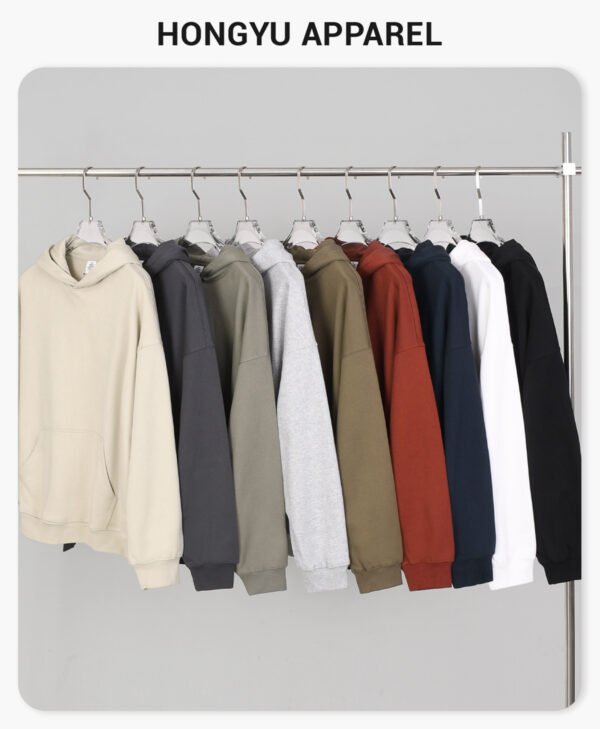

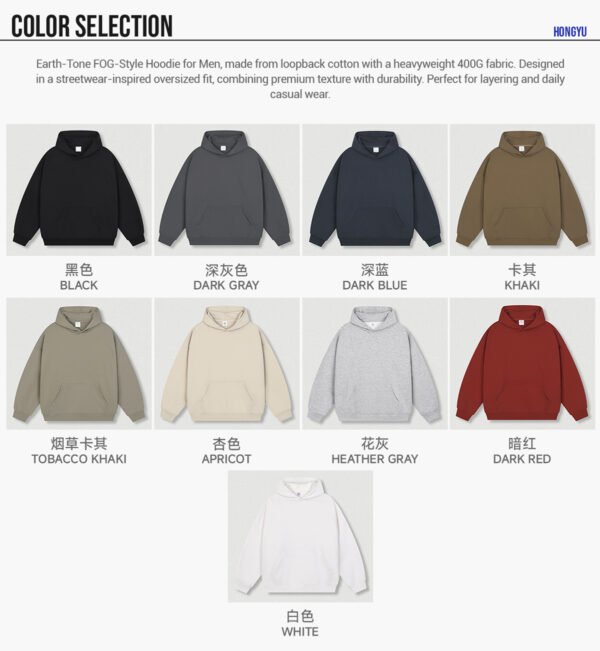

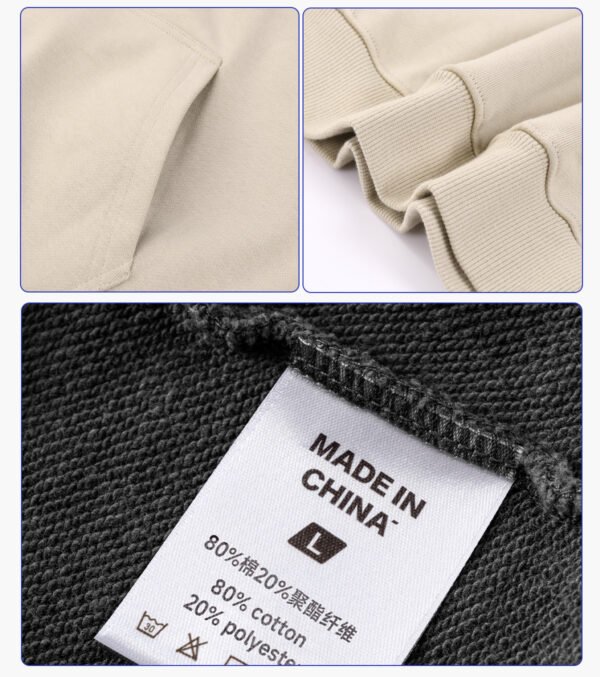








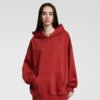

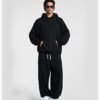
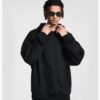
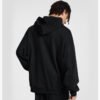
This oversized terry pullover should be approved through dimensional recovery, not appearance alone. The source explicitly states 400gsm, while the image shows relaxed proportions across several colors and bodies. Washing, finishing, and handling can shift those measurements, so the buyer needs post-process checkpoints before locking production.
Why Recovery Controls Matter
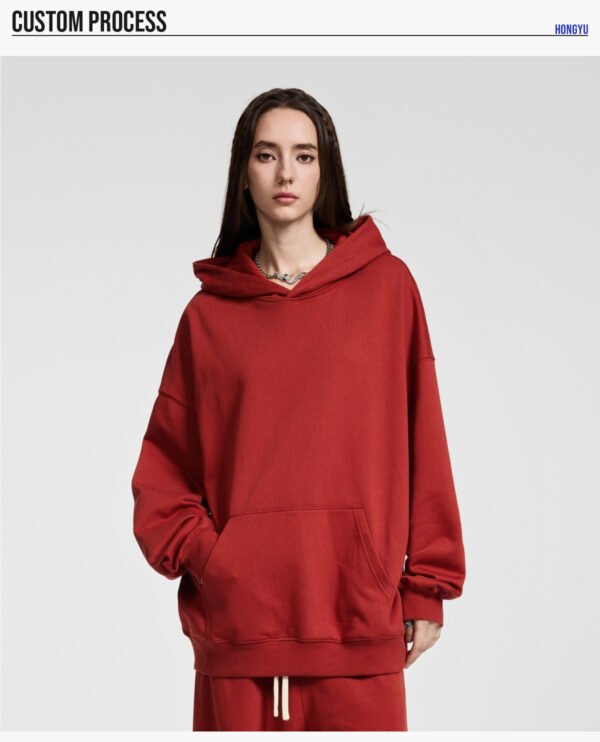
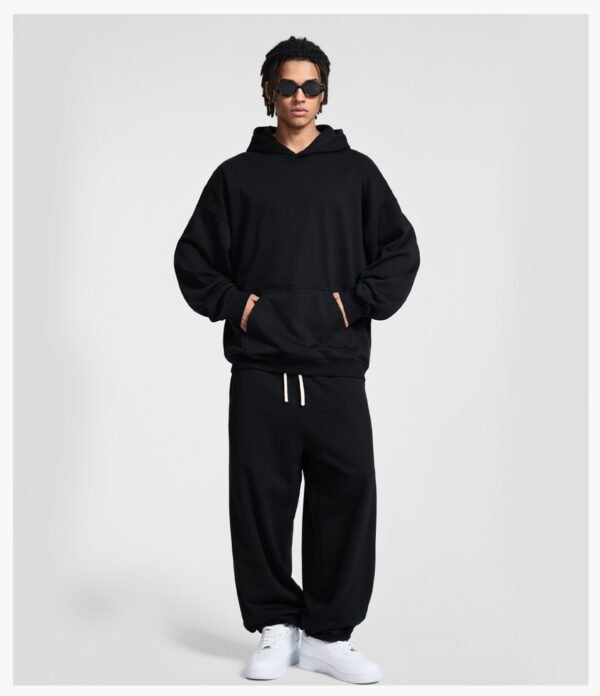
An oversized hoodie is defined by proportion, not simply by adding width to a standard block. The image shows generous bodies, relaxed sleeves, and substantial layering space, while post-process washing or finishing may reduce length, width, or opening dimensions unevenly.
The source confirms 400gsm terry, but it does not verify shrinkage behavior or final measurements. VeeWen should establish a pre-process measurement chart, process the sample through the intended finishing route, and compare recovered measurements against the buyer-approved silhouette.
400gsm Changes the Measurement Risk
Heavier terry carries more material through the body, hood, cuffs, and hem, so dimensional movement can affect drape and balance across multiple panels. A small length change may alter pocket position, rib exposure, sleeve proportion, and the visual relationship between hood and shoulder.
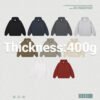
The supplied image visibly calls out 400g thickness and shows a dense-looking sweatshirt presentation, but visual density cannot prove post-process stability. VeeWen should keep the source weight as a reference while confirming actual fabric behavior through approved process sampling.
Protecting the Oversized Block
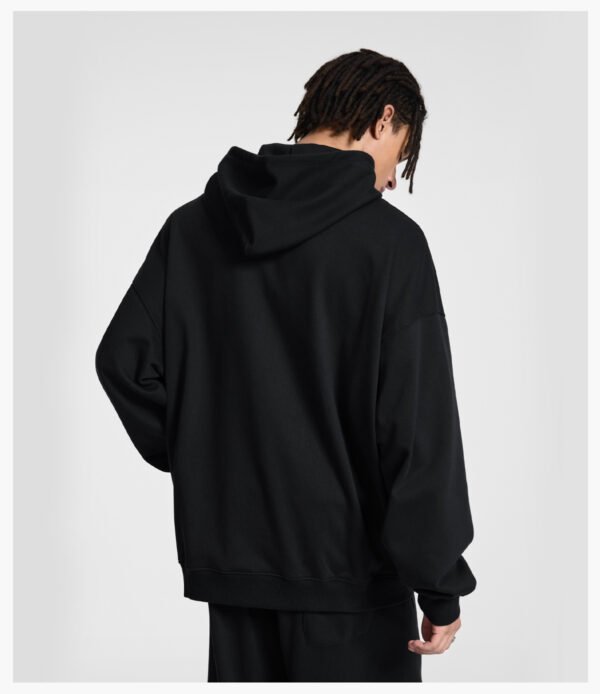
The models demonstrate a deliberately relaxed block across masculine and feminine presentations, making recovery important for inclusive size grading. Body width, garment length, shoulder span, sleeve length, hood opening, and rib dimensions must return to the intended relationship after processing.
A sample that looks oversized before finishing may become merely regular afterward if length or width contracts. VeeWen should measure the complete sample before and after the defined process, then revise the pattern or allowances where recovery misses the approved proportion.
Details That Expose Movement
Kangaroo pocket height, cuff width, hem rib height, and drawcord position provide practical visual indicators of dimensional change. If the body recovers differently from the rib or pocket panel, the hoodie can look distorted even when its headline measurements appear acceptable.
The image clearly shows front pockets, hood cords, and ribbed edges across several colorways, but construction specifications remain unverified. VeeWen should inspect these interfaces after processing, confirming that openings, attachments, and visual alignment remain consistent with the approved sample.
VeeWen Development Checkpoint
VeeWen's workflow should translate the visual reference into a recovery matrix covering each size and critical component. The buyer should approve the unprocessed block first, identify the intended finishing route, and require a measured post-process sample before grading or bulk cutting proceeds.
This checkpoint is specific to the hoodie's weight and silhouette: the team compares body, sleeve, hood, cuff, hem, and pocket measurements after processing. Once the recovery window is accepted, VeeWen can release the style for MOQ: 100 pieces per style.
Buyer Approval Decision
The buyer should judge this style by its recovered silhouette across colors and sizes, rather than approving a single attractive pre-process photograph. Color variation can change perception, but the dimensional relationship must remain stable enough to preserve the same oversized design intent.
Final approval should record the 400gsm source reference, confirmed fiber details, process route, measurement tolerances, and accepted post-process chart. If those points are unresolved, the hoodie remains a development sample rather than a production-ready style for commercial ordering.
Buyer Questions
Why is post-process measurement recovery important?
Washing and finishing can alter length, width, ribs, pocket placement, and hood proportions, so the approved oversized silhouette must be measured again after processing.
Is 400gsm verified for this hoodie?
Yes, 400gsm is stated in the supplied source wording and image overlay; fiber composition and post-process performance are not verified by the evidence.
Which measurements need review?
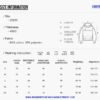
Review body width and length, sleeve length, shoulder span, hood opening, cuff and hem dimensions, pocket placement, and graded-size relationships after finishing.
What is the commercial minimum?
The applicable commercial minimum is MOQ: 100 pieces per style, subject to confirmed material, measurement recovery, finishing, grading, and final sample approval.
Approve the Recovered Oversized Silhouette
Share your size chart and intended finishing route with VeeWen. We will structure approval around pre-process measurements, post-process recovery, 400gsm terry confirmation, construction details, and MOQ: 100 pieces per style.


Reviews
There are no reviews yet.