
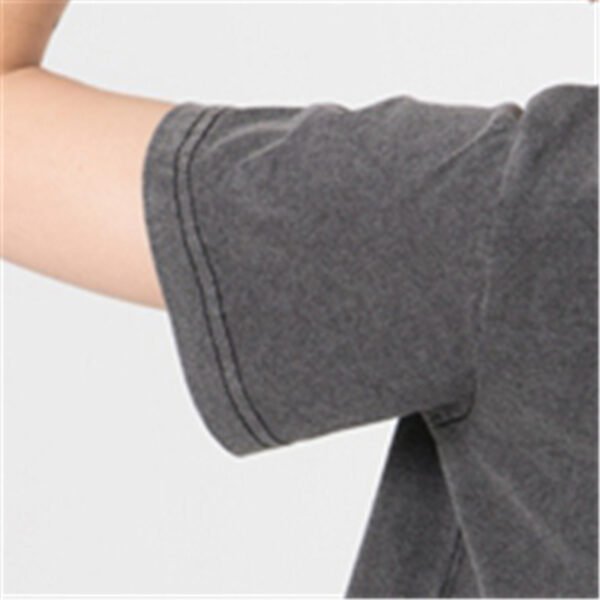
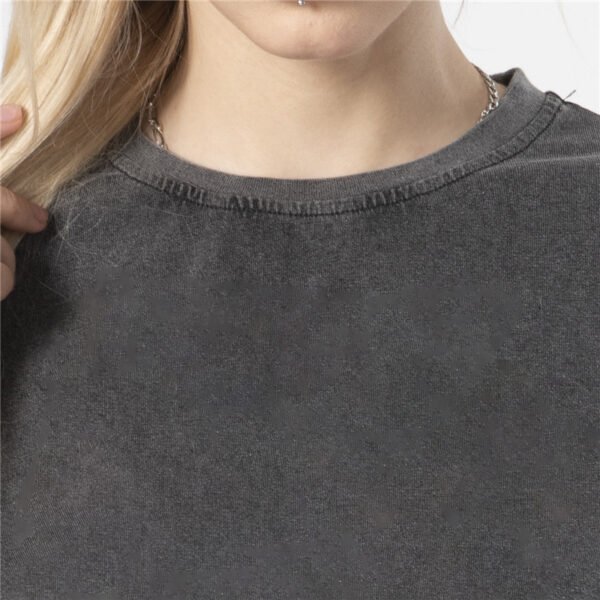
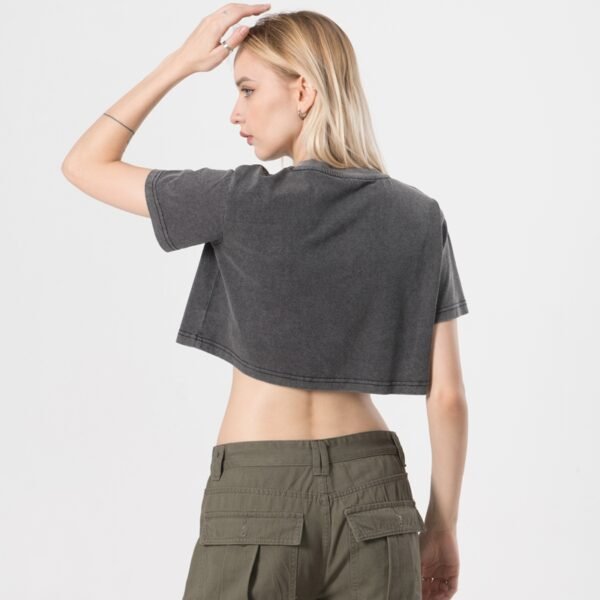
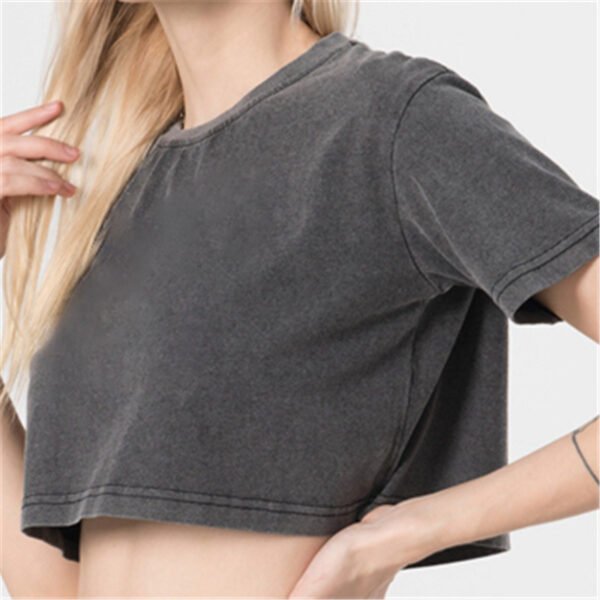

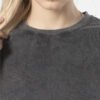
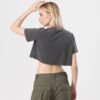

This custom acid-wash cropped T-shirt is built around pocket position and load reinforcement. The supplied close-up shows a compact grey wash surface and clean parallel sleeve-edge stitching, while the cropped proportion leaves limited room for functional detailing. Pocket approval must protect both utility and line.
Why Cropping Magnifies Pocket Errors
A cropped T-shirt has less vertical body length, so a pocket placed only slightly too low can visually lengthen one panel and upset the hem relationship. A pocket positioned too high may crowd the neckline or appear decorative rather than functional.
The source wording establishes the cropped direction, while the supplied close-up does not show the pocket itself. That absence makes the pocket a deliberate development checkpoint: its coordinates must be set from the full pattern, not estimated from a partial image.
Positioning the Pocket on the Front
Pocket placement should be referenced from stable pattern landmarks such as the center front, armhole, neckline, and hem, rather than from wash marks. On a cropped body, these distances should be reviewed proportionally so the pocket remains balanced after grading.
The buyer should approve both nominal coordinates and visual tolerance. Even a technically acceptable shift can change the garment's character when the body is short. VeeWen can record the approved placement as a measurement table and visual overlay for sample comparison.
Reinforcement Must Preserve the Shape
A pocket adds weight and repeated pulling to a relatively small front panel. Reinforcement should spread that stress through suitable seam construction or backing, while avoiding a stiff patch that creates a visible rectangle, puckering, or an unwanted change in drape.
The correct solution depends on the pocket opening, fabric behavior, and intended contents. Because those details are not supplied, the development sample should compare reinforcement options under realistic hand loading, then document the chosen method and its acceptable appearance.
What the Sleeve Close-Up Adds
The supplied close-up shows a grey acid-wash surface and two parallel lines around a rounded sleeve opening. Those details indicate that seam appearance and wash interaction matter to the product language, even though they do not prove the pocket construction or full garment proportions.
A pocket reinforcement detail should therefore harmonize with the visible seam scale rather than becoming visually heavier. Reviewers should check stitch density, edge neatness, and puckering after washing, because contrast between pocket and sleeve finishing can make the cropped style feel unbalanced.
How VeeWen Develops This T-Shirt
VeeWen's product-development workflow should translate the cropped pattern into a pocket map first, defining center-front alignment, vertical height, opening dimensions, and reinforcement zones. The close-up can guide seam presentation and wash review, while the unseen pocket requires a complete technical drawing.
During sampling, the buyer should inspect the pocket on the body and under light load before approving grading. For MOQ: 100 pieces per style, this sequence links functional reinforcement to the exact cropped proportions, reducing the risk of solving utility at the expense of appearance.
Buyer Checkpoint Before Production
Approve the style when the pocket sits intentionally within the cropped front, remains aligned after handling, and does not pull the hem or distort the surrounding panel. Confirm the opening, dimensions, reinforcement, stitch appearance, and acceptable post-wash puckering threshold.
The final approval should distinguish visible acid-wash variation from construction defects. If pocket loading changes the silhouette, revise the reinforcement or placement before production. Once the technical package is signed, the commercial minimum is MOQ: 100 pieces per style.
Buyer Questions
Is the pocket visible in the supplied main image?
No. The supplied close-up shows the sleeve area, so pocket placement and reinforcement must be established from the complete pattern and approved fit sample.
Why is pocket placement important on a cropped T-shirt?
The shorter body leaves less vertical space, making small coordinate changes more noticeable. Placement affects front balance, hem perception, neckline spacing, and overall proportion.
How should reinforcement be approved?
Review the pocket under realistic hand loading, then inspect drape, puckering, stitch appearance, and recovery. Approve the method only after it supports use without distorting the front panel.
What is the commercial minimum?
The exact commercial minimum is MOQ: 100 pieces per style. The approved style includes pocket specifications, reinforcement, wash standard, measurements, and grading instructions.
Approve Pocket Function and Proportion
Share your pocket dimensions, intended use, and crop measurements with VeeWen for focused development. Approve placement, reinforcement, seam appearance, and wash tolerance before releasing MOQ: 100 pieces per style.


Reviews
There are no reviews yet.