


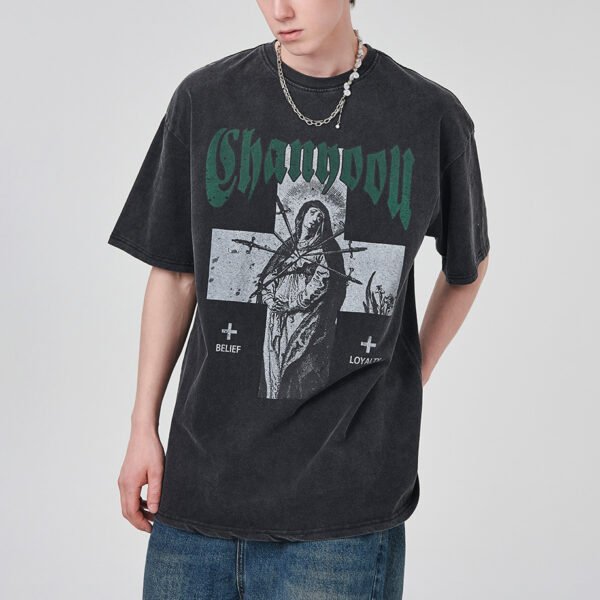


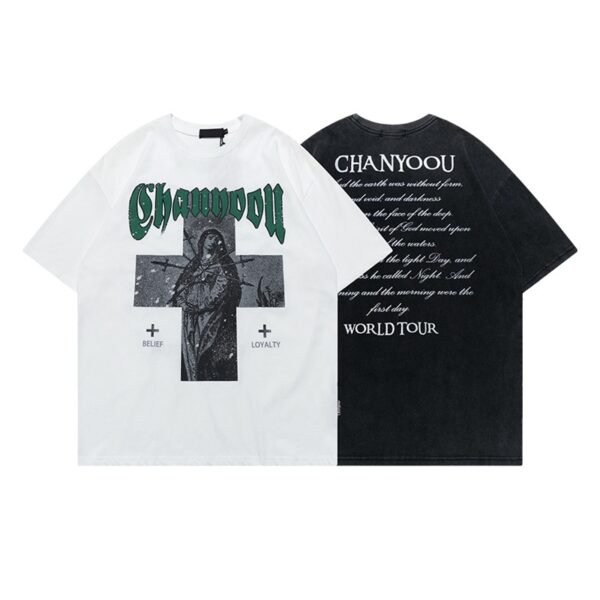

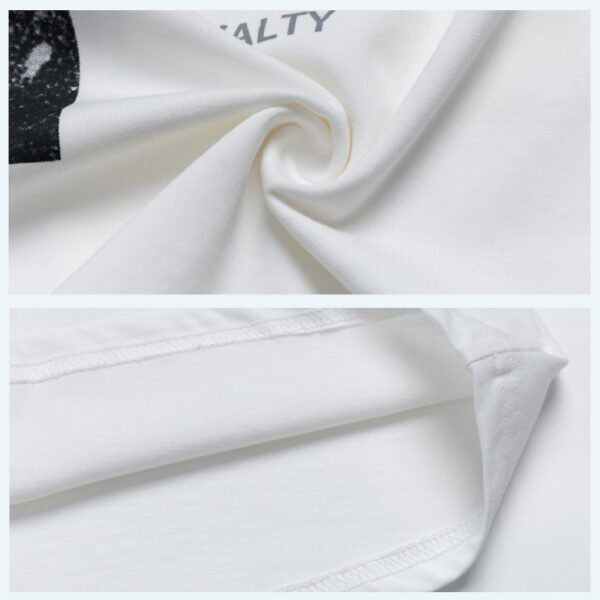
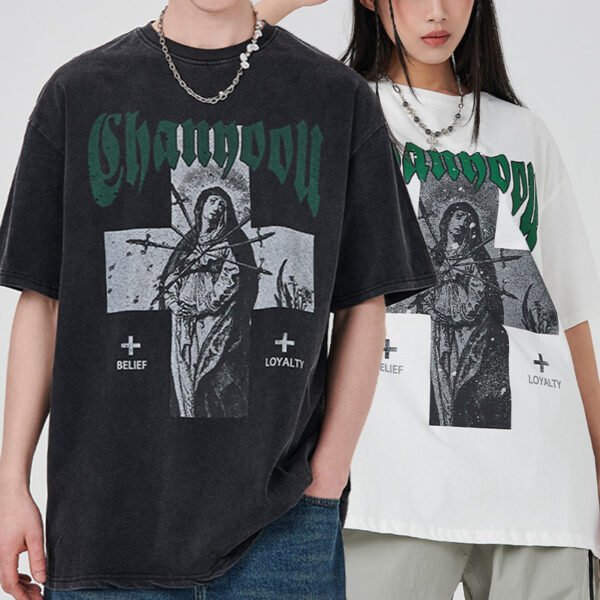
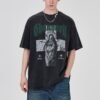

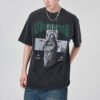

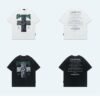
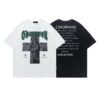


This custom acid wash graphic T-shirt is developed around a specific tension: the relaxed body should look lived-in, while its neckline and shoulder edges must remain controlled. The visible rib crew neck, dropped shoulder line, charcoal wash, and oversized cross artwork define the approval brief.
1. Edge Stability Begins at the Neckline
The image makes the crew neckline a primary control point: a broad rib edge frames the graphic and remains highly visible. Interlining should support the neck seam or shoulder join selectively, preventing waviness while preserving the soft, casual opening expected from this silhouette.
Too much support would flatten the collar and create a stiff contrast against the washed body. The development target is a measured stabilizer, potentially combined with seam tape or controlled stitch density, confirmed through laundering and recovery checks on the actual chosen jersey.
2. Dropped Shoulders Need Controlled Reinforcement
The shoulder seam sits beyond the wearer's natural shoulder, so its exposed length can stretch, twist, or lose symmetry during cutting, sewing, washing, and packing. A narrow reinforcement zone can protect the seam without turning the relaxed shoulder line into a structured sleeve cap.
The supplied image shows the sleeves falling broadly from the shoulder, making balance more important than sharp tailoring. VeeWen's development review should compare unsupported, taped, and lightly interlined samples, then approve the option that keeps both shoulders visually level after wash testing.
3. Wash Character Must Not Become Edge Distortion
The charcoal fabric has visibly varied tonal depth rather than a flat solid appearance. That finish creates the desired vintage impression, but chemical or mechanical treatment can expose differences in shrinkage between body, rib, seam allowances, and stabilizing materials.
The technical brief should therefore pair the wash recipe with edge construction decisions. Development samples need matching neckline rib and body panels, allowing the team to observe whether the collar contracts, the shoulder rolls, or the hem changes proportion after the planned finish.
4. Graphic Scale Raises Stability Demands
The large centered artwork occupies much of the chest, combining upper lettering, a pale cross image, and smaller side messages. Such a strong print zone can emphasize fabric rippling, registration drift, or local distortion when the shirt is laid flat or worn.
VeeWen should validate artwork placement against the stabilized pattern before bulk approval. The buyer should review the graphic on washed fabric, not only greige jersey, because surface variation and edge movement directly affect perceived alignment and the product's vintage credibility.
5. VeeWen Workflow for This Construction
VeeWen's product-development workflow should begin with a measurement-controlled base pattern, rib specification, and stabilization map identifying neckline, shoulder, and any graphic-sensitive zones. The first sample should document the proposed interlining choice, application width, stitch method, and wash sequence for direct buyer review.
The next checkpoint is a paired construction and laundering comparison using the same artwork and finish. Instead of treating edge support as a hidden factory detail, the team can link each visible change to a construction variable, making approval decisions easier to reproduce across colorways.
6. Buyer Approval Checkpoint
Approval should focus on three visible outcomes: the collar must sit evenly, both dropped shoulders must retain their intended fall, and the graphic must remain centered without making the body appear stiff. These criteria connect technical stability to the commercial look shown in the supplied image.
The buyer should sign off only after confirming the approved jersey, rib, stabilizer, wash intensity, and artwork scale as one coordinated package. If softer hand feel conflicts with edge recovery, the decision is whether to adjust support or revise the silhouette before production.
Buyer Questions
Why is interlining relevant to a relaxed T-shirt?
Even casual jersey benefits from localized support where neckline and shoulder edges experience repeated stretching, laundering, handling, and graphic-related visual scrutiny.
Will stabilization make the shirt feel rigid?
It can if applied broadly or too heavily. The correct development approach compares localized support options and evaluates hand feel, drape, recovery, and wash appearance together.
What should the buyer inspect on the first sample?
Inspect collar symmetry, shoulder fall, graphic centering, rib recovery, surface variation, and post-wash proportions before approving the construction package.
Is the cotton composition confirmed?
No. Cotton is present in the source wording, but the exact fiber composition, fabric weight, and finishing details require supplier documentation or sample verification.
Approve the Edge-Stability Direction
Send your target measurements, artwork, and wash reference to VeeWen for a construction review focused on neckline recovery, shoulder balance, graphic alignment, and the final relaxed hand feel.



Reviews
There are no reviews yet.