
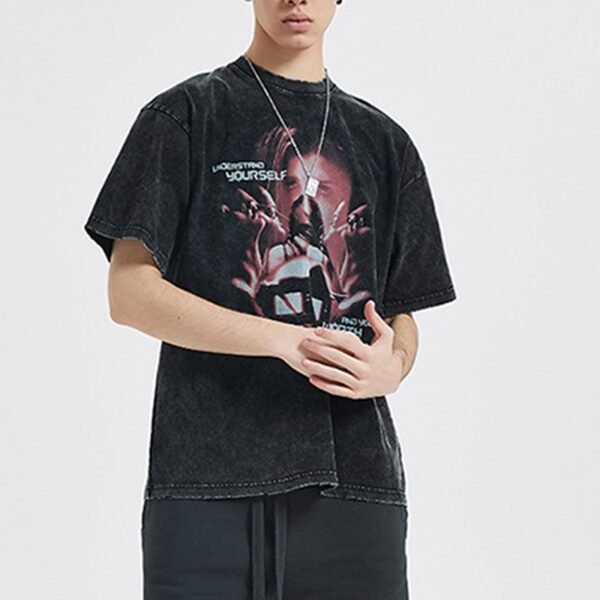
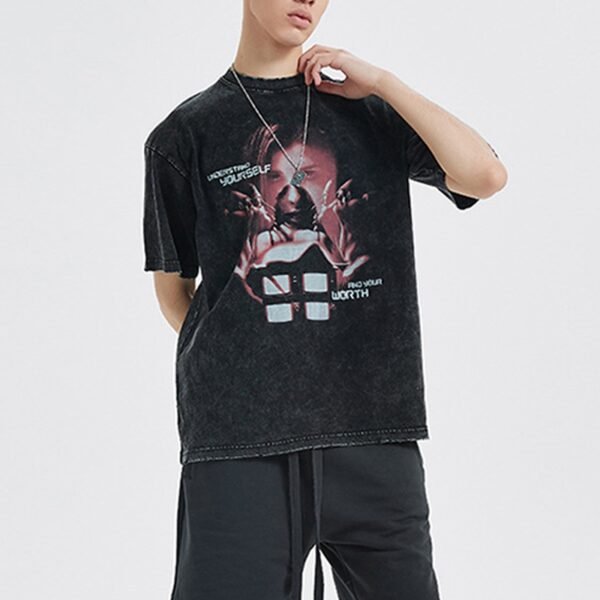
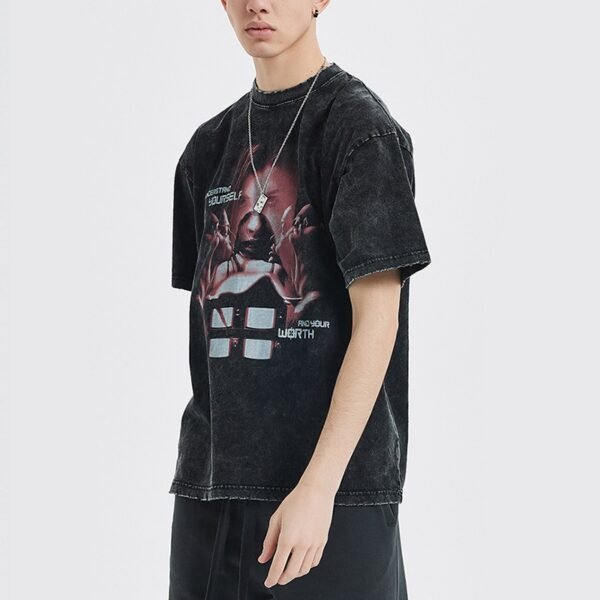
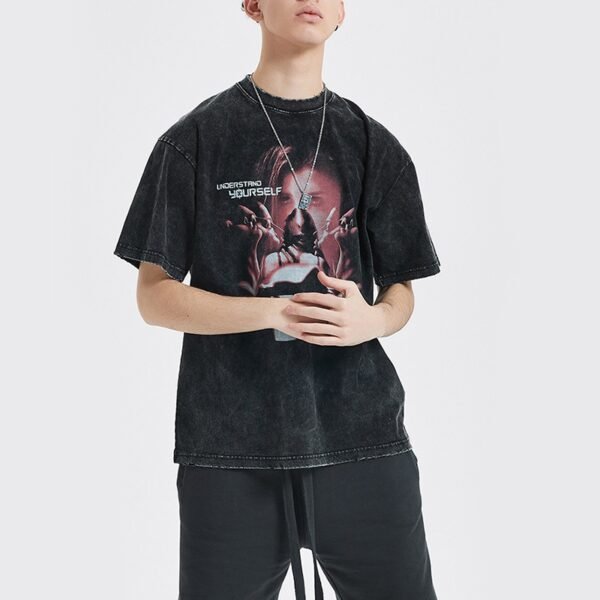







This custom acid-wash T-shirt is developed around how fabric direction affects a large front graphic after washing and movement. The dark mottled surface, oversized proportions, and broad artwork field make grain control, stretch mapping, and post-wash placement the critical decisions for a stable commercial result.
Stretch Direction Determines Graphic Stability
The front graphic occupies much of the torso, so even modest crosswise or lengthwise growth can alter its proportions. On an oversized body, the available surface is generous, but inconsistent stretch direction may pull lettering, faces, or borders away from the approved artwork geometry.
VeeWen should first map the fabric's lengthwise and crosswise behavior before locking the pattern and print file. The development sample should record relaxation, extension, and recovery observations, allowing the buyer to approve a direction that supports both comfort and repeatable artwork alignment.
Acid-Wash Variation Changes the Visual Ground
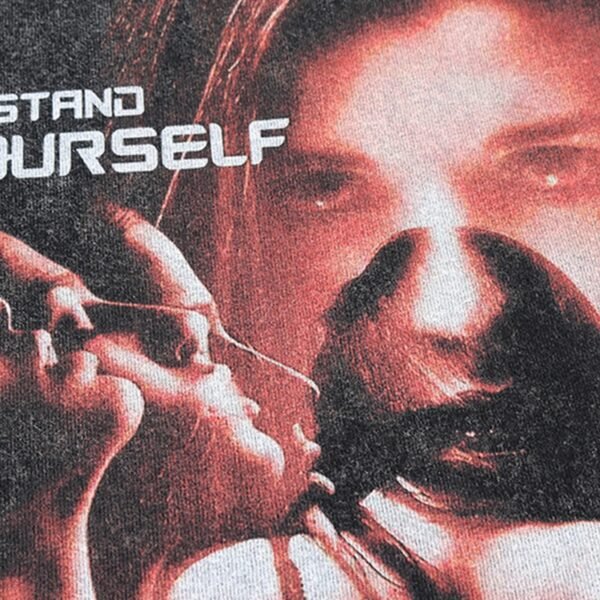
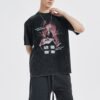
The image shows mottled charcoal coloration rather than a flat, uniform field. That variation becomes part of the graphic decision because lighter and darker areas can either frame the artwork attractively or reduce contrast around important printed details.
Wash development should therefore review color placement and graphic readability together. A buyer may accept natural tonal irregularity, but the approval must define acceptable overall character, visible contrast, and any areas where wash concentration could obscure or overpower the front design.
Pattern Grain and Artwork Coordinates Must Agree
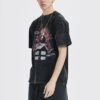
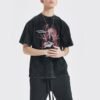
An oversized cut can appear forgiving, yet its dropped shoulder and wide body make vertical and horizontal reference lines especially visible. If the pattern shifts relative to the fabric grain, the graphic may sit unevenly even when the printed file is technically centered.
The pattern should carry fixed chest, shoulder, center-front, and hem coordinates before cutting. VeeWen can then compare the artwork position against those coordinates on the unwashed sample and again after washing, separating pattern drift from fabric relaxation or finishing variation.
Large Artwork Magnifies Small Fit Changes
The supplied image presents a bold central artwork field that visually anchors the entire front. When a graphic occupies that much area, small changes in body width, shoulder slope, or hem length can change perceived placement more strongly than they would on a minimal chest print.
Fit approval should include the garment worn naturally and viewed from the front. If the artwork appears low after relaxation, the buyer can adjust its vertical origin; if it looks compressed across the chest, fabric direction or print scale may require revision before grading.
Trade-Offs Between Comfort and Registration
More stretch can improve ease through the shoulders and torso, but it may increase graphic distortion and complicate consistent sizing. Lower stretch can protect registration while making the oversized garment feel rigid, particularly when the pattern relies on dropped shoulders and broad sleeves.
The correct decision depends on the collection's priority: expressive surface stability, relaxed movement, or a measured balance. VeeWen should document the selected fabric direction, artwork tolerance, and wash appearance so production review evaluates the style against one agreed visual standard.
VeeWen Workflow Builds a Washed Reference Standard
VeeWen's development process should connect fabric selection, grain marking, pattern coordinates, print placement, and wash review in one controlled sequence. This style needs that sequence because the surface treatment and graphic cannot be judged independently from stretch behavior.
Once the washed sample is approved, the final package should preserve the accepted artwork origin, grain orientation, body measurements, and finish appearance. The buyer's checkpoint is a signed reference sample that defines how much tonal variation and placement movement remain commercially acceptable.
Buyer Questions
Why test fabric direction before approving the artwork?
Stretch can change graphic proportions and position. Mapping lengthwise and crosswise behavior helps VeeWen set artwork coordinates that remain stable after movement and washing.
Does acid washing always create the same tonal pattern?
No. Surface variation can differ with fabric, garment placement, and finishing conditions. Define the acceptable visual range through an approved washed reference sample.
Should artwork be centered before or after washing?
Center it on the approved unwashed pattern coordinates, then verify post-wash position and distortion. Any correction should address the actual source of movement.
What is the minimum order for this development?
The commercial minimum is MOQ: 100 pieces per style. Final quantities, color assortment, and production details should be confirmed during order review.
Approve the Stretch and Wash Reference
Share the artwork, target measurements, and desired wash character with VeeWen. We will coordinate grain direction, graphic placement, and washed-sample review before production approval.


Reviews
There are no reviews yet.