
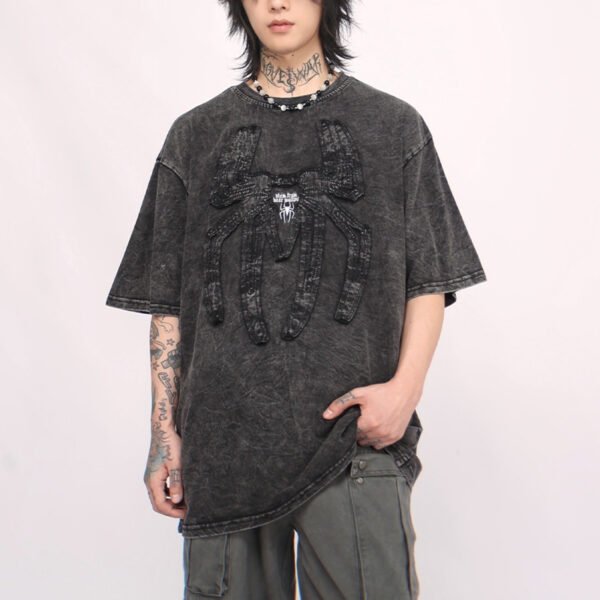
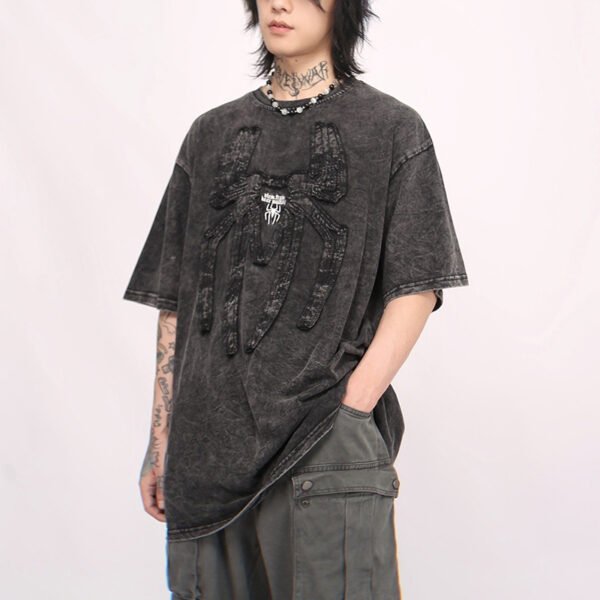
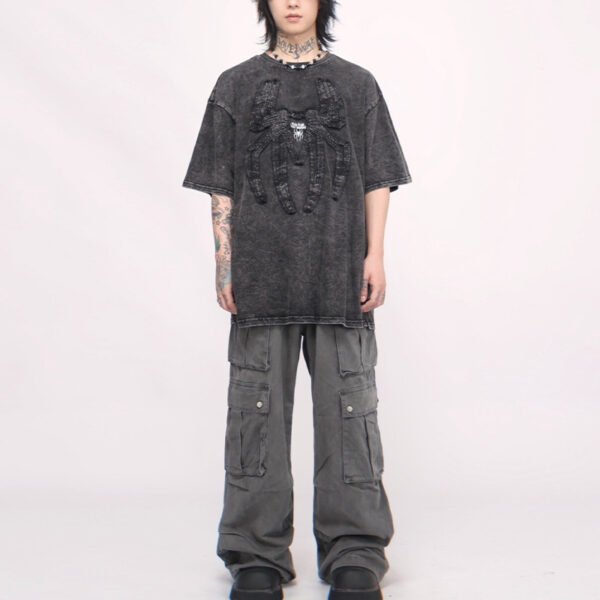
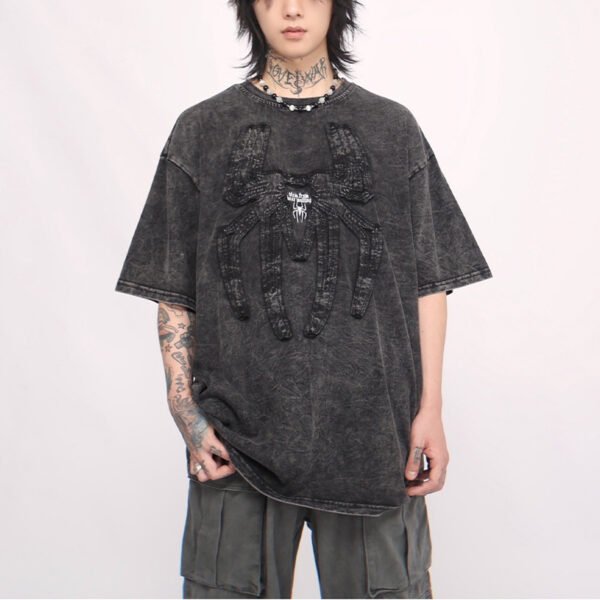
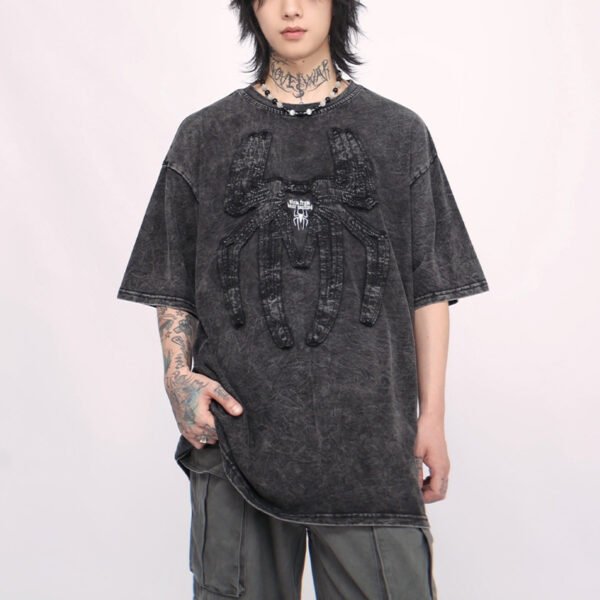
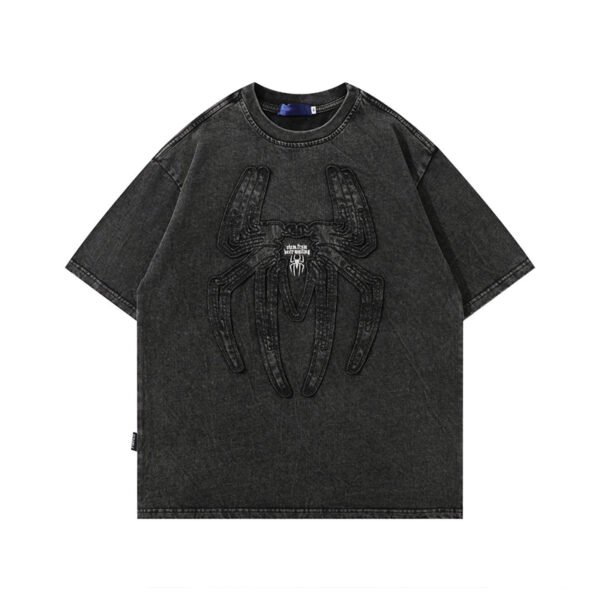


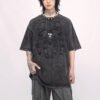
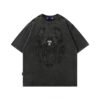
This custom oversized T-shirt is built around artwork repeatability rather than decoration alone. The supplied image shows a large tonal spider embroidery on a washed charcoal body, so scale, stitch density, and wash response must be approved as one connected production decision.
Scale Is the Primary Artwork Decision
A motif covering much of the chest changes how a T-shirt hangs, folds, and feels. Its bounding box should be measured against chest width, shoulder slope, and hem position. Scaling by height alone can make the legs crowd seams or lose the intended centre of gravity.
The supplied image shows the spider extending broadly across the front, with several legs reaching toward the lower chest. That visible proportion is the starting reference; the final embroidery file should define artwork limits, centre placement, and clearance from neckline and armhole seams.
Stitch Structure Affects Repeatability
A complex motif combines large filled areas, narrow legs, layered body sections, and a small central detail. Each element responds differently to thread direction and stabilisation. The production file should separate these zones so operators can reproduce edges, overlaps, and fine details consistently.
The image visibly includes broad dark limbs beside a compact centre and tiny lettering-like marks. This contrast makes density control important: overfilled areas may stiffen the shirt, while under-supported narrow sections may lose definition after handling or washing.
Acid-Wash Variation Changes Perception
Garment washing creates a surface with tonal movement, so identical thread colours can appear more or less contrasted depending on the panel underneath. Development should evaluate embroidery on the washed body, not only on an unwashed fabric cutting, because the finish influences perceived scale and sharpness.
The supplied garment appears charcoal with lighter abrasion-like variation across the front and sleeves. That evidence supports a controlled wash reference, but it does not establish a fixed recipe. The buyer should define acceptable shade range, placement variation, and artwork contrast before approval.
The Oversized Base Needs Balance
A relaxed body gives large embroidery room to breathe, but it also introduces more movement and folding beneath the motif. Shoulder width, sleeve opening, body length, and chest ease should be reviewed together. An oversized silhouette can magnify even small placement differences between sizes.
The image shows dropped shoulders, broad short sleeves, and a long, loose body. These visual cues support an oversized development direction, while the exact measurements remain open. Artwork should be graded or repositioned deliberately rather than enlarged mechanically with the garment.
VeeWen Development Checkpoint
VeeWen can focus the development workflow on a paired artwork-and-wash review: freeze the approved motif box, prepare the embroidery file, apply the chosen wash reference, and inspect the decorated sample for density, distortion, contrast, and placement before confirming the size-set direction.
This sequence connects the manufacturing axis to a real approval gate. The buyer confirms whether the motif remains legible and proportionate after the surface finish, then records the accepted file version, placement landmarks, stitch decisions, and wash tolerance for production communication.
Trade-Offs Before Production Approval
More stitch coverage can strengthen a bold tonal effect but may increase stiffness, puckering, or weight across the chest. A lighter file can improve drape while reducing visual depth. Wash intensity can heighten character but also widen shade variation, so the commercial priority must be explicit.
Before production, approve the embroidery boundary, thread appearance, backing approach, wash sample, and size grading logic. The decision should weigh hand feel against graphic impact, especially where the spider's long legs cross areas that flex, fold, or receive repeated abrasion.
Buyer Questions
Is the T-shirt definitely heavyweight cotton?
The source wording identifies heavyweight construction, but the supplied evidence does not verify fibre content or GSM. Confirm composition, weight, and finished hand feel through material approval before sampling.
Should embroidery be applied before washing?
The sequence requires development testing because washing can alter shade, puckering, and perceived contrast. Approve a decorated wash sample using the intended construction sequence before production confirmation.
Can the spider motif be resized?
Yes, artwork scale can be adjusted, but preserve seam clearances and the intended chest proportion. Review the bounding box separately across sizes instead of applying automatic proportional enlargement.
What is the minimum order?
The commercial minimum is MOQ: 100 pieces per style. Confirm size ratios, colour quantities, embroidery file approval, packaging, and wash requirements before order acceptance.
Approve the Embroidery-and-Wash Direction
Share the target measurements, artwork file, thread preference, and wash reference so VeeWen can review motif scale, stitch behaviour, tonal contrast, and production repeatability together.


Reviews
There are no reviews yet.