






This oversized acid-wash T-shirt is developed around a practical decoration problem: expressive layered artwork can lose definition or become heavy when applied to a relaxed body. VeeWen should validate edge registration, layer sequencing, and front-panel balance before approving the style for production.
Why the Decoration Needs Edge Discipline
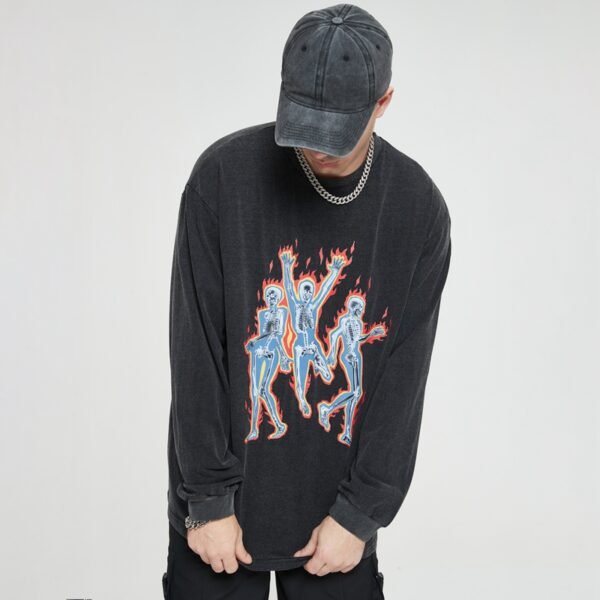
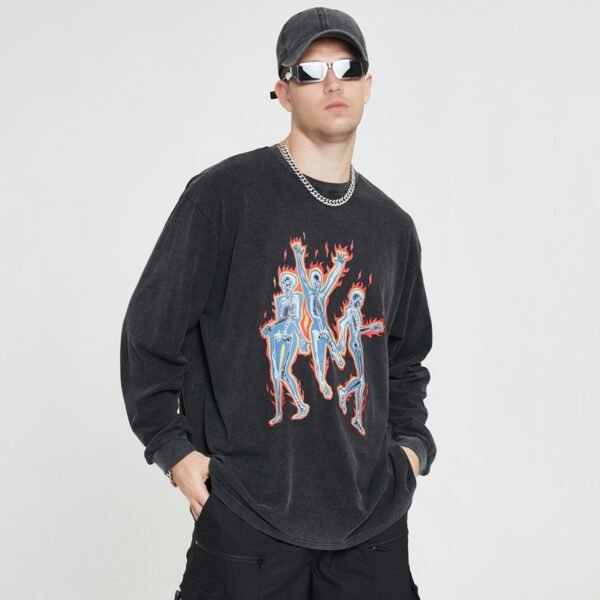
The supplied image shows a central graphic built from several colored contours, pale figure interiors, and flame-like outer shapes. Each perimeter must remain visually separated after cutting, placement, pressing, and washing, because small registration shifts would make the artwork appear blurred.
An oversized silhouette gives the graphic room to breathe, but it also enlarges the viewer's attention to every edge. VeeWen's development checkpoint should compare artwork at actual placement size, confirming that narrow outlines survive handling without creating uneven borders or exposed adhesive.
Managing Layer Bulk Across the Chest
The front motif appears materially richer than a single flat print because contrasting outlines and interior forms overlap across the chest. Additional layers can increase stiffness, warmth, and drag during wear, especially on a broad oversized panel that folds when the wearer moves.
The target is not maximum build-up; it is controlled dimensional contrast. Sampling should isolate the smallest viable number of applique or transfer components, then review chest drape, hem hang, and surface flexibility before artwork approval locks the construction.
Acid-Wash Variation and Artwork Contrast
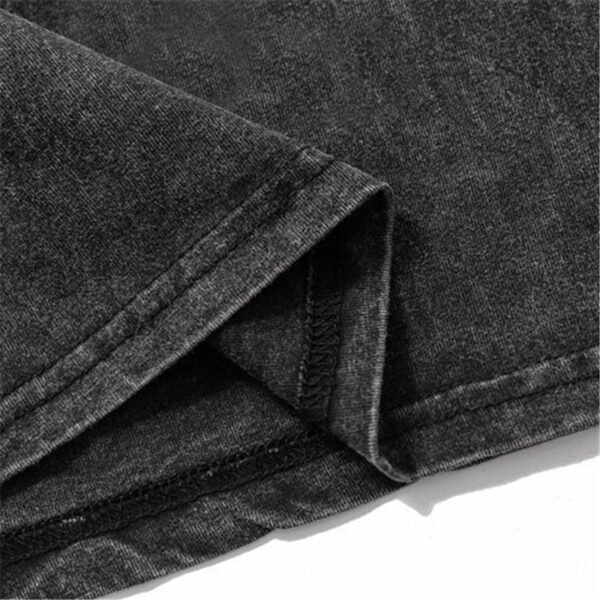
The base appears dark charcoal with a visibly irregular washed surface rather than a perfectly uniform black. That variation affects how bright outlines and pale graphic areas read, so artwork approval should use the intended wash recipe or a representative fabric panel.
Wash abrasion can also influence decoration boundaries and surface perception. VeeWen should review prewash and postwash samples side by side, checking whether the graphic remains legible without looking detached from the garment's worn, directional character.
Placement on an Oversized Body
The image places the graphic centrally, beginning below the neckline and extending toward the lower torso. That scale suits the generous body, yet the bottom artwork boundary must remain clear when the shirt folds, layers over trousers, or is partially tucked.
Development should establish neckline, side-seam, and hem measurements as fixed placement references rather than relying on visual centering alone. This keeps the motif consistent across size grading and prevents added decoration from drifting toward one shoulder or the lower side seam.
VeeWen Development Checkpoint
VeeWen can translate the artwork into a component map identifying every applique or transfer layer, its edge allowance, placement coordinate, and pressing sequence. This exact map gives the sample room a measurable way to investigate registration instead of judging decoration only by overall appearance.
The buyer's review should cover the physical strike-off, decorated front panel, and completed washed garment. Approval should record acceptable edge offset, layer count, hand-feel limit, and artwork placement tolerance before the specification moves into size grading.
Approval Criteria for the Production Run
A production-ready version should preserve the graphic's energetic outline while remaining comfortable across the chest. Buyers should inspect corners, narrow flame tips, overlapping figure details, and lower graphic edges, where adhesive or stitching stress may become most visible.
The final decision is a balanced one between visual complexity and daily wearability. Approve when the washed base, decoration edges, layer weight, and graded placement work together; otherwise simplify the artwork before confirming the MOQ: 100 pieces per style order.
Buyer Questions
What decoration method should buyers approve first?
Approve a physical strike-off that demonstrates the intended applique or transfer sequence, edge tolerance, layer count, and post-wash appearance before confirming bulk construction.
How can oversized proportions affect the graphic?
Broad panels provide placement space, but folding and grading can expose misalignment, so use neckline, seams, and hem as measured references during approval.
Is the fabric composition confirmed?
No. The supplied evidence confirms the visible washed appearance and garment form, while fiber content, GSM, and finishing chemistry remain To Confirm.
What is the commercial minimum?
The exact commercial minimum is MOQ: 100 pieces per style, with final construction and artwork requirements confirmed before production scheduling.
Approve the Artwork Construction
Send the artwork, target wash direction, size range, and decoration priorities to VeeWen for a controlled development review before committing to MOQ: 100 pieces per style.


Reviews
There are no reviews yet.