















This long-sleeve tee is built around a subtle but consequential cutting decision: every panel may need the same surface direction when the washed knit shows nap or pile. VeeWen can develop that orientation alongside relaxed fit, cuff alignment, and shade control.
Why One-Way Cutting Matters on Washed Knit
When a knit surface has directional nap or pile, reversing a panel can change how light reflects from it. Acid washing may amplify that difference, making sleeves, body panels, or cuffs appear mismatched even when they use the same fabric.
One-way cutting reduces that risk by orienting every visible piece consistently, but it consumes more fabric and can reduce marker efficiency. The buyer must decide whether shade uniformity has priority over material yield for this specific product direction.
The Image Shows a Surface-Led Product
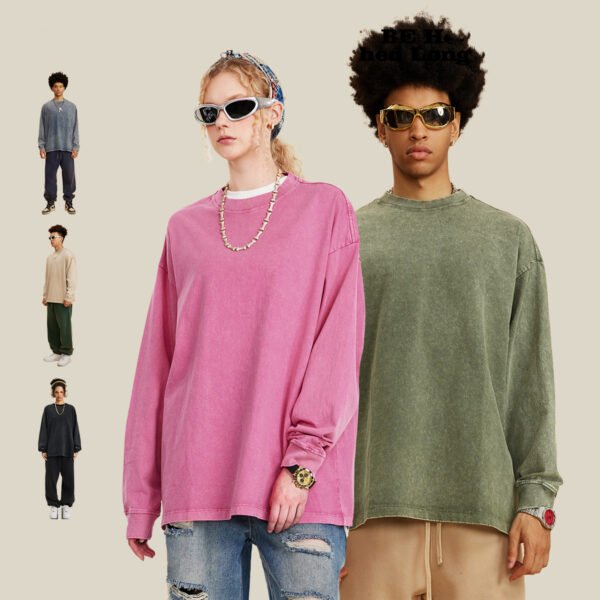
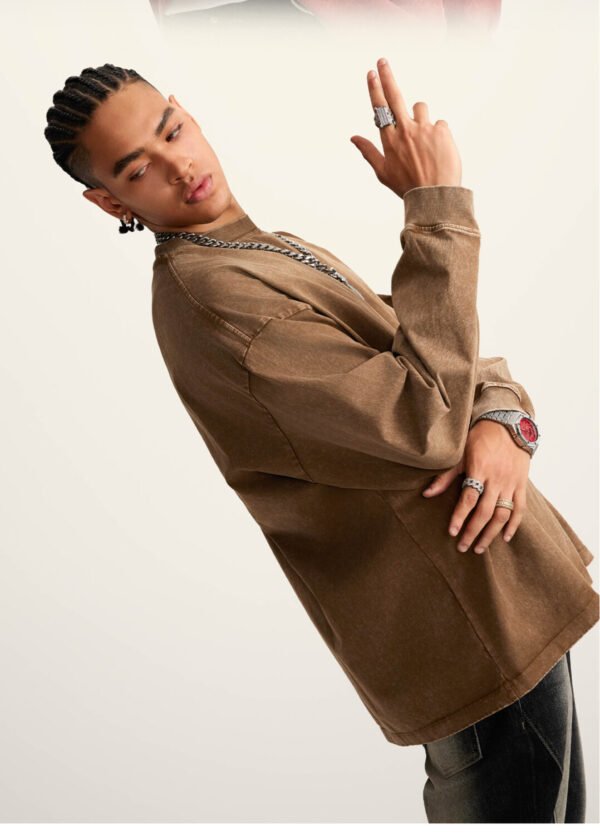
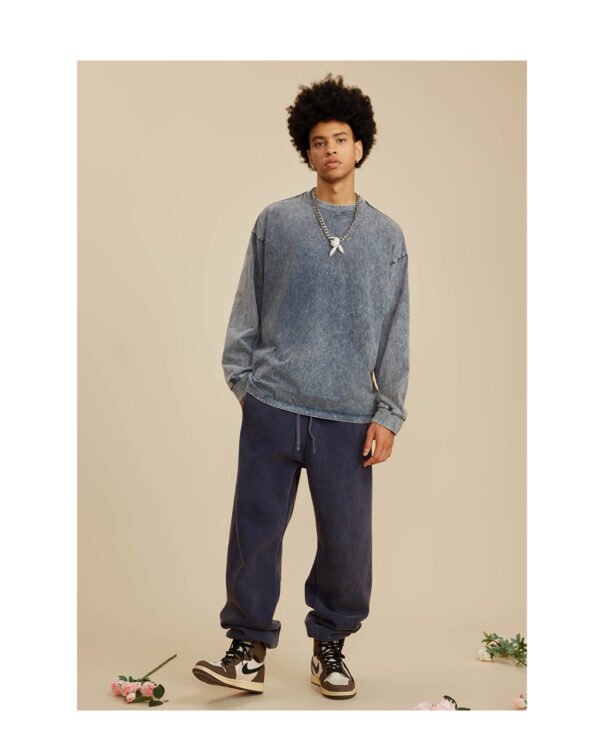
The main image emphasizes a brown long-sleeve tee whose surface appears softly irregular rather than flat and uniform. The broad body area makes directional shade changes easy to notice, especially across the front, shoulder, and sleeve transitions.
That visual character is useful for a washed collection, yet it creates a narrower tolerance for accidental reversal. Development should inspect panels under consistent lighting and from multiple viewing angles, because nap direction may read differently as the garment moves.
Relaxed Volume Magnifies Alignment Errors
The featured tee uses dropped shoulders and an easy body, so more fabric remains visible around the upper torso and sleeves. In a close-fitting style, a small shade shift might hide within seams; here, large uninterrupted surfaces expose it.
The trade-off is that relaxed proportions improve layering and support a casual silhouette, while they increase the visual area that must match. Marker planning, shoulder balance, sleeve pitch, and panel orientation should be reviewed as one connected system.
Ribbed Cuffs Add a Second Direction
The ribbed cuffs shown at the sleeve ends introduce a different texture and stretch behavior from the main body. Their vertical ribs and compressed finish frame the washed sleeve, making cuff alignment and attachment tension part of the visual result.
If cuff openings are stretched unevenly during sewing, the sleeve may twist or the rib may sit off-axis. Approval should check cuff recovery, seam rotation, sleeve length, and whether the rib shade complements the washed body after processing.
VeeWen Workflow: Build the Marker Around Evidence
For VeeWen's development workflow, the marker should be planned after the fabric surface direction is identified, not treated as a late production detail. The sample stage can compare two orientations and document the lighting conditions used for shade review.
Once the direction is approved, the technical record should carry nap arrows, panel labels, cuff orientation, wash notes, and color references into cutting and sewing. This connects visual evidence to an actionable production control at MOQ: 100 pieces per style.
Approve Shade Continuity Across Colors
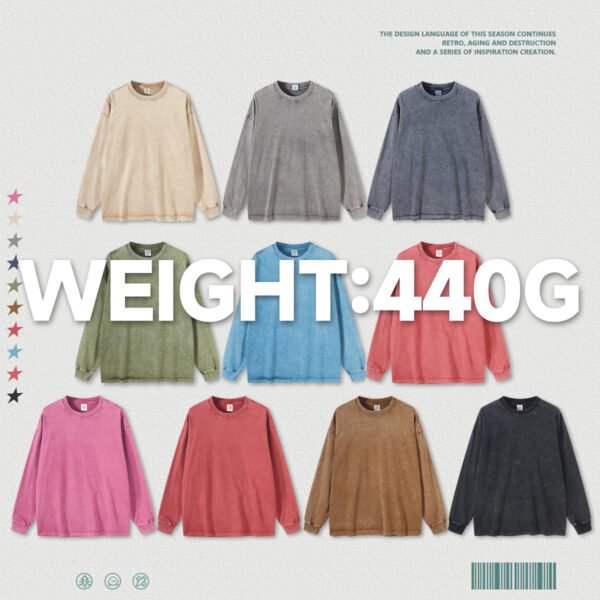
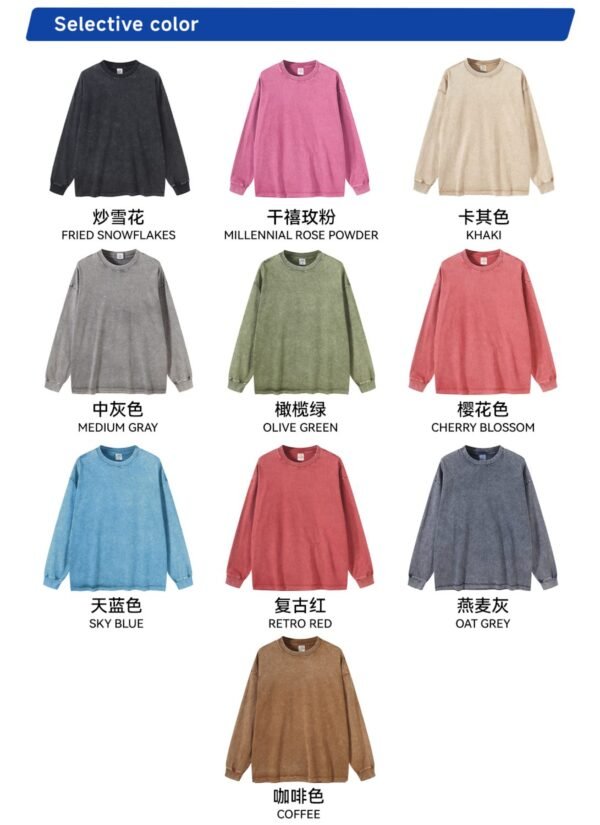
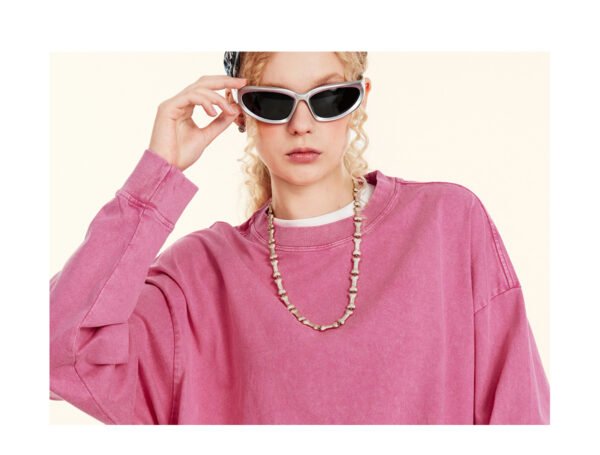
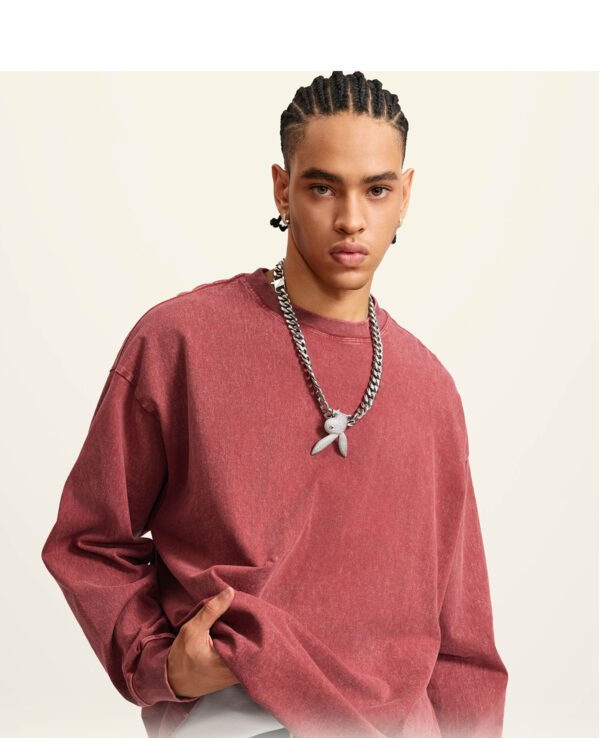
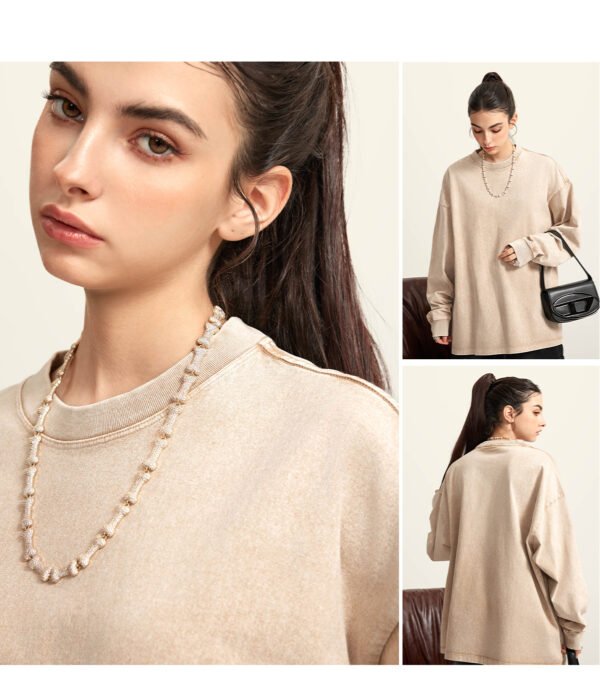
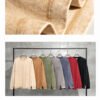
The supplied image shows the concept across several colors, including brown, pink, blue, red, grey, green, and black. Each color can reveal directional differences differently, so one approved shade behavior cannot automatically represent the entire range.
Buyers should request representative samples from the intended color groups and compare front, back, sleeve, and cuff surfaces. The decision checkpoint is approval of acceptable tonal variation by color, with one-way cutting retained wherever the nap effect remains visible.
Buyer Questions
Why is one-way cutting relevant to this tee?
A directional knit surface can reflect light differently when panels reverse. One-way cutting keeps nap or pile aligned, improving shade continuity while potentially increasing fabric consumption.
Is the cotton composition fully verified?
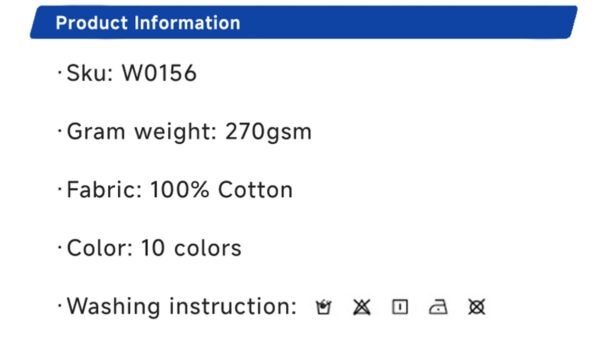
The source wording identifies cotton and 270gsm, but it does not establish a complete fiber percentage or blend. Confirm the final material specification before approval.
Does one-way cutting guarantee identical color?
No. It controls orientation-related shade shifts, but washing, dye variation, lighting, and fabric lots still require defined tolerance and representative sample review.
What should the buyer approve first?
Approve the fabric surface direction and wash behavior first, then confirm relaxed measurements, cuff construction, color tolerances, and the production marker before ordering.
Approve Direction Before Cutting
Share your target colors, measurements, and wash references with VeeWen for a marker-led development review. We will align nap direction, cuff behavior, shade tolerances, and sample approval at MOQ: 100 pieces per style.


Reviews
There are no reviews yet.