
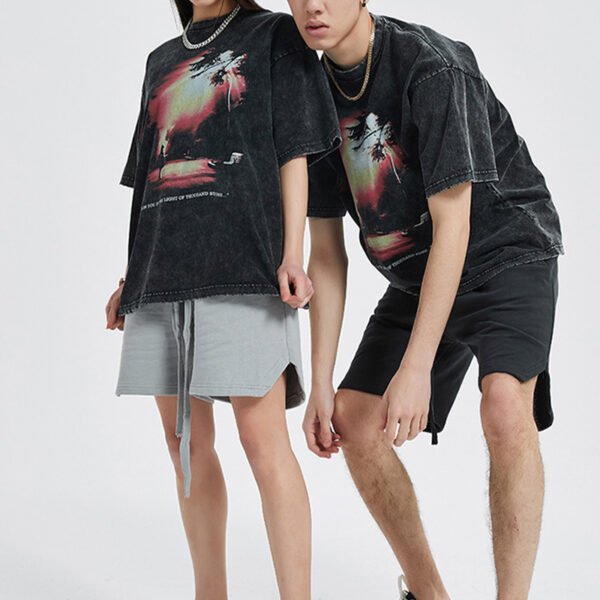
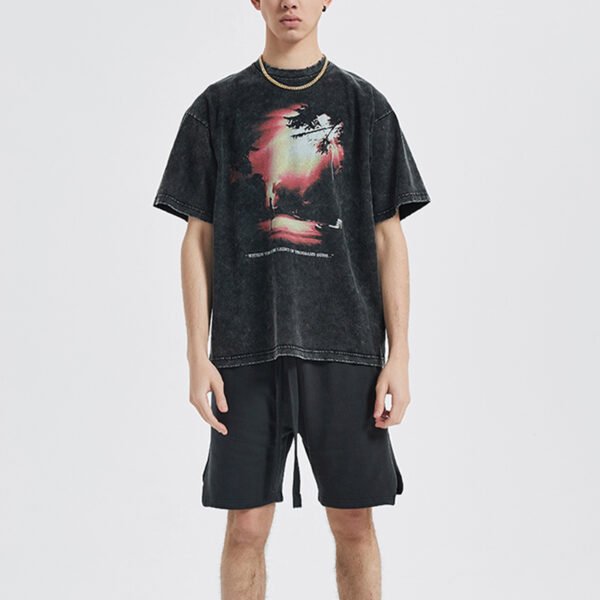

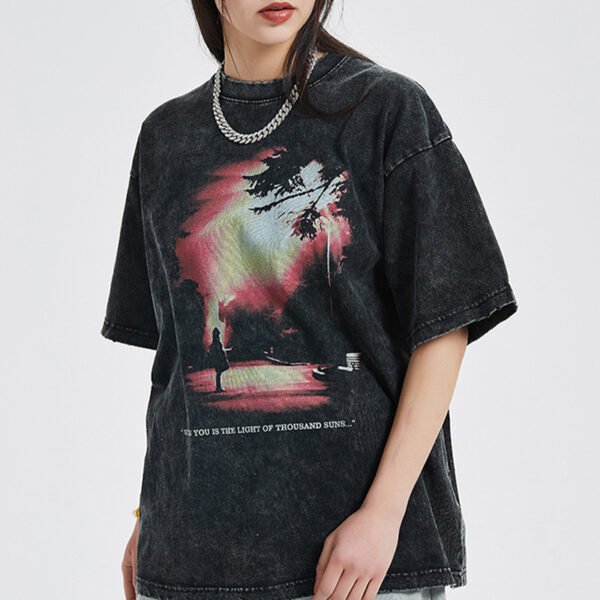


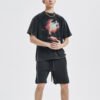


This custom T-shirt is built around reorder control through a sealed approval sample. The supplied image shows a charcoal washed ground, vivid front artwork, and an oversized dropped-shoulder shape, so color, print position, and measurements must be approved together before repeat production begins.
Why a Sealed Sample Matters
Washed garments can vary visually because the ground color is created through a finishing process rather than a simple uniform shade. On this T-shirt, the dark surface carries the graphic contrast, making small shifts in wash depth capable of changing the entire product impression.
A sealed approval sample gives the buyer and factory one physical reference for comparison. It should be photographed, measured, labeled, and retained with the technical record, so a reorder is judged against an agreed garment rather than memory or an isolated screen image.
Control the Washed Ground
The supplied image presents a charcoal-black ground with visible tonal variation across the body and sleeves. That variation is part of the visual language, but its acceptable range must be defined. Buyers should decide whether lighter abrasion, darker panels, and edge fading are intentional or unacceptable.
VeeWen's development review should document the approved wash appearance under consistent lighting and include representative body areas. The sample record should identify the desired overall tone, contrast level, and visible irregularities, while acknowledging that process effects require practical tolerance.
Graphic Registration on a Moving Surface
The front artwork combines bright color with irregular, distressed-looking forms against the dark ground. Because the wearer's chest curves and the relaxed body shifts during movement, artwork placement must be evaluated on the actual garment, not only within a flat digital file.
Approve the graphic's horizontal center, vertical position, scale, and clearances from the collar and side seams. The sealed sample should also show the selected decoration method and surface appearance, allowing future orders to compare registration and visual density consistently.
Oversized Fit as a Reorder Variable
Dropped shoulders and broad sleeves create the relaxed silhouette visible in the image. These proportions are easy to change unintentionally when grading sizes or adjusting fabric behavior, so the reorder reference must include shoulder width, chest, body length, sleeve length, and opening measurements.
The buyer should review the sample on the intended fit block and compare front, side, and back views. Record how the garment hangs at rest, then confirm whether the same ease and sleeve volume must be preserved across every approved size.
VeeWen Development Checkpoint
VeeWen can structure this product around a sealed-sample workflow: define the wash target, approve artwork on the garment, record fit measurements, and consolidate the accepted details into one controlled reference. Each decision should be attached to the same sample identity and revision record.
The critical approval occurs when the buyer confirms the physical sample as the reorder standard. That approval should cover wash tone, acceptable variation, graphic registration, decoration appearance, measurements, labels, and finishing details before MOQ: 100 pieces per style is released.
Trade-Offs in Repeat Production
A visibly varied wash can create character, but tighter color consistency may require narrower process tolerances and reduce the range of acceptable effects. A large graphic strengthens impact, yet it makes registration errors and placement drift more noticeable on the oversized body.
The buyer should choose the acceptable balance between expressive wash variation and repeatability before ordering. If the product is intended for reorders, the sealed sample must prioritize measurable decisions and clear tolerances over adjectives that different reviewers may interpret differently.
Buyer Questions
What should the sealed approval sample include?
Include the approved wash appearance, artwork scale and position, decoration method, measurements, labels, trims, finishing notes, and documented tolerance decisions.
Can the wash appearance vary between production lots?
Some variation may occur with washed finishes, so the buyer should define acceptable tonal range and compare production against the retained sealed sample.
Is heavyweight construction technically verified?
It is a source reference only. Exact GSM, fiber composition, and resulting hand feel require VeeWen material selection and buyer approval.
What is the commercial minimum for reorders?
The commercial minimum is MOQ: 100 pieces per style, with repeat production governed by the approved sealed sample.
Seal the Reorder Reference
Share your artwork, target measurements, wash direction, and reorder expectations with VeeWen. We will organize the approval sample around repeatable color, registration, fit, and finishing decisions before MOQ: 100 pieces per style.


Reviews
There are no reviews yet.