
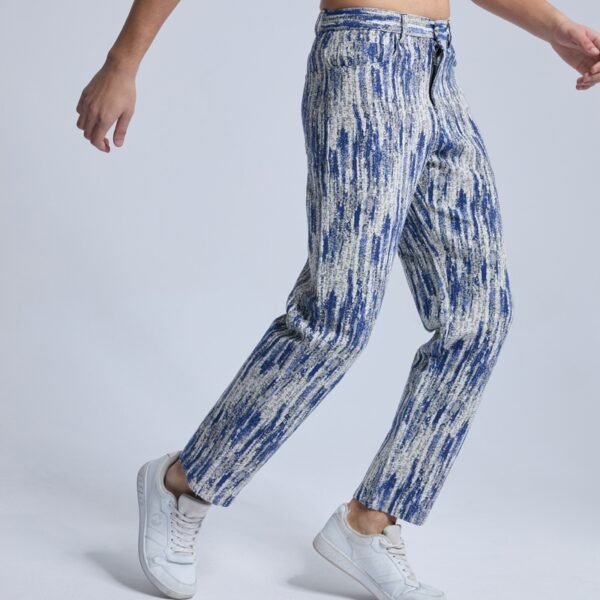


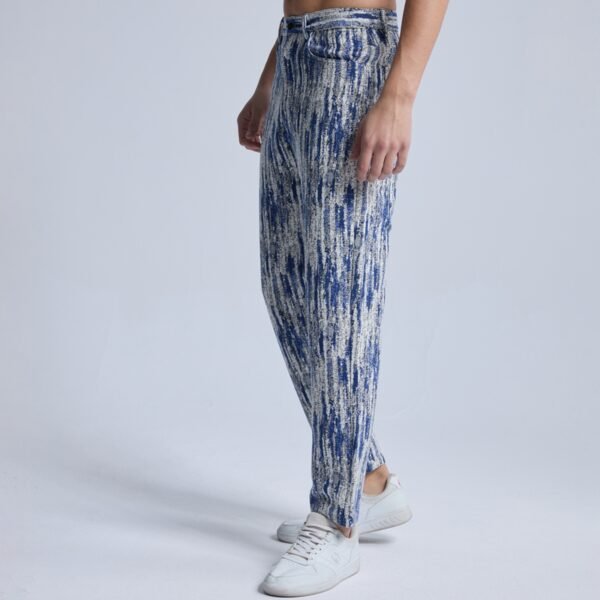
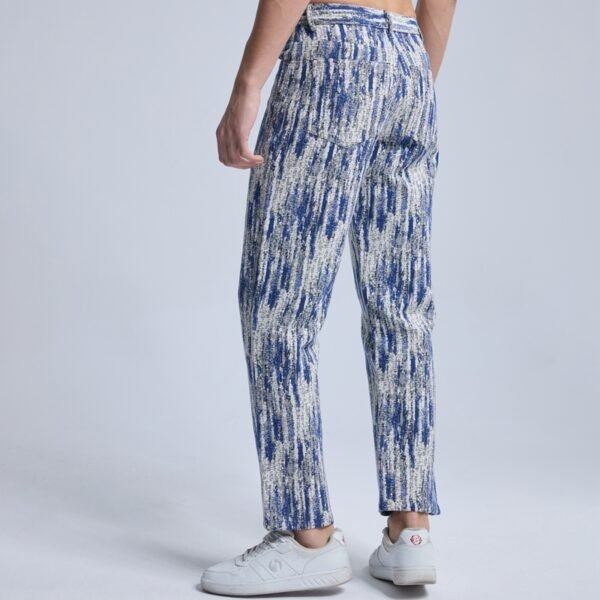
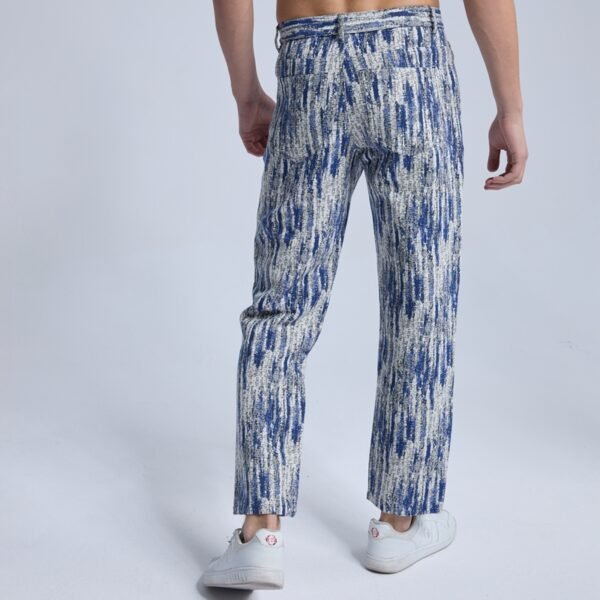


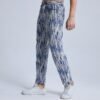
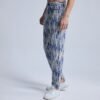
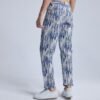
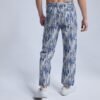
This jean concept is governed by how several fabric layers meet beneath a directional print. VeeWen can develop the waistband, fly, pocket, and hem sequence to control thickness, preserve a straight silhouette, and keep the blue-white surface visually coherent through sampling.
Why Layered Seams Define This Jean
The image shows a relatively clean straight-leg outline, but the garment's comfort will be decided inside the layered intersections. Waistband ends, fly components, pocket openings, belt loops, and side seams can create stacked thickness that changes drape and pressure.
A print with strong vertical movement makes those areas more visible because raised seams can interrupt the pattern rhythm. Seam bulk control therefore supports two outcomes at once: easier wear through high-contact zones and a more continuous printed appearance across the front and legs.
Mapping the High-Bulk Intersections
Development should begin with an intersection map identifying every location where multiple denim layers, pocketing, labels, or reinforcement pieces overlap. The map should distinguish structural joins from decorative topstitching, because each contributes differently to thickness and needle penetration.
For this style, priority areas include the front fly base, waistband corners, front pocket openings, belt-loop attachments, back pocket edges, yoke joins, and hem folds. Reviewing them together prevents isolated solutions from creating new imbalance elsewhere in the garment.
Sequencing the Construction
Bulk is influenced by the order in which panels are joined, turned, pressed, and topstitched. VeeWen can test a sequence that keeps bulky starts away from the most sensitive contact points while maintaining the straight-leg geometry shown in the reference.
The objective is not to remove every visible seam, because denim structure depends on purposeful joins. Instead, the sample should compare seam allowances, turn-back directions, reinforcement placement, and stitch density to determine where thickness can be reduced without weakening the intended silhouette.
Protecting Print Continuity
The supplied image presents a blue-white vertical pattern that travels across the visible denim, making panel transitions part of the design conversation. Print artwork should be reviewed against front and back pattern pieces so seam allowances do not create accidental blank bands or abrupt shifts.
At pockets and fly areas, continuity may require artwork registration rules rather than simple all-over placement. VeeWen's development review can define acceptable alignment windows, visible mismatch limits, and panel references before grading and cutting arrangements are finalized.
Fit, Comfort, and Hardware Review
A straight-leg jean still needs controlled ease through the seat, thigh, knee, and hem so added seam structure does not feel restrictive. The sample should be worn seated and standing, with attention to fly overlap, pocket opening pressure, and waistband contact.
Hardware and reinforcement decisions should be evaluated with the seam map, not separately. Buttons, rivets, belt loops, and dense bar-tacks can intensify local thickness, so the buyer should approve their placement alongside the construction sequence and print registration.
VeeWen Development Checkpoint
VeeWen's product-development workflow should turn the reference into a measured construction brief covering denim confirmation, print scale, seam allowances, topstitching, intersection priorities, hardware, and tolerance points. This makes the technical argument actionable before the first approval sample is cut.
The buyer's checkpoint is approval of a wear-tested prototype that demonstrates manageable bulk, functional openings, consistent straight-leg balance, and acceptable print continuity. After material and artwork decisions are locked, MOQ: 100 pieces per style governs the commercial request.
Buyer Questions
Which seam areas need the closest bulk review?
Prioritize fly bases, waistband corners, front pocket openings, belt-loop attachments, back pockets, yoke joins, side seams, and folded hems because layers concentrate there.
Can the print cross pockets and fly panels continuously?
It can be developed toward controlled continuity, but artwork registration, panel allowances, acceptable mismatch, and production method must be confirmed through sampling.
Does the source confirm the denim composition?
Yes, the supplied source wording states 100% cotton. Denim weight, weave, stretch status, wash process, and reinforcement details are not confirmed.
What is the minimum commercial quantity?
The exact commercial minimum is MOQ: 100 pieces per style, with final requirements depending on approved denim, artwork, colorways, measurements, and documentation.
Approve the Layered-Seam Prototype
Share the denim reference, print artwork, fit measurements, and hardware direction for a construction-led prototype. VeeWen can then validate seam bulk and surface continuity before production authorization.



Reviews
There are no reviews yet.