
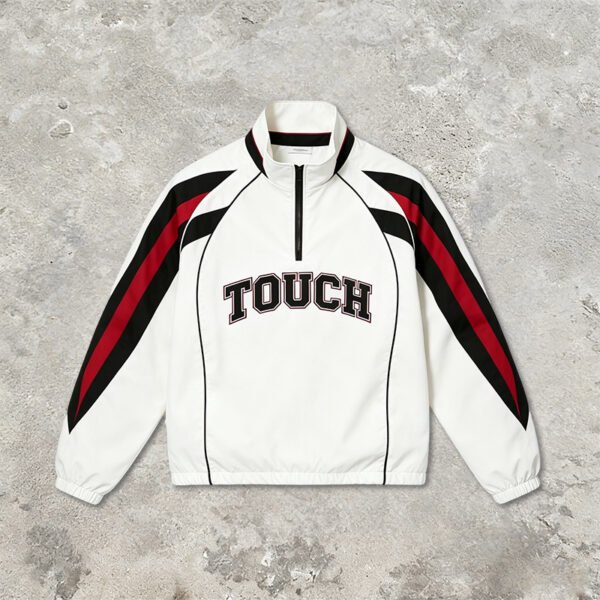
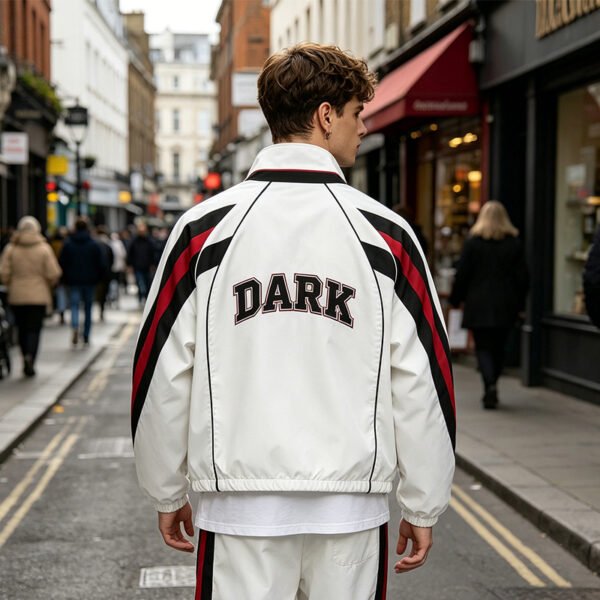



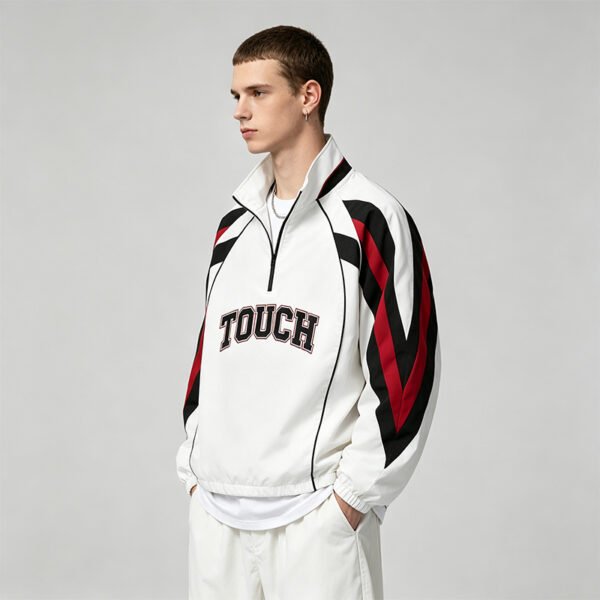
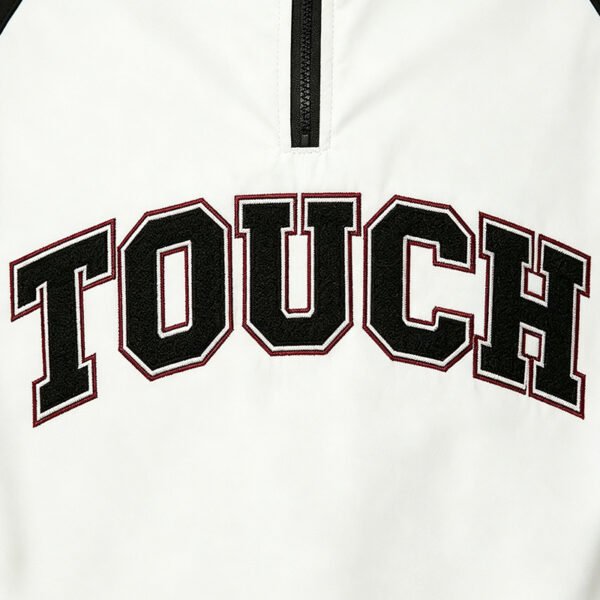
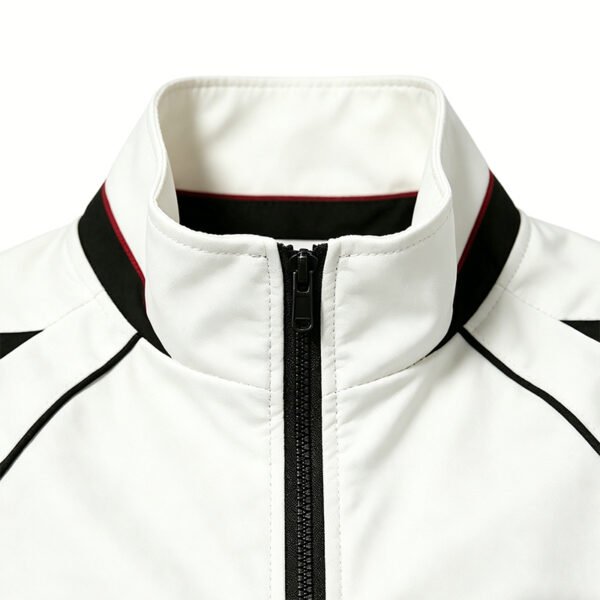
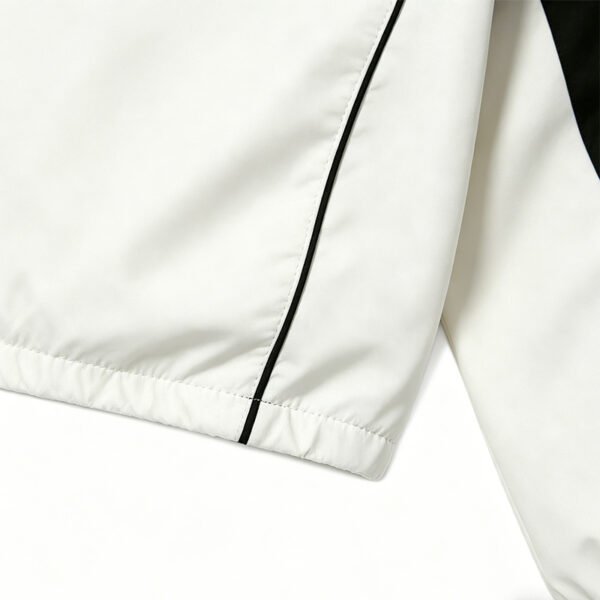









This quarter-zip windbreaker is developed around neckline behavior rather than decoration alone. The supplied image shows a raised collar, short zipper, angular shoulder panels, elastic cuffs, and a gathered hem. The manufacturing priority is preserving collar shape while keeping entry, comfort, and panel alignment commercially workable.
Neck Recovery Is the Primary Mechanism
The raised collar must hold a clean vertical profile when the zipper is closed, yet flex enough for the wearer to pull the jacket over the head. Rib recovery, collar height, seam tension, and zipper length therefore operate as one functional system.
If the edge is too firm, entry becomes uncomfortable and the collar can push against the neck. If it is too relaxed, the stand collar collapses and loses the structured appearance visible in the supplied image.
Quarter-Zip Opening Geometry
The short zipper creates a controlled opening rather than a full front entry. Its finished length determines how much the neckline can expand, while the surrounding collar construction determines whether the opening returns neatly after repeated use and adjustment.
The pattern review should test zipper length, placket width, top-stop position, and collar circumference together. Buyers should assess entry across the intended size range, because grading can change the balance between usable opening and retained neckline shape.
Panel Seams Reinforce the Silhouette
Black and red angular panels run from the upper body into the sleeves, creating directional lines that make the collar and shoulders appear more structured. Their placement is not interchangeable decoration; seam angles influence balance, movement, and the perceived width of the upper body.
VeeWen should develop the panel map with notches, seam allowances, and zipper alignment clearly controlled. Approval should check that both sides mirror the intended geometry and that the collar remains centered when the wearer moves through the shoulders and arms.
Shell, Edge, and Opening Trade-Offs
The source wording identifies waterproof nylon, while the image presents a smooth white shell with elastic cuffs and hem. A more protective shell treatment may affect hand, noise, seam behavior, and the way the collar folds during entry.
Material confirmation should address the shell construction, internal layers, coating or membrane details, and edge finishing before performance claims are finalized. The buyer should choose the acceptable balance between weather resistance, pliability, collar recovery, and the clean surface shown in the reference image.
VeeWen Development Workflow
VeeWen's workflow for this jacket should begin with a collar-and-opening prototype, then integrate the approved quarter-zip geometry into the full raglan-style body and contrast panel map. This keeps the assigned neckline argument visible during pattern, trim, and sewing decisions.
The key review is a physical fit sample with the zipper operated repeatedly and the collar assessed closed, open, and partially open. Only after entry comfort, recovery, panel symmetry, cuff behavior, and hem gathering are accepted should the production specification advance.
Approval Checkpoint for Outerwear
A firmer collar can preserve a sharper stand, but it may narrow the usable entry and increase pressure at the neck. A softer edge improves flexibility, yet it can undermine the elevated neckline profile and make the quarter-zip front appear unfinished.
Buyers should approve the collar by observing both static appearance and movement. Record the selected rib or edge construction, collar measurements, zipper specification, shell reference, and unresolved performance items so manufacturing decisions remain traceable through MOQ: 100 pieces per style.
Buyer Questions
Is waterproof performance verified?
Waterproof nylon is stated in the source title, but no coating details, membrane specification, seam testing, or test results are supplied. Performance remains To Confirm.
What neckline construction is shown?
The image shows a raised stand collar around a short quarter zipper. Exact rib composition, collar height, recovery, and placket measurements require sample approval.
How should the panels be reviewed?
Review panel angles, left-right symmetry, seam alignment, zipper centering, and sleeve mobility on a physical sample before approving the final outerwear pattern.
What is the minimum order?
The commercial minimum is MOQ: 100 pieces per style. Shell options, trim choices, color variations, size ratios, and testing requirements should be confirmed separately.
Approve the Collar Before the Full Jacket
Share the target collar profile, zipper preference, shell reference, size range, and panel artwork with VeeWen to start a focused quarter-zip windbreaker development review.


Reviews
There are no reviews yet.