
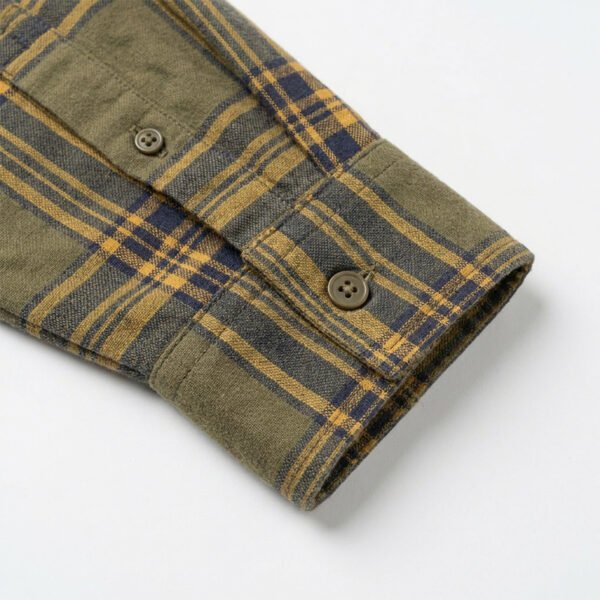
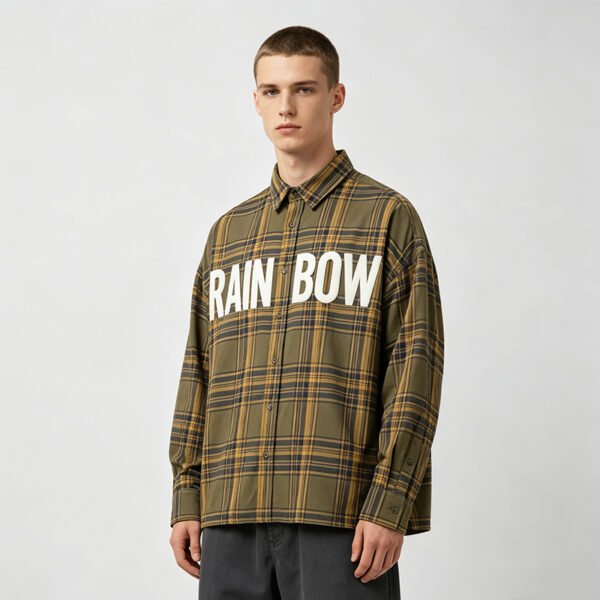
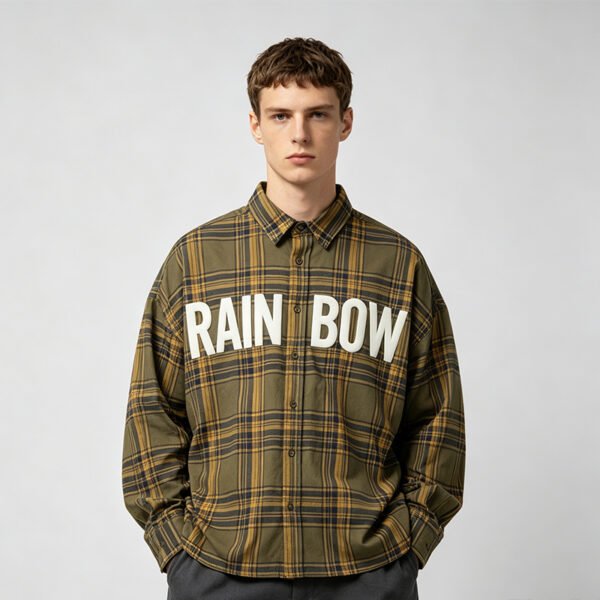
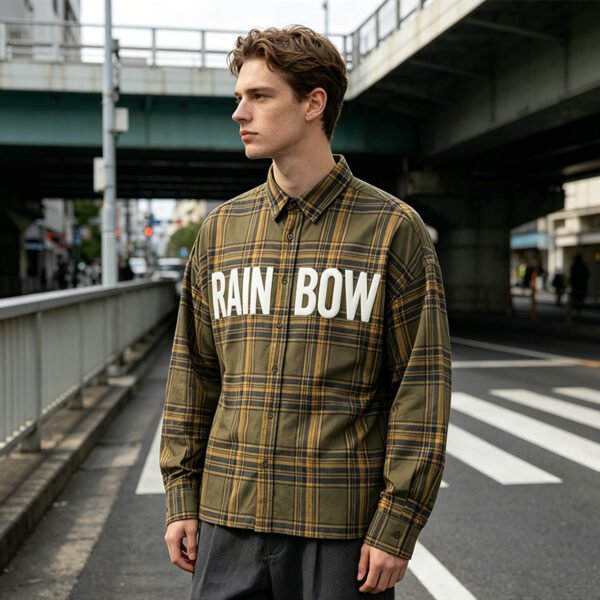
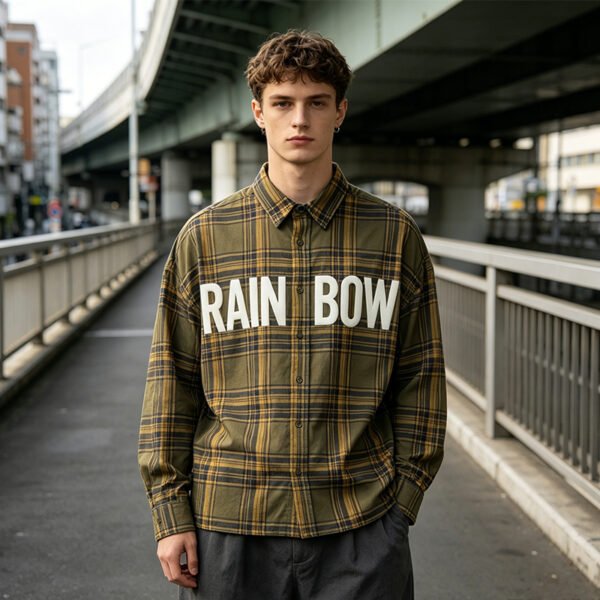
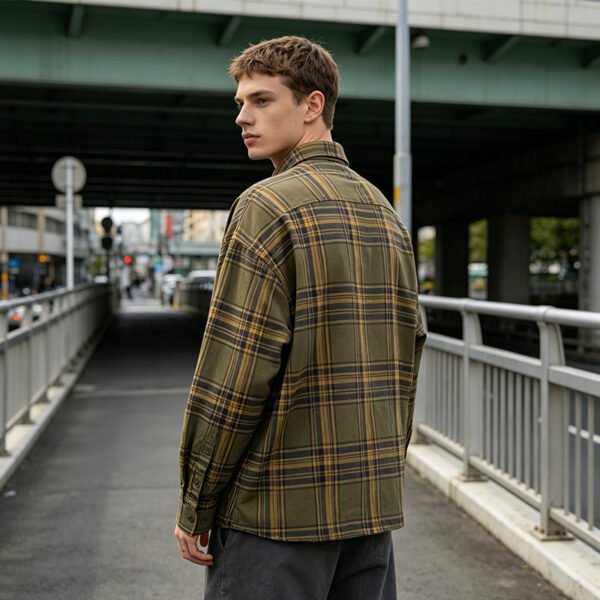
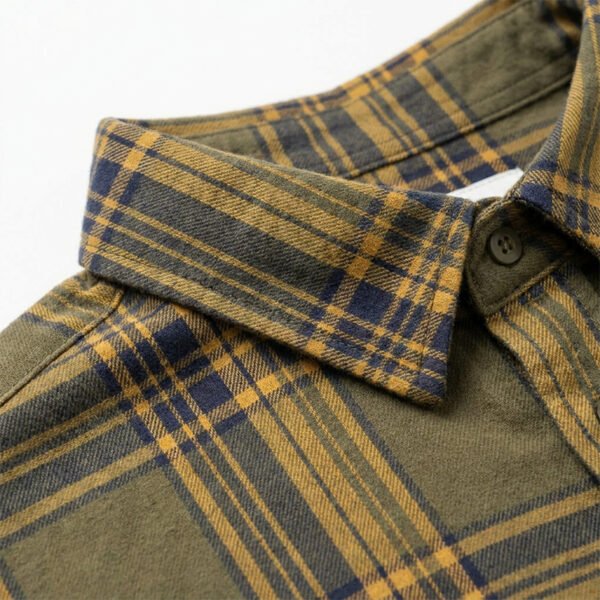
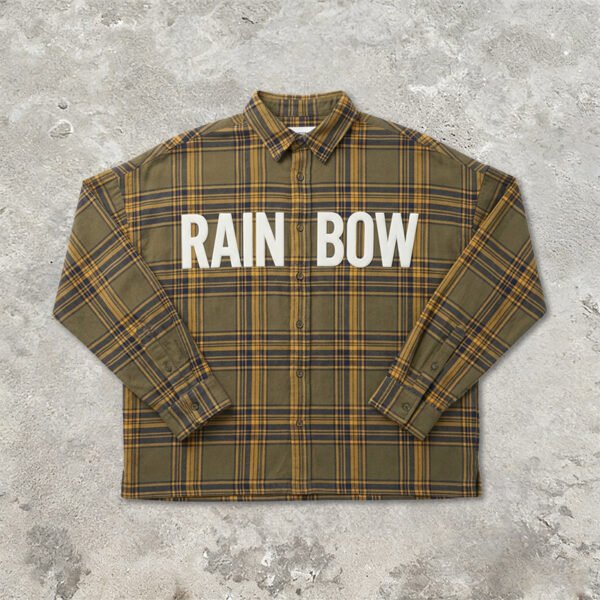

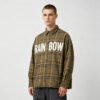
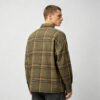
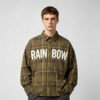
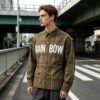


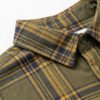
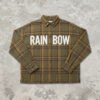
This army green plaid long-sleeve shirt is defined by the relationship between a linear woven pattern and dimensional surface decoration. The supplied cuff image shows layered thickness, button placement, and aligned plaid lines, making applique edge control essential to preserving comfort, clarity, and a commercially clean finish.
Plaid Alignment Is a Decoration Constraint
The supplied cuff image shows mustard and dark navy lines continuing across a muted army green ground. This repeat gives the shirt its identity, so any raised artwork must be positioned with awareness of line density, intersections, and the visual direction of each panel.
A decoration that ignores the plaid may disappear into busy crossings or create an unintended collision with strong stripes. Development should therefore test artwork scale and placement over representative plaid sections before the buyer approves the final print or applique specification.
Edge Control Protects Visual Sharpness
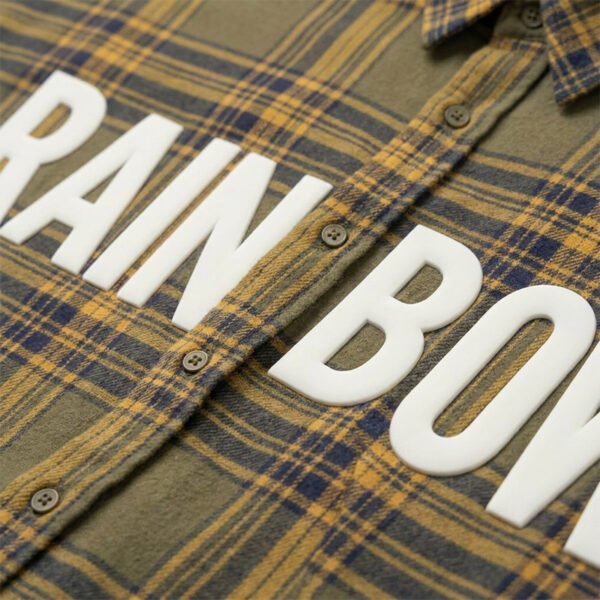
Raised lettering is referenced in the source wording, while the image evidence establishes a textured plaid base and folded cuff construction. Dimensional decoration needs a defined edge profile so its outline remains legible without appearing ragged against the woven pattern.
The sample review should inspect corners, narrow counters, and curved letter edges after application. Buyers should decide whether a slightly softened edge supports the casual direction or whether sharper boundaries are necessary for the intended graphic hierarchy.
Layer Bulk Accumulates at Cuffs
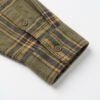
The main image presents the sleeve cuff folded over itself, with a button and multiple visible fabric layers. This is important evidence for development because decoration, seam allowances, and cuff folding can combine into a thicker area than the flat artwork suggests.
VeeWen should review artwork placement against the sleeve pattern and cuff turnback before approving production. Keeping raised elements away from high-fold zones can preserve cleaner rolling, button operation, and wearer comfort without removing the dimensional character from the shirt.
Raised Effects Need a Controlled Profile
A raised print creates depth by depositing material above the fabric plane. On plaid, that depth can improve graphic visibility, but excessive height may catch during folding, amplify stiffness, or compete with the garment's natural texture and line rhythm.
The buyer should approve a target profile using a physical strike-off or sample, evaluating hand, flex, edge definition, and appearance over both green ground and plaid crossings. The correct decision balances dimensional impact with practical movement and packability.
Buttons and Lines Form a Checkpoint
The cuff button is positioned within a field of intersecting plaid lines, demonstrating how small hardware details interact with the repeat. Button placement, buttonhole direction, and stripe alignment should be reviewed together because each can influence whether the sleeve looks orderly when worn.
During VeeWen development, the pattern technician and decoration team should coordinate the cuff repeat with closure positions. A buyer approval should confirm that the button remains functional, the plaid reads continuously, and dimensional artwork does not obstruct folding or fastening.
VeeWen Product-Development Workflow
VeeWen can develop this style by first confirming the plaid repeat and sleeve construction, then mapping decoration over the repeat, reviewing a raised-effect strike-off, and checking cuff bulk on a sewn sample. Each step targets the interaction between surface depth and garment engineering.
The production brief should record artwork boundaries, edge tolerance, target profile, prohibited cuff zones, and plaid alignment priorities. The buyer's final checkpoint is a complete sample review covering print clarity, fold behavior, button operation, and the approved visual relationship.
Buyer Questions
Is the shirt made from cotton?
The supplied evidence shows a plaid shirt but does not verify fiber composition. Confirm the final fabric content, weight, weave, and finishing specification during development.
Can raised lettering be placed over plaid lines?
Yes, but artwork should be tested across representative stripe crossings to confirm edge clarity, contrast, and the intended relationship between decoration and plaid.
How can cuff bulk be controlled?
Map decoration away from fold-heavy cuff zones, then evaluate a sewn sample for thickness, flexibility, button operation, and comfort before approving bulk.
What is the minimum order?
The commercial minimum is MOQ: 100 pieces per style, with final artwork, fabric, construction, and production requirements confirmed before order approval.
Approve the Plaid and Applique Map
Share your artwork dimensions and preferred raised profile so VeeWen can align the decoration with the plaid repeat and review cuff bulk on a sewn sample.


Reviews
There are no reviews yet.