


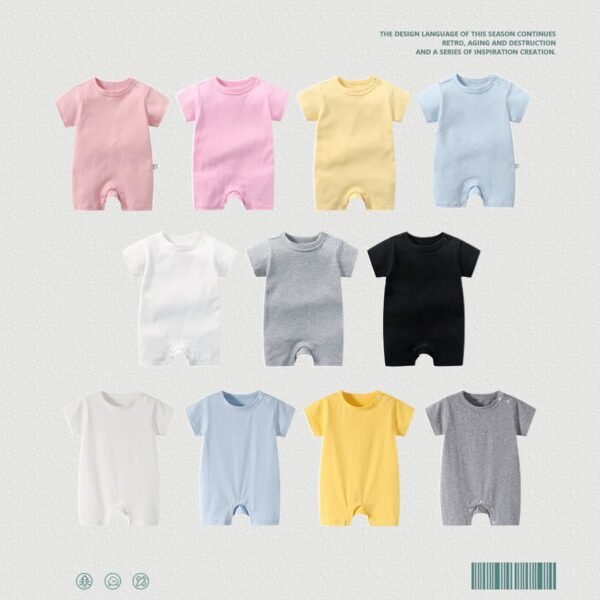


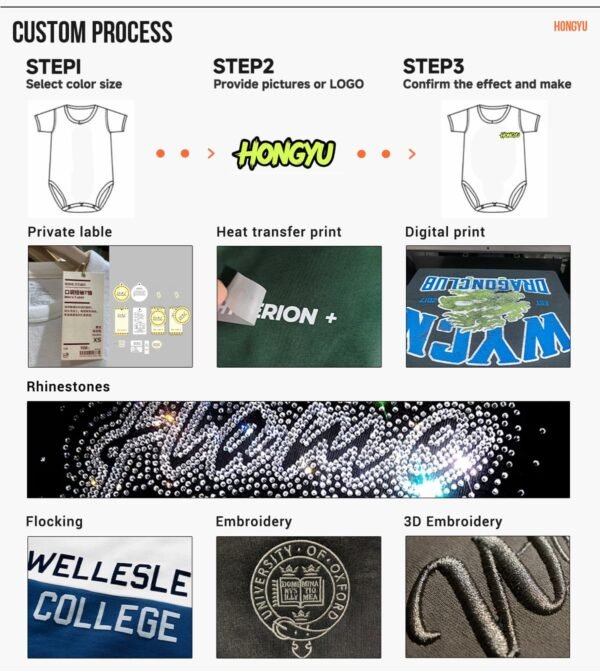


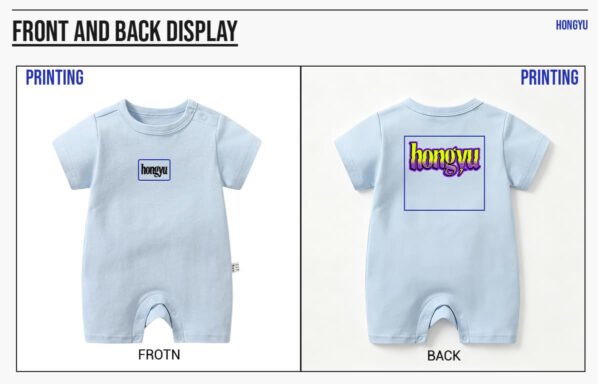
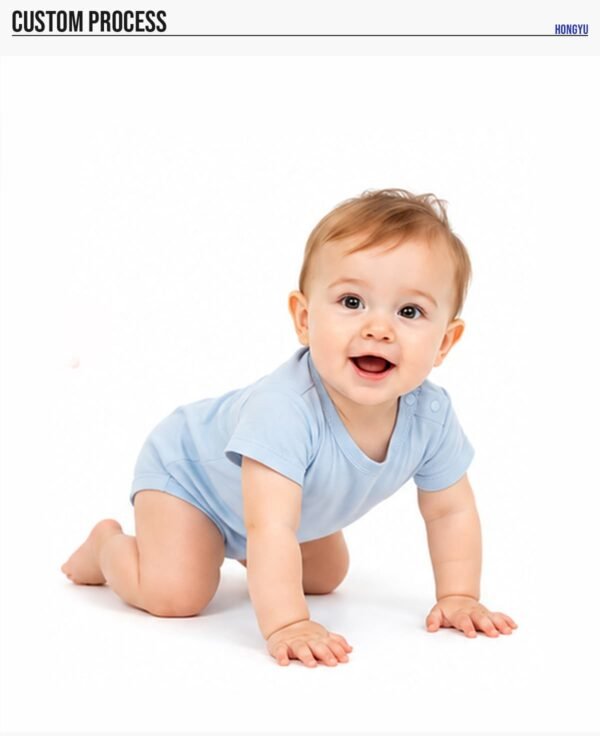

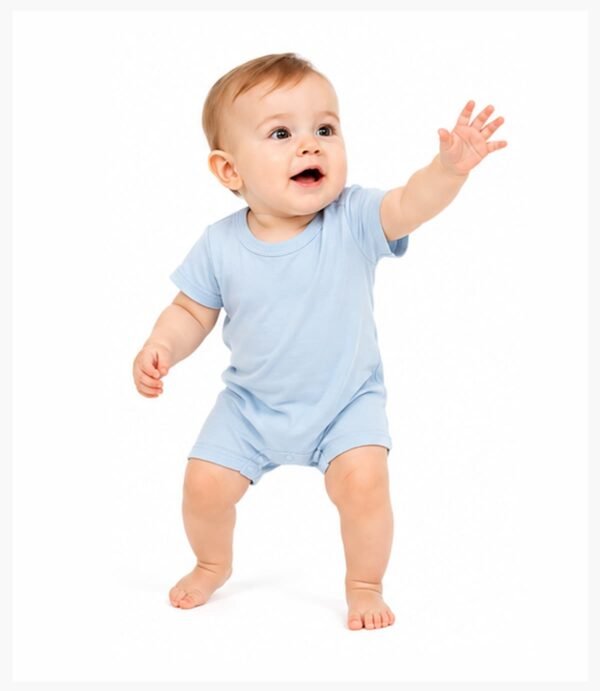












This custom baby romper is developed around closure stability and spacing, where a lightweight summer garment must open cleanly without pulling across the body. The supplied visual shows a short-sleeve infant fit, smooth blue fabric reference, lower closure area, and broad pastel assortment for private-label planning.
Why Closure Geometry Matters
A baby romper opens and closes across a high-movement lower body area, so uneven spacing can create twisting, gaping, or concentrated strain. Stable placket geometry keeps each fastening point aligned while preserving enough flexibility for dressing, sitting, crawling, and routine care.
The supplied image shows the lower closure region on a short-sleeve romper, but does not identify the exact hardware. That makes closure type, reinforcement method, and spacing tolerance essential development questions rather than assumptions carried forward from the visual reference.
Placket Stability for Lightweight Fabric
The source title references 190gsm cotton, a useful lightweight summer benchmark. A lighter fabric may feel comfortable and breathable, yet it can require additional support around fastenings to prevent stretching, puckering, or distorted edges during repeated opening and closing.
VeeWen's workflow should convert this risk into a sample comparison: assess the placket with the proposed fastening, inspect edge recovery after handling, and confirm that any reinforcement remains soft against the wearer. Approval should document construction without overstating unverified performance.
Button or Snap Spacing
Even spacing controls how force travels between closure points. If the intervals are too wide, the fabric may pull between fastenings; if too close, dressing access and sewing tolerance can suffer. The correct layout depends on garment length, size range, hardware diameter, and seam allowance.
Because the image does not make the fastening details conclusive, buyers should approve a measured closure map rather than infer button count or placement. The map should identify start and end points, spacing tolerance, overlap, and the relationship to the leg openings.
Infant Fit and Movement
The visual presents an infant wearing a short-sleeve romper with a rounded neckline and exposed legs, supporting a warm-weather, movement-focused silhouette. Closure placement must follow that shape, allowing comfortable leg motion while keeping the garment secure during ordinary activity.
Fit approval should include seated and active positions across the intended size range. VeeWen can use the approved base sample to review placket alignment, leg opening balance, and lower-body ease, then update the measurement record before grading the remaining sizes.
Fabric, Color, and Appearance
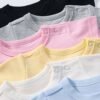
The supplied image includes a blue fabric close-up and several pastel and neutral romper colors. These references suggest a smooth jersey appearance and assortment flexibility, but they do not verify fiber percentage, knit specification, colorfastness, or final trim compatibility.
Color sampling should include at least one pale shade and one darker shade, because placket stitching, edge definition, and closure visibility can change across the palette. Buyers should confirm the selected fabric and fastening finish together so the visual result remains controlled.
Production Approval Checkpoint
The buyer's approval checkpoint is a closure-focused sample that demonstrates stable placket edges, consistent spacing, comfortable access, and clean alignment after handling. Review the lower closure with the actual proposed hardware, because visual evidence alone cannot establish button, snap, or reinforcement performance.
After approval, VeeWen can carry the confirmed closure map into grading, trim records, color allocation, and production documentation. The signed sample should remain the controlling reference, with MOQ: 100 pieces per style applied to the approved commercial specification.
Buyer Questions
Is this romper confirmed to use buttons?
No. The source axis mentions button spacing, but the supplied image does not conclusively identify the fastening hardware. Confirm whether buttons, snaps, or another closure is required.
What does the 190gsm reference establish?
The source title provides 190gsm cotton as a material reference. It does not confirm fiber percentage, knit construction, softness, shrinkage, recovery, or performance without supporting documentation.
Why sample spacing before grading?
Closure spacing affects access, alignment, strain, and lower-body comfort. Approving the base layout first gives grading a controlled reference and helps prevent inconsistent fastening positions across sizes.
What should the buyer check on the sample?
Check placket stability, fastening alignment, spacing tolerance, edge recovery, leg-opening balance, and dressing access. Review pale and dark colors separately before confirming the commercial assortment.
Approve the Closure Map First
Share the intended fastening type, size range, and preferred colors with VeeWen for a closure-focused sample review covering placket stability, spacing, lower-body comfort, and MOQ: 100 pieces per style.

Reviews
There are no reviews yet.