


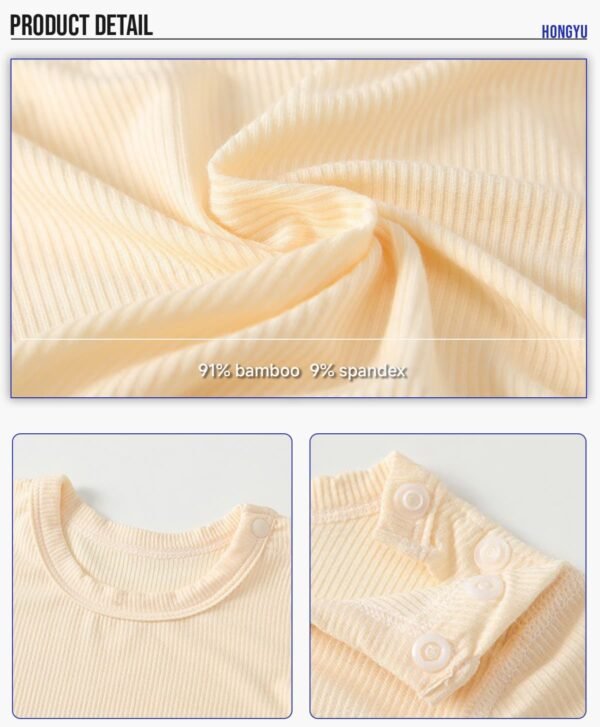


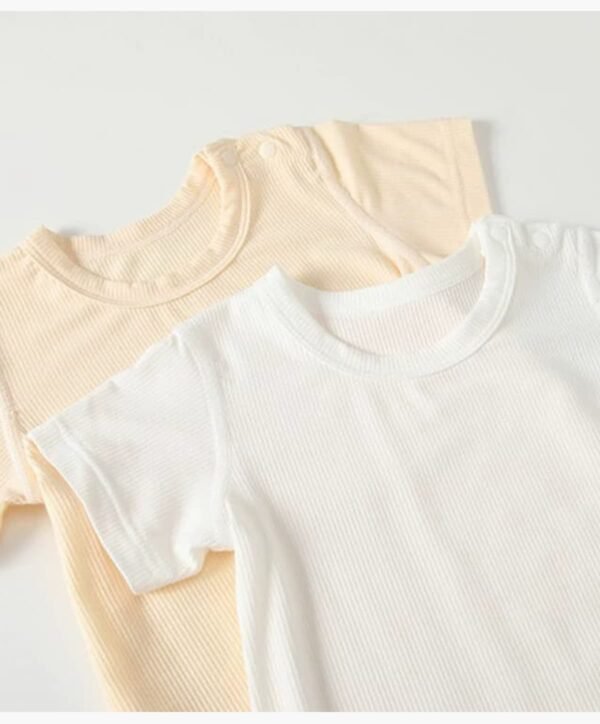
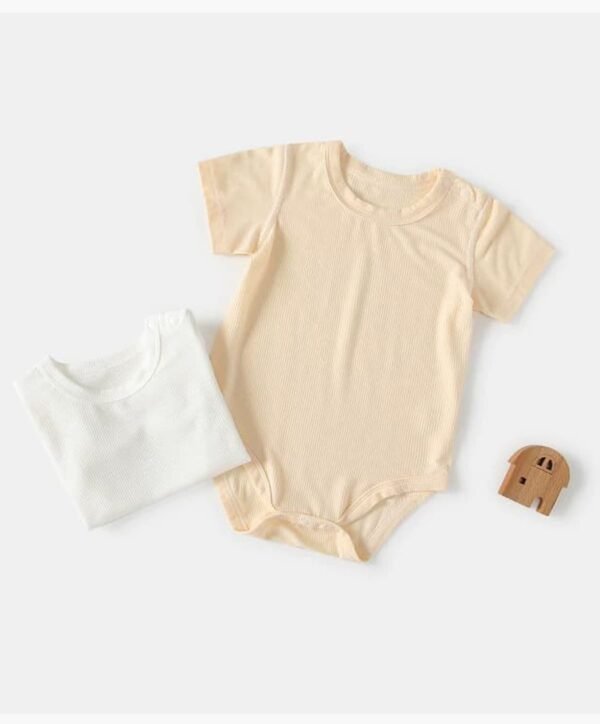





This romper should be developed from the neckline outward. The supplied image identifies a 190G ribbed fabric with 91% bamboo and 9% spandex, while the short-sleeve crew neck makes collar roll and stand height central to comfort, stability, and repeatable dressing performance.
Why collar geometry controls babywear comfort
A baby romper neckline must open easily without standing away from the body during movement. Excessive roll can create pressure or visual bulk, while insufficient stand height can collapse, stretch out, or expose the shoulder line during dressing and wear.
The supplied image shows a clean crew neckline on a short-sleeve romper, making collar proportion a visible design anchor. Development should evaluate the neckline flat, worn, and stretched, with attention to binding width, seam placement, and recovery after handling.
Use the rib structure deliberately
The image visibly identifies 190G thickness and a 91% bamboo, 9% spandex composition, alongside an enlarged rib texture panel. Rib columns can support stretch and contour, but their behavior depends on direction, recovery, finishing, and how the collar is cut.
Align the collar construction with the fabric's actual stretch direction and recovery behavior after laundering trials. Compare rib appearance at rest and extension, then check whether the neckline returns evenly without twisting, rippling, or creating a raised ridge against the child's skin.
Control roll and stand height through patterning
Collar roll is influenced by neckline curve, rib length, seam allowance, tension, and attachment pressure. Stand height is influenced by the finished collar width and how the neckline sits against the upper chest, so both should be measured rather than judged from photographs alone.
Create a neckline measurement sheet covering finished circumference, collar height, opening extension, seam bulk, and roll position. Review those measurements across sizes because a proportion that feels balanced on one sample can become restrictive or unstable after grading.
Lower opening and dressing sequence
The supplied image shows a one-piece baby garment with a lower opening, but the exact fastening system is not confirmed. That detail affects dressing sequence, diaper access, seam bulk, and how much stress reaches the neckline during repeated changes.
Test the complete garment while opening and closing the lower section, then observe whether the neck stretches unnecessarily during dressing. Review fastener spacing, reinforcement, corner shape, and interior comfort together with collar recovery before approving the construction package.
VeeWen workflow for neckline approval
VeeWen can organize this style around a neckline-focused development record containing the rib reference, collar pattern, finished measurements, seam method, fastening specification, and graded sample observations. This keeps the commercial question centered on stable comfort rather than treating the collar as a decorative afterthought.
Move from fabric and color confirmation into a first pattern sample, then conduct wear and handling review before locking the production pattern. Record any collar correction against the sample size and verify the same roll and stand relationship after grading.
Buyer approval checkpoint for kidswear release
Before release, the buyer should approve the collar circumference, stand height, roll behavior, opening ease, and interior seam comfort on a representative graded set. The 190G and composition references support development, but they do not replace construction-level approval.
Request clear photographs and measurements of the neckline at rest and extension, plus confirmation of fastening details and care assumptions. The final decision should identify critical dimensions and the evidence required for future repeat production checks.
Buyer Questions
Are the fabric percentages verified?
The supplied image visibly states 91% bamboo and 9% spandex, with 190G thickness; broader fabric testing, finishing details, and production confirmation remain to confirm.
Why is collar roll important for this romper?
Collar roll affects pressure, dressing ease, appearance, and neckline stability, so it should be assessed at rest, during extension, and after recovery across graded sizes.
Is the lower fastening system confirmed?
No. The supplied image shows a lower opening, but the exact fastener type, spacing, reinforcement, and finished construction require confirmation during development.
What is the commercial minimum?
The commercial minimum is MOQ: 100 pieces per style, while final colorways, size ratios, fasteners, labeling, and construction details require production confirmation.
Approve the Collar Geometry and Graded Sample Set
Share your size range, color direction, care expectations, and labeling needs with VeeWen, then approve neckline measurements and dressing tests before production release.


Reviews
There are no reviews yet.