


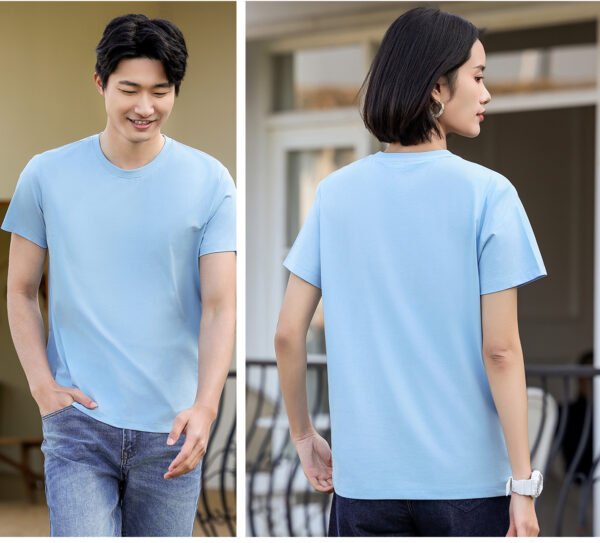








This basic-fit crew-neck T-shirt is best developed as a surface-control program, where a clean jersey face and restrained seam behavior protect consistency across many colorways. The supplied image shows a unified silhouette in eight solid tones, making texture discipline more commercially important than decorative treatment.
Surface Texture Is the Primary Approval Variable
The image presents a quiet, even-looking shirt face rather than a brushed, slubbed, printed, or heavily washed surface. That visual restraint means small knitting, dyeing, pressing, or handling differences may become noticeable, especially when eight colors are displayed together.
For development, define the acceptable surface range before approving bulk fabric. Compare swatches under consistent lighting, then inspect body panels beside sleeve panels for shade, grain, and texture continuity. The goal is controlled uniformity, not an artificial promise of identical appearance.
Seam Puckering Can Disturb a Minimal Silhouette
A basic tee has few design distractions, so puckering around the crew neck, sleeve hems, and lower hem can change the perceived quality of the entire garment. The supplied image shows straight-looking edges, creating a useful visual reference for a flatter finished appearance.
Puckering control depends on compatible fabric recovery, thread tension, stitch density, seam allowance, pressing, and laundering. VeeWen should isolate these variables during sample review, documenting where rippling appears and whether it remains acceptable after the intended finishing route.
Color Expansion Raises Surface-Control Risk
The visible assortment moves from pale yellow and pink to red, navy, black, brown, white, and blue. Such tonal spread can expose different dye-response, finishing, and optical texture effects even when the same pattern and nominal fabric reference are used.
Approve the palette with paired physical standards rather than screen color alone. Dark shades should be checked for shine and flattening, while pale shades should be checked for uneven face texture. Each approved shade should retain the same basic silhouette and seam appearance.
Source Specifications Need a Physical Translation
The source wording references Sorona, 180gsm, cotton, and a basic fit, but the supplied evidence does not verify composition percentages or final production specifications. These references can guide inquiry, yet they should not substitute for a signed material brief.
During VeeWen development, convert the reference into measurable checkpoints: fabric composition, finished weight tolerance, width, shrinkage allowance, color standard, stitch construction, and pressing method. Record which items are confirmed, provisional, or still open before the pattern is graded.
VeeWen Workflow: Lock Texture Before Color Scaling
VeeWen's workflow should begin with one representative color and one complete construction sample, using it to establish the surface and seam baseline. Once the neckline, sleeve, and hem behavior are accepted, extend the same controls to the broader colorway group.
The approval gate should compare first-fit samples, fabric lots, and finished garments against the baseline under repeatable inspection conditions. Any color-specific puckering or texture drift should trigger adjustment before size grading and color expansion proceed.
Buyer Checkpoint: Approve the Standard, Not Just the Sample
The commercial decision is whether the tee can remain visually composed when repeated across a large solid-color assortment. A single attractive sample is insufficient if dark and light shades produce different face texture or seam reactions after finishing.
Before approval, request representative swatches and garments in contrasting tones, then review neckline, sleeve hems, and lower hems after the planned care process. Confirm the acceptable puckering tolerance and material data in writing before issuing the purchase specification.
Buyer Questions
Is the 180gsm reference verified?
No. The source wording references 180gsm, but final fabric weight, tolerance, composition, and finished performance require confirmation through the development brief.
What should be checked first on the sample?
Inspect the jersey face, crew neckline, sleeve hems, and lower hem under consistent lighting before evaluating broader color and size expansion.
Can this tee support multiple colors?
The supplied image shows eight solid colorways, but each shade still requires separate approval for texture, shade consistency, pressing response, and seam behavior.
What is the commercial minimum?
The exact commercial minimum is MOQ: 100 pieces per style, with color allocation and development requirements confirmed during order planning.
Set the Surface Standard for ZW96T
Send your target color palette, fit measurements, and care route to VeeWen for a focused sample review covering texture consistency and seam-puckering tolerance.


Reviews
There are no reviews yet.