


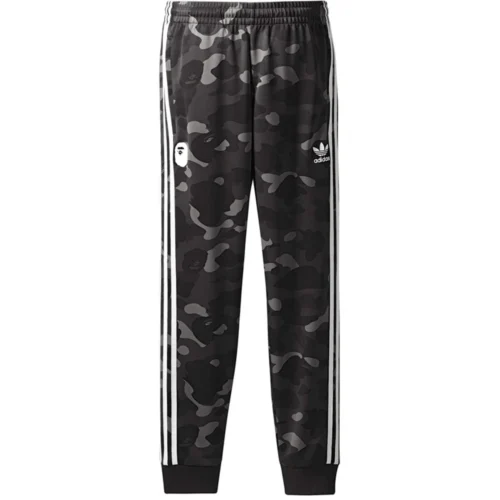
This custom cargo pant develops its identity through layered pocket architecture, not simply added decoration. The supplied image shows tonal black-grey fabric, a broad relaxed leg, and a compact stacked pocket detail, making edge control and layer bulk the decisive factors for comfort, durability, and visual precision.
Edge Control Defines the Pocket
The supplied image shows a compact cargo pocket built from overlapping panels, with a narrow strap or flap detail crossing the upper section. Because the pocket outline is highly visible, uneven turns or wavering edges would immediately reduce perceived precision.
The development target is a controlled edge that stays flat without becoming excessively rigid. VeeWen should review seam allowance behavior, corner shaping, edge topstitch distance, and the pocket's recovery after handling before confirming the final construction.
Layer Bulk Must Stay Functional
Layered pocket construction creates useful visual depth, but every added panel increases thickness at the upper leg. On a relaxed silhouette, excess bulk can catch against the body, interfere with sitting, and pull the pocket away from the trouser panel.
The buyer should define which layers are structural and which are visual. Reducing hidden overlap, adjusting flap dimensions, or refining interlining can preserve the stacked appearance while keeping the pocket flexible enough for everyday movement.
Tonal Contrast Exposes Accuracy
The image uses black and charcoal tones, with lighter worn areas emphasizing seams and pocket boundaries. This contrast makes small differences in edge distance, panel alignment, and topstitch tension more noticeable than they would be on a uniformly dark garment.
A stronger contrast may improve shelf impact but also reveals construction variation. The wash and applique review should therefore be combined, checking whether abrasion highlights the intended edges or makes the pocket look uneven across sizes and production panels.
Pocket Placement Balances the Leg
The pocket sits across a broad upper-leg area, where its dimensions strongly influence how the entire pant reads. If positioned too high, it crowds the hip; too low, it can make the leg appear elongated and visually heavy.
Pattern development should map pocket placement against the side seam, front rise, and knee level. The buyer should approve a placement tolerance because even a small shift can change access, balance, and the perceived amount of cargo volume.
Test Loaded and Empty States
A pocket that looks clean when empty may distort once a phone, card case, or small accessory is inserted. Layered edges can gape, straps can twist, and the upper-leg panel can bow if the pocket depth and attachment points are mismatched.
VeeWen's sample workflow should include empty, lightly loaded, seated, and walking checks. These observations reveal whether the applique package supports practical wear or functions only as a flat visual treatment.
VeeWen Development Checkpoint
For VeeWen, the product-specific workflow begins by locking the pocket stack as a measured package. The buyer confirms panel count, edge width, flap function, topstitch direction, and intended bulk; the pattern team then maps those details onto the relaxed leg.
The approval checkpoint is a construction sample reviewed for edge flatness, layer flexibility, access, alignment, and wash interaction. Confirm these details before grading, because scaling the pocket without preserving its edge relationships can change the garment's character.
Buyer Questions
Can the layered pocket be simplified for lower bulk?
Yes. VeeWen can separate structural and visual layers, then review reduced overlap, lighter support materials, or revised flap dimensions during sample development.
How should the pocket edge be approved?
Review the pocket empty and lightly loaded, checking flatness, corner shape, topstitch distance, strap alignment, opening access, and recovery after sitting and walking.
Will washing change the pocket appearance?
It can. Washing may emphasize abrasion, seam contrast, and edge variation, so the pocket construction and wash direction should be approved together.
What is the minimum order for this style?
The commercial minimum is MOQ: 100 pieces per style. Final production remains subject to approved materials, construction, finishing, and order confirmation.
Approve the Layered Pocket Package
Share your pocket sketch, target measurements, fabric direction, and wash reference with VeeWen. We will organize the sample review around edge control, layer bulk, loaded comfort, tonal contrast, and production approval.


Reviews
There are no reviews yet.