


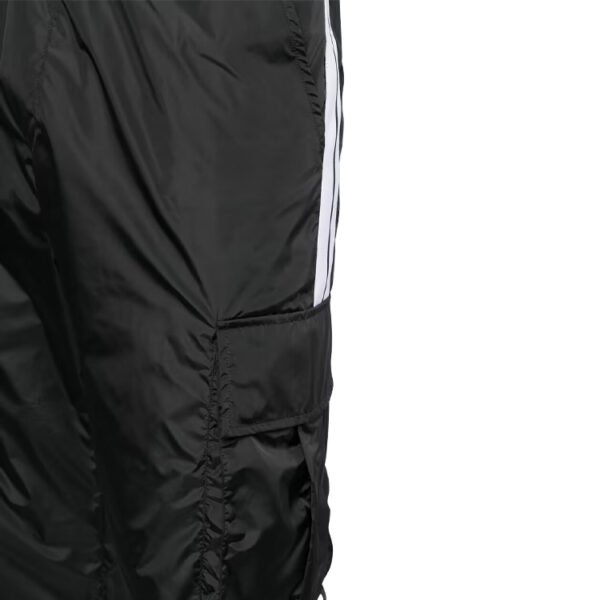


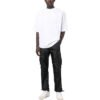
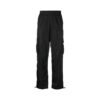

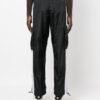
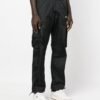

This custom black cargo jean is developed around graded size-set proportion: every size must preserve the utility silhouette, pocket relationship, and controlled hem shape visible in the supplied reference image. VeeWen can use the first approved size as the measurement anchor, then validate how each proportion scales before bulk cutting.
Proportion Starts with the Anchor Size
The reference image presents a balanced utility shape: the upper leg carries practical volume, while the lower leg remains relatively straight before tightening at the hem. That relationship should be measured from one anchor size, because grading only works when the starting proportions are deliberately defined.
For VeeWen development, the buyer should approve waist, front rise, back rise, thigh, knee, inseam, and leg opening as one connected size-set. Increasing only the waist or inseam can distort the cargo stance, making larger sizes appear narrow or smaller sizes look overly bulky.
Rise and Leg Balance Across Sizes
A graded size set changes more than circumference. Rise depth influences where the cargo pocket sits, how the hip falls, and how much fabric gathers above the knee. The image shows a clean upper-body-to-leg transition, so rise and thigh measurements need coordinated increments rather than isolated increases.
The development sample should compare at least the anchor size with adjacent sizes on a fit model or mannequin. This exposes whether the front rise pulls, the back rise collapses, or the straight leg shifts toward a tapered appearance as dimensions move away from the base measurement.
Cargo Pockets Need Coordinate Grading
The visible side cargo pockets are strong focal points because their rectangular volume interrupts the uninterrupted black leg. Their vertical position, width, flap relationship, and distance from the side seam must therefore grade with the leg landmarks, not simply move by a uniform numerical increment.
VeeWen can map pocket coordinates against waistline, hip, knee, and hem reference points during pattern review. That method protects usability and visual balance simultaneously, while allowing the buyer to decide whether pocket capacity should increase, remain stable, or reduce across the approved size range.
Hem Adjustment Changes the Silhouette
The image shows drawcord details at both lower hems, creating a second silhouette option: the trouser can fall straighter when released or gather closer at the ankle when adjusted. Because the opening changes visually, the base circumference and drawcord exit position require explicit size-set rules.
A larger size may need additional hem width to preserve a relaxed fall before adjustment, while a smaller size may need restrained gathering to avoid excessive bunching. The buyer should review released and tightened states on adjacent sizes before confirming the construction and trim specification.
Black Surface Makes Errors Obvious
Black emphasizes proportion because seam lines, pocket edges, and hem changes are read as strong graphic boundaries. The supplied image also shows a slight reflective surface, but that appearance does not verify fiber content, denim weight, coating, or finishing chemistry, all of which remain development questions.
Request the material reference, fabric weight, stretch status, shrinkage allowance, and intended wash route before locking the pattern. Any laundering or surface treatment can alter dimensions, hand feel, and pocket stability, so graded measurements should be reviewed after the intended finish is confirmed.
VeeWen Workflow and Approval Checkpoint
VeeWen's product-development workflow should treat this style as a linked proportion study: establish the anchor size, build the graded pattern, place cargo details by body landmarks, and inspect both hem positions. This workflow directly addresses the reference silhouette instead of treating grading as a final administrative adjustment.
The buyer's approval checkpoint is a complete size-set review covering measurements, pocket coordinates, rise balance, released hem, tightened hem, and post-finish appearance. Once those elements agree, confirm the material route and submit the style for production under MOQ: 100 pieces per style.
Buyer Questions
Is this product confirmed as denim?
The assigned product type is Jeans, and the source title references denim. The supplied image alone cannot verify weave, weight, composition, stretch, or laundering, so those details require confirmation.
How should the graded size set be approved?
Approve one anchor size first, then compare adjacent sizes for rise, thigh, knee, leg opening, pocket coordinates, and both released and tightened hem positions before production.
Can the cargo pockets remain visually aligned across sizes?
Yes, if pocket coordinates are graded against waist, hip, knee, and seam landmarks. The buyer should approve the coordinate table alongside physical samples because uniform movement may distort placement.
What is the minimum order for this style?
The commercial minimum is MOQ: 100 pieces per style. Final material, trim, size distribution, and production specifications should be confirmed before the order is released.
Approve the Proportion Map
Send VeeWen your target size chart and material direction for this black utility jean. We will align the anchor size, graded measurements, pocket coordinates, hem states, and production checkpoint for review.


Reviews
There are no reviews yet.