


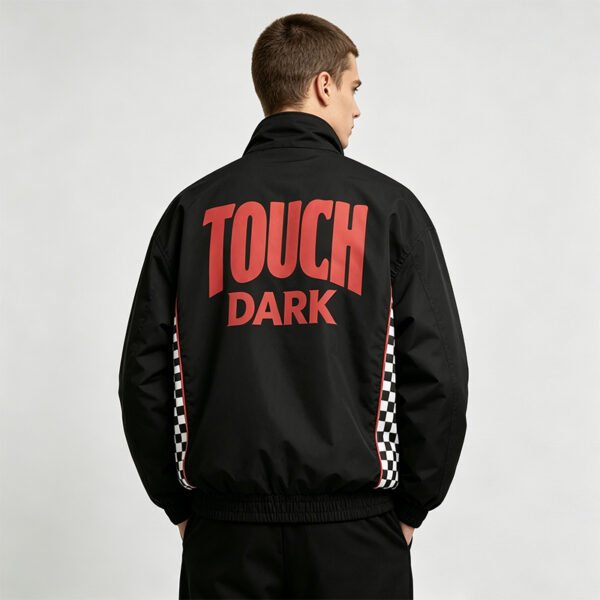
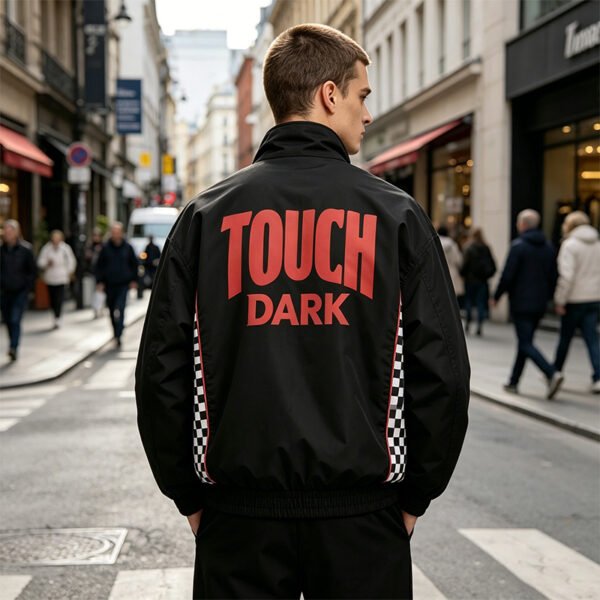




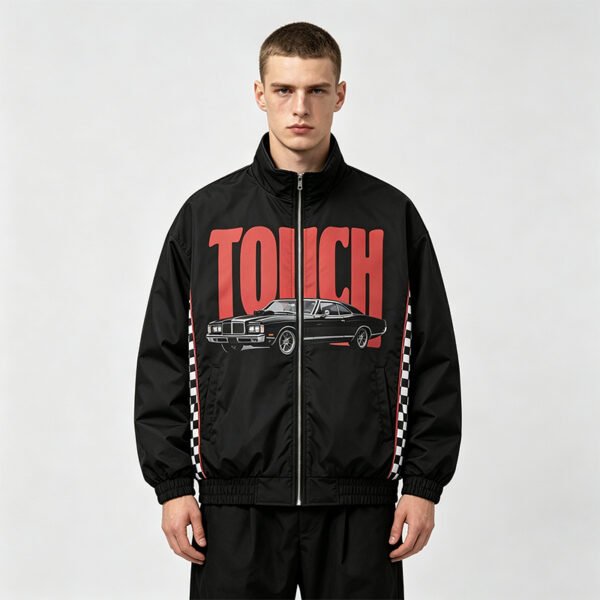

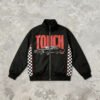





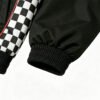


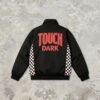
Develop this custom black racing bomber around controlled applique edges and restrained layer bulk. The supplied image shows a black zip jacket, bold central vehicle artwork, checkerboard side panels, and gathered rib openings, creating several high-contrast transitions that require deliberate sequencing during sampling and approval.
Graphic Boundaries Define the Approval Risk
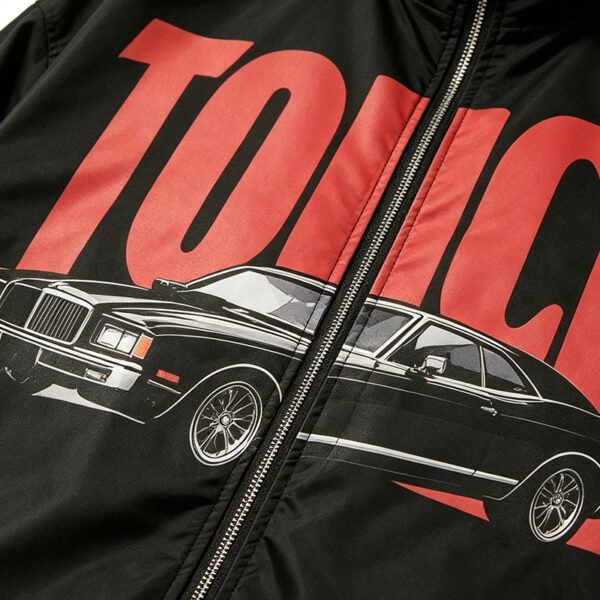
The front image places a large red, white, and gray vehicle graphic across the black body, while checkerboard panels flank it vertically. Because these elements sit close to seams and the zipper, artwork scale and panel alignment should be approved together.
The side treatment appears visually segmented rather than evenly distributed across the garment. That concentration makes small edge deviations noticeable, especially where checkerboard squares approach black shell areas. The first sample should therefore establish panel shape, square scale, and clean boundary tolerance before grading.
Control Layer Bulk at Joined Panels
Checkerboard side sections introduce additional material or decoration beside the central shell, while the front artwork adds another surface layer. Even without confirmed fabric weights, the visible stack indicates that seam allowances and turn-under decisions may influence drape and side-front thickness.
VeeWen's development workflow should map every decoration layer against seam lines before cutting the approval sample. The technical review can then identify whether panel edges need reduced allowances, whether artwork must shift inward, and whether the side construction remains comfortable when zipped.
Protect the Zipper and Collar Zone
The full-length front zipper divides the central graphic and terminates beneath a raised collar. This placement means artwork registration, zipper tape width, and collar seam allowance interact directly. A minor shift could interrupt the vehicle illustration or leave uneven visual spacing beside the closure.
Approve a front-panel artwork file with a defined zipper exclusion zone and measured collar relationship. VeeWen can use that reference during pattern correction, ensuring the graphic remains balanced after sewing rather than relying on print placement alone.
Manage Ribbed Opening Accumulation
The image clearly shows gathered ribbed cuffs and a ribbed waistband, both creating concentrated fullness where the smooth black body meets elasticated openings. These zones can amplify thickness if adjacent panels or internal allowances are stacked without relief.
During sample review, VeeWen should inspect cuff and waistband joins from both exterior and interior sides. The buyer's checkpoint is a flat, controlled transition with secure attachment, consistent gathering, and no unwanted distortion of nearby checkerboard or graphic edges.
Translate the Visual Map into Production Files
This jacket depends on a coordinated package rather than isolated artwork. Pattern pieces, checkerboard panel files, central graphic placement, zipper measurements, rib dimensions, and seam annotations must reference the same body size and construction sequence.
VeeWen's product-development workflow can consolidate those inputs into a style-specific approval record. The buyer should sign off the decorated front, side-panel geometry, rib specifications, and graded placement rules together, because changing one element may alter several neighboring boundaries.
Set the Preproduction Decision Gate
Before releasing the style for production, review a complete sample for edge cleanliness, panel symmetry, artwork interruption, zipper operation, and localized bulk. The supplied image establishes the intended contrast, but it does not verify inside construction, material behavior, or wash durability.
The approval decision should record accepted tolerances and unresolved confirmations for shell, lining, decoration method, and care requirements. With those points documented, VeeWen can proceed toward MOQ: 100 pieces per style under a controlled technical reference.
Buyer Questions
Is the checkerboard treatment printed or applied as a separate panel?
The image shows a distinct checkerboard side treatment, but it does not verify construction. Confirm whether production uses applique, cut panels, print, or a combined method.
What should be approved before grading this jacket?
Approve the front artwork position, checkerboard geometry, zipper exclusion zone, rib dimensions, seam allowances, and edge tolerances before applying graded sizes.
Can the jacket use a different shell material?
Yes, material alternatives can be developed, but each change requires renewed checks for drape, seam thickness, decoration adhesion, zipper behavior, and rib transitions.
What is the commercial minimum for this style?
The exact commercial minimum is MOQ: 100 pieces per style. Final material, color, decoration, size ratio, and packaging details remain subject to approval.
Approve the Racing Panel Map
Send the preferred shell reference, size chart, artwork files, and checkerboard construction direction. VeeWen can organize the style review around edge control, layer bulk, and the MOQ: 100 pieces per style requirement.



Reviews
There are no reviews yet.