


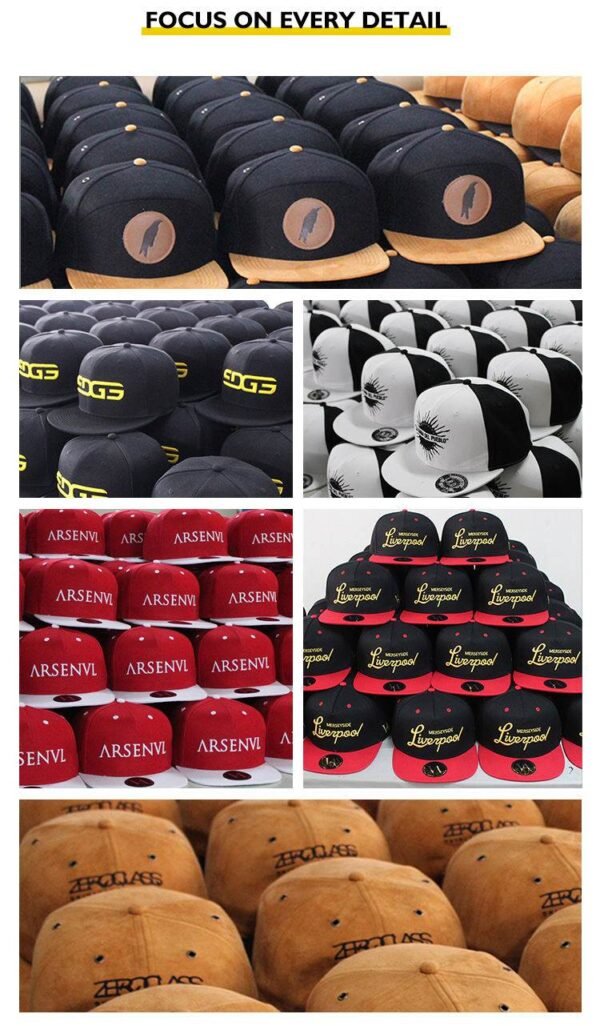

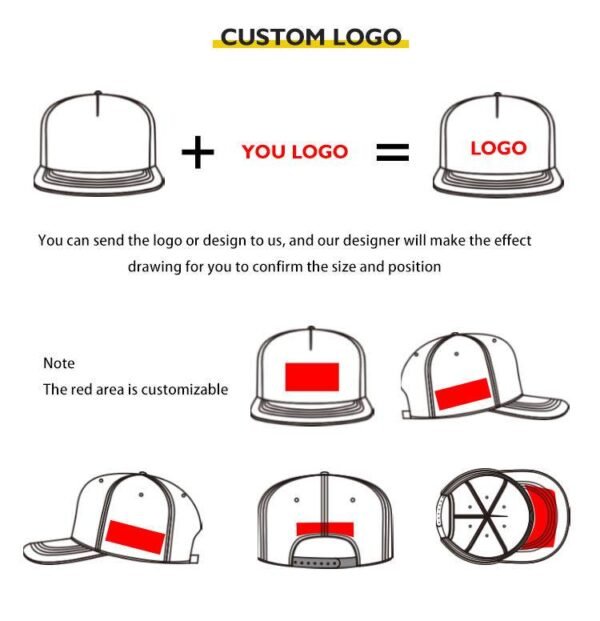





This custom snapback cap is developed around proportion rather than decoration alone. The supplied image shows a structured black crown, broad flat brim, converging panel seams, and raised contrasting front work. VeeWen can use these visible relationships as approval checkpoints before locking the production pattern.
Proportion Starts With the Crown Block
The image presents a crown with enough vertical rise to maintain a firm, architectural silhouette above the brim. If the block is lowered, the front decoration may dominate; if raised excessively, the cap can feel top-heavy. The first sample should establish the middle ground.
Panel seams visibly converge toward a covered top button, creating directional lines that frame the front area. Their spacing affects how wide or narrow the crown appears from each angle. VeeWen should mark seam positions on the pattern before decoration placement is finalized.
Brim Projection Controls the Lower Silhouette
The flat brim extends substantially beyond the front crown and appears broad relative to the cap body. That projection creates a streetwear-oriented profile, but excessive length can overwhelm the face or distort balance. Brim width, curvature tolerance, and attachment angle should be reviewed together.
Brim stitching is visibly arranged in multiple parallel rows near the edge, giving the lower component a controlled finish. Stitch density, thread selection, and edge distance remain To Confirm. The development decision is whether the visible structure supports the intended retail silhouette consistently.
Opening Geometry Completes the Fit
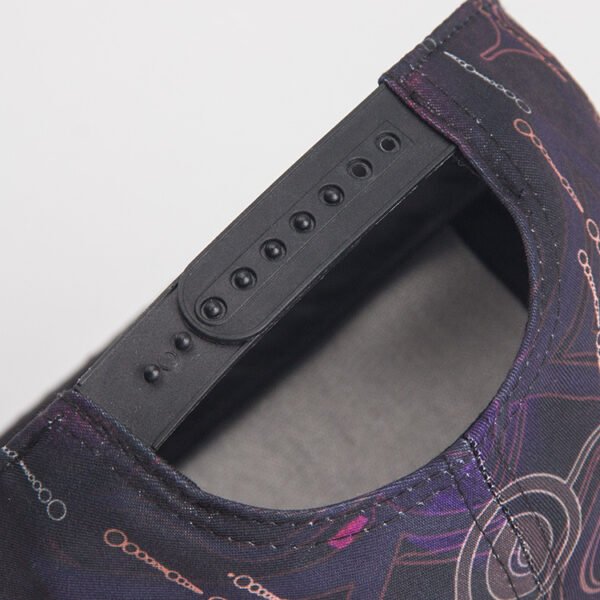
A snapback format requires the rear opening to absorb wearer variation without making the crown collapse. The supplied category identifies an adjustable snapback construction, while exact closure dimensions are not provided. VeeWen should grade the opening, overlap, and eyelet placement against the approved crown block.
The opening must also preserve the cap's visual proportion when tightened or loosened. A closure that gathers the rear too sharply can pull the side seams backward; a shallow adjustment range can restrict usability. Sample review should test several settings on representative head forms.
Decoration Must Respect the Front Panel
The supplied image shows large white raised lettering spanning the lower front panels, with strong contrast against the black ground. Because the decoration crosses seam-adjacent areas visually, its baseline, height, and spacing must follow the panel geometry rather than forcing the crown out of shape.
VeeWen's development workflow should confirm the front panel pattern first, then position artwork on the actual graded piece. A pre-production sample can reveal whether raised work changes perceived crown height, interferes with seams, or creates unwanted tension around the front panel.
Construction Review Protects the Proportion
Visible details include a covered top button, stitched panel joins, a clean brim edge, and a firm crown presentation. These observations support a structured construction direction, but they do not verify internal reinforcement, composition, seam allowance, or final stitch specifications. Those details require technical confirmation.
During VeeWen's technical review, the buyer should approve a measured specification sheet alongside front, side, and rear photographs. The review should record crown rise, seam angles, brim projection, closure range, and decoration placement so later size or color changes preserve the argument.
Approval Checkpoint for Production Release
The key approval is not simply whether the cap looks attractive in one image. The buyer should confirm that crown rise, seam convergence, brim projection, and opening adjustment remain visually coherent across the complete viewing set and on the intended wearer or fit form.
Once those measurements and images are approved, VeeWen can carry the confirmed block into sample iteration and production planning under the stated commercial minimum. Any change to artwork scale, closure hardware, or brim profile should trigger a proportion review before release.
Buyer Questions
What fit information should be approved first?
Approve crown rise, finished circumference range, rear overlap, and brim projection together, using front, side, and rear sample views before confirming the final pattern.
Is the front decoration included as embroidery?
Raised front decoration is visibly present, but its exact stitch method, backing, dimensions, and thread composition remain To Confirm during artwork sampling.
Can the brim shape be modified?
Yes, brim projection and curvature can be developed, but every change should be checked against crown rise and front-panel decoration to preserve balance.
What is the commercial minimum?
The stated commercial minimum is MOQ: 100 pieces per style. Final sampling, packaging, and production details require confirmation within the approved development brief.
Approve the Proportion Before Production
Send the intended artwork, target opening range, and preferred brim profile for a VeeWen development review focused on measurable crown, seam, and silhouette relationships.


Reviews
There are no reviews yet.