
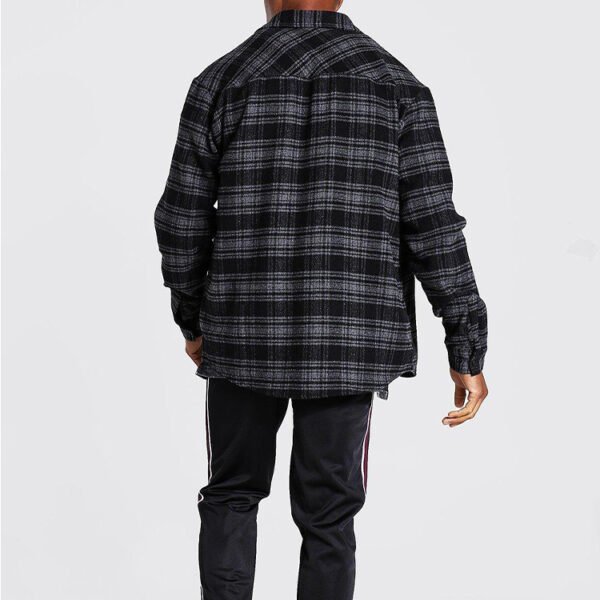


This jacket development record focuses on seam visibility within a dark plaid overshirt construction. The supplied back image shows grey linework, defined shoulder and sleeve joins, gathered cuffs, and a relaxed hem, making thread choice a central control for perceived structure and finish.
Plaid contrast makes seam thread consequential
The supplied back image presents a black ground interrupted by repeated grey plaid lines, so seam visibility will depend on both thread color and its relationship to the pattern. A poorly matched thread can create unintended stripes across already active surfaces.
Thread should be selected after the actual plaid fabric is available, with samples placed across shoulder, sleeve, and side seams. The buyer must decide whether construction should blend into the grid or provide a controlled tonal outline.
Shoulder seams define the jacket frame
The back view makes the shoulder joins and upper sleeve lines easy to read because the relaxed body holds a broad, stable shape. Stitch contrast at these points can sharpen the jacket frame, while excessive prominence may make the garment look rigid.
Review seam appearance on the intended seam allowance and stitch density, since both change how thread reflects across the plaid. The objective is consistent definition along curved or angled joins without creating visibly uneven line weight.
Sleeve seams need continuity through movement
Long sleeves and gathered cuffs create a transition from a relatively open upper arm to a compressed wrist area. Thread visibility should remain coherent through that change, especially where fabric folds can interrupt plaid alignment and expose seam construction.
Sample approval should include relaxed and worn positions, not only a flat back photograph. Check whether the thread remains clean at elbow folds, cuff gathering, and underarm joins, then confirm reinforcement needs without overloading the seam.
Elastic cuffs alter perceived stitch emphasis
The image visibly shows gathered sleeve ends, indicating that elastic tension concentrates fabric near the wrist. That compression can make bartacks, topstitching, and seam thread appear heavier than they do across the smoother body panels.
The buyer should inspect cuff construction from both inside and outside, comparing thread visibility before and after stretch. A balanced result keeps the cuff secure and intentional while preventing bright or thick stitching from distracting against the plaid.
VeeWen workflow resolves thread decisions physically
VeeWen can build a focused trim-and-seam approval sheet using the plaid swatch, proposed thread cards, stitch samples, cuff elastic, and key garment photographs. This workflow lets the buyer judge appearance under actual fabric tension instead of relying on color names alone.
The development sample should prioritize back, shoulder, sleeve, side, and cuff views because those areas carry the visible construction evidence. Once thread appearance is approved, the decision can be recorded with stitch specifications and applied consistently across the style.
Buyer checkpoint: approve visibility, not just color
Thread approval should cover contrast, thickness, stitch density, and behavior over seams that curve, fold, or gather. Choosing a nominally matching color is insufficient if the thread still reflects differently from the plaid ground.
Approve the complete seam appearance on a wearable sample, then confirm whether the final direction is low-contrast utility or deliberate structural framing. Record the selected thread and stitch treatment before authorizing the remaining trim and label package.
Buyer Questions
Why is thread choice important on this plaid jacket?
The dark plaid ground already contains repeated grey lines. Thread can either merge with that pattern or add another strong line, changing how structured, clean, or busy the jacket appears.
What does the supplied image confirm about construction?
It visibly confirms a relaxed back silhouette, long sleeves, shoulder and sleeve seams, a straight lower edge, dark plaid styling, and gathered sleeve ends.
Should the thread match the black ground or grey plaid?
Either direction may work, depending on the intended visual hierarchy. Review black, grey, and intermediate options on actual seams before approving the final thread specification.
What should be included in the approval sample?
Include the actual plaid fabric, chosen thread, stitch density, sleeve elastic, seam allowances, and back and cuff views so appearance can be judged under realistic construction conditions.
Approve seam visibility for the plaid jacket.
Share your target plaid swatch, thread contrast preference, cuff behavior, and label requirements with VeeWen. We will organize the development review around physical seam appearance before progressing toward sampling and MOQ: 100 pieces per style.


Reviews
There are no reviews yet.