
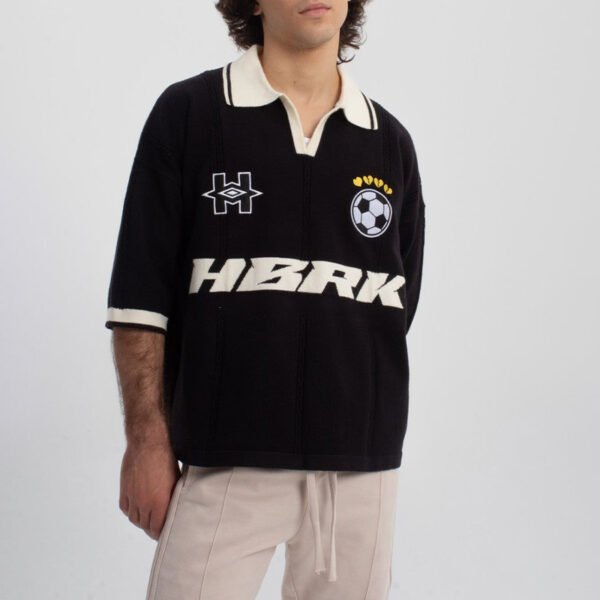
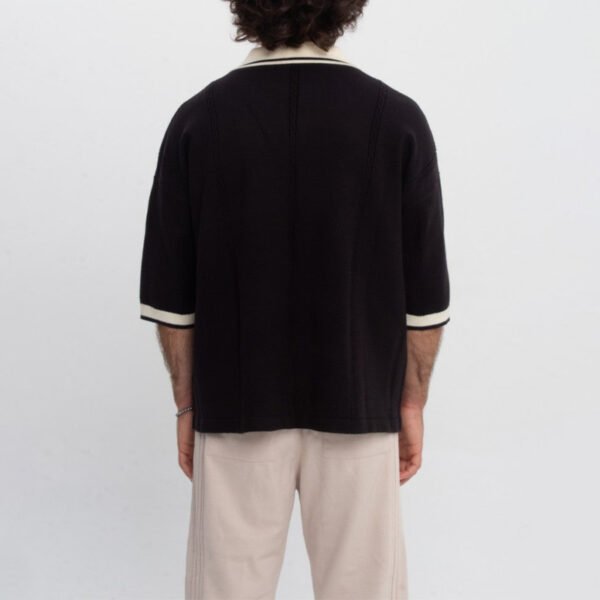
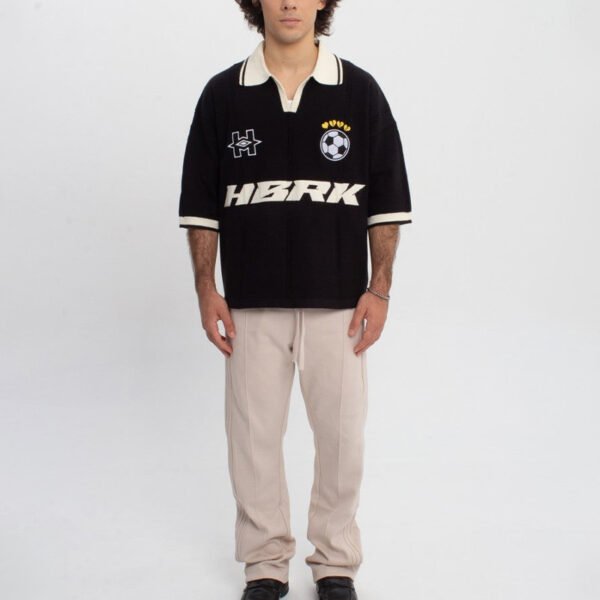


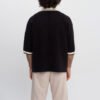

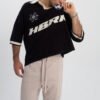

This custom knit sport polo is developed around elastic insertion and torque prevention: the goal is keeping a ribbed, contrast-trimmed body visually aligned after movement. The black ground, ivory collar, sleeve bands, chest emblems, and broad center graphic create a clear approval target for sampling and wear evaluation.
Elastic Control Defines the Technical Direction
Elastic insertion matters because a knit polo can elongate unevenly at the collar, cuffs, placket, or graphic band. Stabilizing selected seams or edge structures helps distribute recovery forces, reducing spiraling and localized stretching while preserving the relaxed silhouette shown in the front-facing image.
The construction decision is not simply adding stretch. VeeWen development should map where elastic is inserted, how much restraint each zone needs, and whether the collar and cuff ribs recover at comparable rates. Excess restraint can make the garment feel rigid, while insufficient control permits torque.
Contrast Lines Make Torque Visible
The front image shows a black knit body with a light collar, matching sleeve edging, and a wide ivory chest graphic crossing the torso. Those horizontal and contrasting elements make torque easy to see: any diagonal drift across the band or collar will be apparent during approval.
Development imagery also indicates a compact long-sleeve polo proportion with a straight lower edge and roomy body. The visual balance depends on the chest band staying level against that hem. Pattern correction should therefore be reviewed alongside elastic placement, because either choice can alter perceived alignment.
Collar and Cuff Recovery Must Agree
At the collar, the ivory rib frame and dark body create a high-contrast boundary that should remain flat rather than roll outward. A controlled elastic or stabilizing insertion can support that boundary, but it must be balanced with neckline comfort and opening depth, keeping access practical.
At the cuffs, matching light edging visually repeats the collar and gives the sleeve opening a recovery line. Elastic insertion may reduce flare and twisting, yet overly firm cuffs can interrupt layering. Buyers should approve the balance with a bent-arm fit check, not a lay alone.
Graphic Weight Affects Body Alignment
Because the chest graphic spans the body horizontally, its carrier area can expose torque before smaller details do. The sample review should inspect the band at rest, during reach, and after release, recording whether the artwork remains level and whether adjacent knit panels recover together.
Embroidery and chest motifs add localized weight and stiffness, even when their exact technique is not confirmed by the supplied evidence. That uncertainty matters: placement, backing, and stitch density can influence drape. Confirm the decoration package after the base knit and torque-control method are approved.
VeeWen Workflow Converts the Image into Checks
Within VeeWen's product-development workflow, the technical brief should identify elastic insertion points as approval variables, then translate them into pattern, rib, and seam notes. The visual reference becomes a torque map: collar, cuffs, placket, and chest band receive separate alignment checks before size grading.
At the sample checkpoint, compare relaxed photographs with movement observations and measure recovery after repeated handling, without treating unverified performance as established. Approve the next iteration only when comfort, opening function, graphic level, and edge alignment support the intended streetwear presentation.
Approve Stability Against the Intended Hand
The principal trade-off is visual stability versus softness and unrestricted movement. More elastic control can protect the polo's graphic geometry, while less intervention may deliver a freer hand. Neither outcome is universally correct; the right setting depends on target fit, wear intensity, and decoration weight.
Before bulk approval, buyers should sign off on a defined torque standard using the visible contrast lines as reference points. Request confirmation of fiber content, fabric weight, elastic method, decoration construction, and wash-care behavior separately, because those specifications remain open until documented.
Buyer Questions
What does the supplied evidence confirm about this polo?
The reference shows a knit polo silhouette with long sleeves, contrast collar and cuffs, a black ground, and a broad light chest graphic. Exact yarn, weight, stretch percentage, and decoration construction require confirmation.
Why is elastic insertion the manufacturing focus?
Elastic insertion is the development focus for controlling edge recovery and preventing visible spiraling. Its final location, width, tension, and compatibility with the knit should be approved through samples and movement checks.
How should torque be reviewed during sampling?
Use the contrasting collar, cuffs, and horizontal chest graphic as alignment references. Review the garment relaxed, worn, bent, and after release, checking whether lines stay level and whether the body, neckline, and sleeve openings recover consistently.
Can VeeWen develop this at the stated MOQ?
Yes, the record is suitable for MOQ: 100 pieces per style, subject to final technical approval. Confirm the base knit, torque-control construction, decoration package, measurements, labeling, and care details before commercial sampling proceeds.
Approve the Torque-Control Brief
Send VeeWen your target measurements, knit reference, decoration artwork, and torque priorities. We can organize the approval brief around edge recovery, movement alignment, and the checkpoints required before MOQ: 100 pieces per style is confirmed.



Reviews
There are no reviews yet.