





A loose multipocket jean needs more than generous measurements: its waistband must recover without disturbing the long leg line. This development direction treats elastic insertion and torque prevention as linked controls, using the visible cargo layout and panel seams to define approval checkpoints.
Elastic Placement Must Preserve the Waistline
Elastic can improve comfort in a loose jean, but its insertion method determines whether the waistband gathers evenly or pulls the seat and pocket openings out of balance. VeeWen should first lock casing width, extension range, recovery target, and visible waistband treatment.
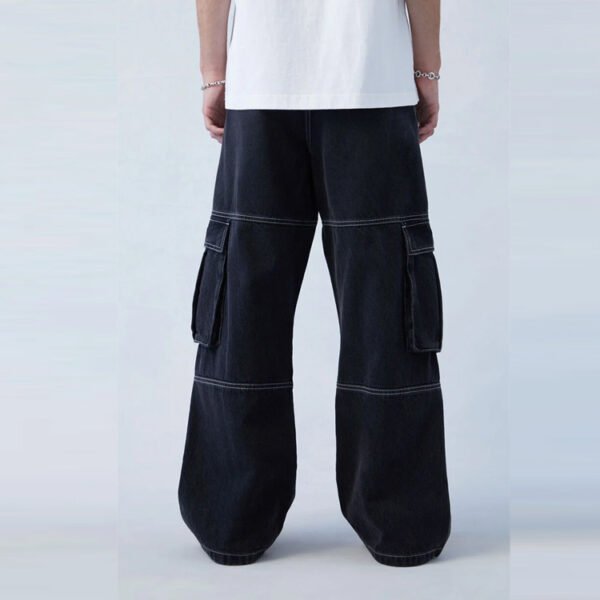
The supplied image presents a relatively clean upper block above oversized cargo pockets, so elastic should remain visually controlled rather than becoming the dominant design feature. A development sample should compare enclosed elastic, partial insertion, and hybrid waistband options before the pattern is approved.
Cargo Loading Creates a Torque Risk
The large side pockets shown on the legs add concentrated weight away from the center seam. When pocket bags, flaps, or contents pull unevenly, the outer leg can rotate forward or backward, changing the intended loose silhouette and making both legs appear mismatched.
Torque prevention therefore belongs in pattern review and sewing review together. Pocket placement should be mirrored from stable grain references, seam allowances should remain consistent, and the sample should be inspected empty and lightly loaded to reveal rotation before grading.
Horizontal Seams Become Control Lines
Visible horizontal seams cross the thighs and lower legs in the supplied image, creating practical visual datums for checking twist. If these lines rise, dip, or angle differently between sides, the problem may indicate panel distortion, leg rotation, or inconsistent ease distribution.
VeeWen's approval notes should record seam level, front-to-back balance, and the relationship between each horizontal line and the cargo pocket edges. These measurements turn a visual concern into a repeatable inspection method for the approved size and later production checks.
Loose Fit Needs Directed Ease
A loose jean is not simply an enlarged slim jean. The image shows volume through the thigh, knee, and hem, with enough space for the cargo construction to sit without collapsing. Ease should be distributed deliberately so the legs hang relaxed while the waist remains controlled.
Pattern development should separate comfort ease from pocket and panel allowance, then evaluate the garment on a moving fit model. The buyer's decision is whether the silhouette stays intentional during walking, sitting, and pocket access, rather than only matching a flat measurement chart.
Finish Should Support Inspection
The dark appearance and light contrast stitching make construction clarity part of the product's visual identity. A heavy wash, sanding pattern, or aggressive abrasion could obscure seam references and make torque defects harder to identify, particularly around pocket corners and horizontal panel joins.
For this reason, the wash direction should be reviewed after the construction sample, not treated as an isolated finishing choice. VeeWen can use the approved seam map to judge whether color variation preserves pocket symmetry, leg datums, and clean topstitch visibility.
VeeWen Workflow Checkpoint
VeeWen's product-development workflow should open with a measurement map for elastic insertion, waistband recovery, pocket coordinates, panel levels, and grain direction. The first sample then tests the physical interaction between these decisions, documenting movement behavior instead of approving each feature independently.
Before bulk cutting, the buyer should sign off the graded pattern, elastic method, pocket reinforcement, seam map, and wash reference together. The commercial gate remains MOQ: 100 pieces per style, while composition, weight, and final production specifications stay tied to approved references.
Buyer Questions
Is the waistband elastic already confirmed?
No. Elastic insertion is the assigned development axis, but casing, extension, recovery, and final waistband construction require an approved sample and measurement review.
How should pocket torque be evaluated?
Inspect the jeans empty and lightly loaded, comparing pocket coordinates, side seams, horizontal panels, and leg hang while standing, walking, sitting, and accessing compartments.
Can the loose silhouette be graded across sizes?
Yes, subject to approval. Grade leg ease, pocket scale, seam levels, and waistband behavior independently so larger sizes do not gain uncontrolled visual distortion.
What is the minimum order?
The exact commercial minimum is MOQ: 100 pieces per style. Fabric composition, wash development, packaging, and other production details remain subject to approval.
Approve the Waistband and Torque Test
Send the target size chart, denim reference, and pocket-loading requirements so VeeWen can prepare the first development review around elastic recovery, seam datums, and stable leg hang.


Reviews
There are no reviews yet.