
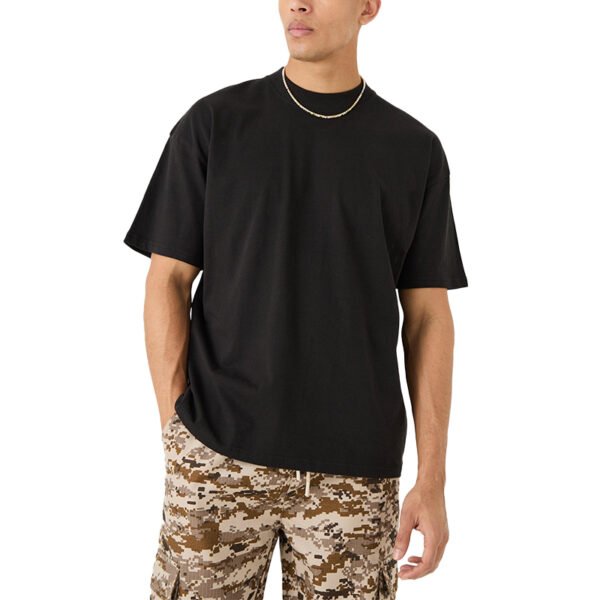
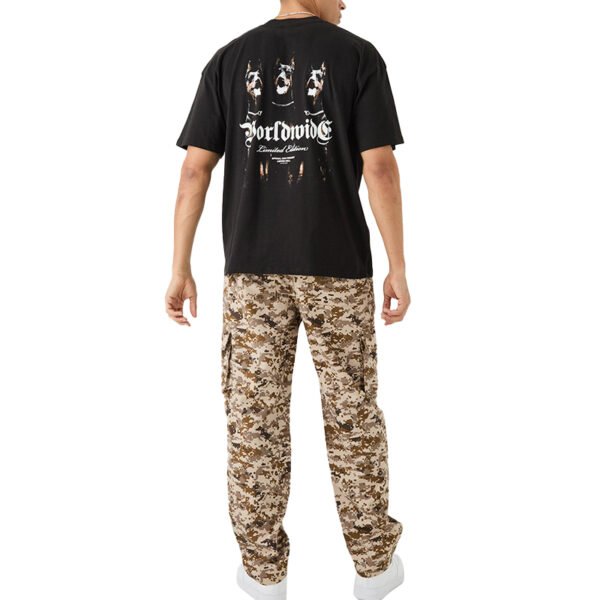
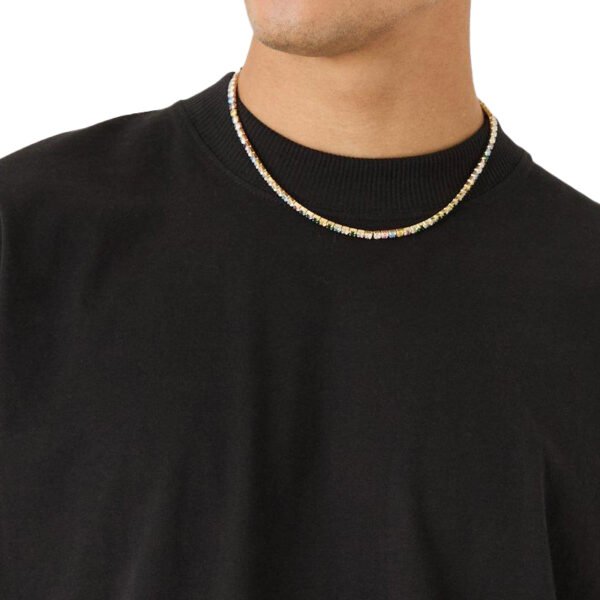
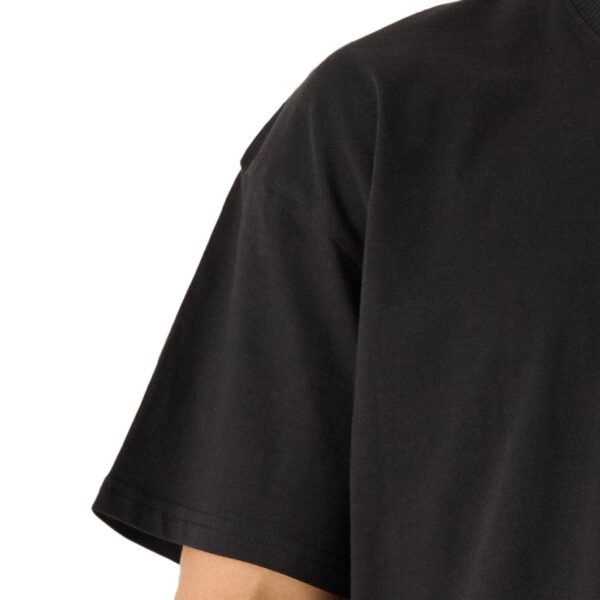
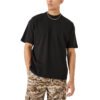
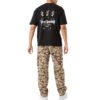
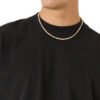

This custom black oversized T-shirt is a development base for testing trim decisions without sacrificing the uncomplicated pullover identity shown in the image. Its open crew neckline, broad short sleeves, and uninterrupted black torso make clearance review practical before any optional zip puller is approved.
Why Closure Absence Matters
The image shows a plain crew-neck opening and no zipper, placket, or puller. That absence is useful evidence: the neckline currently distributes pressure continuously, while the chest remains uninterrupted for artwork. A hardware decision would therefore change the garment's operating behavior.
For buyers considering a quarter-zip variation, puller size cannot be selected independently from neckline height, tape width, slider travel, and artwork boundaries. Oversized proportions create room visually, but they do not guarantee comfortable movement or clean sewing clearance.
Operational Clearance Around the Neck
A puller needs enough finger access to operate, yet excessive scale can strike the chin, distort the neckline, or create a heavy focal point. On this reference, the crew neck offers a clear starting boundary for mapping travel, end stops, and reinforcement before sampling.
VeeWen can translate that map into a development checkpoint covering neckline construction, zipper insertion, puller reach, and print exclusion zones. The sample should be reviewed opened and closed, while worn, to expose interference that a flat technical drawing may hide.
Graphic Placement Consequences
The black front appears visually uninterrupted, which allows a print or tonal graphic to occupy the torso without competing with closure hardware. Adding a zipper would divide that field and could require artwork separation, registration changes, or a narrower safe zone around the operating path.
The source wording identifies a printed black-and-white direction, but it does not verify artwork method, scale, or placement. Buyers should approve the graphic file alongside the closure proposal, checking whether contrast, hand feel, and durability expectations remain compatible.
Fit And Movement Trade-Offs
The model image suggests a roomy body, dropped shoulder impression, and sleeves extending well beyond a close athletic line. That volume supports layered styling, but a front closure can introduce weight and stiffness across the center, changing drape during reaching, sitting, and repeated opening.
A smaller puller may protect softness and visual restraint, whereas a larger puller improves discoverability and grip. The correct choice depends on intended wear behavior, user age range, and styling direction; none should be finalized from appearance alone.
VeeWen Development Workflow
VeeWen should first lock the existing T-shirt block as the control sample, documenting neckline dimensions, chest artwork boundaries, sleeve balance, and hem behavior. A second sample can then isolate the proposed zipper and puller, making the construction change measurable rather than blending several variables.
The buyer approval gate is a side-by-side wear review: control T-shirt versus closure sample. Confirm chin clearance, puller reach, print separation, seam comfort, and visual balance before issuing the final tech pack and applying MOQ: 100 pieces per style.
Approval Checkpoint Before Bulk
Before bulk approval, confirm whether the product remains a crew-neck T-shirt or becomes a different closure-led style. That classification affects pattern engineering, trim sourcing, artwork planning, sewing operations, labeling, and the buyer's expected retail description.
Request confirmation of fabric composition, weight, print process, zipper specification, puller dimensions, testing requirements, and final size grading. The supplied evidence supports visual direction only, so production release should depend on approved samples and documented measurements.
Buyer Questions
Is a zipper included in this T-shirt reference?
No. The supplied image shows no zipper or puller; closure hardware is an optional development direction requiring separate pattern, trim, comfort, and artwork approval.
What does operational clearance mean here?
It means checking puller access, slider travel, neckline comfort, seam spacing, and artwork exclusion zones so hardware operates without interference during wear.
Can the clean crew-neck version remain unchanged?
Yes. It can remain the control sample, allowing buyers to compare the original pullover behavior with any proposed closure variation before approving a changed style.
What is the commercial minimum?
The commercial minimum is MOQ: 100 pieces per style, applied after the buyer approves the construction, materials, artwork, measurements, and final production configuration.
Approve The Closure Direction
Send the target measurements, artwork, fabric references, and trim preference to begin development. VeeWen can organize the control sample and optional closure sample for a focused wear and clearance review.


Reviews
There are no reviews yet.