
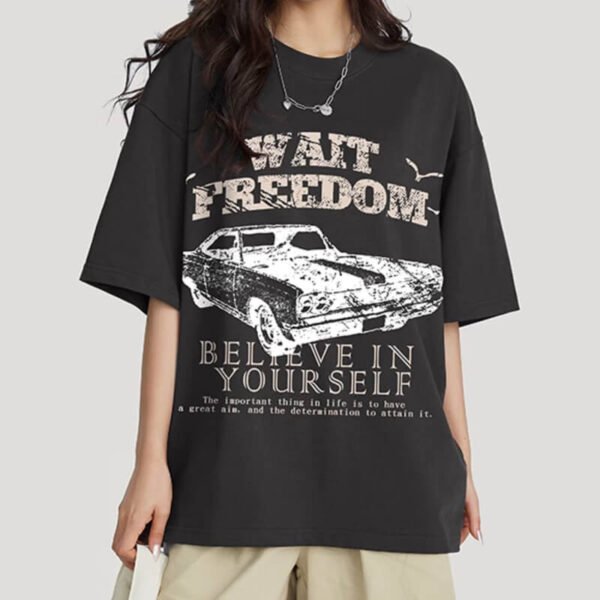
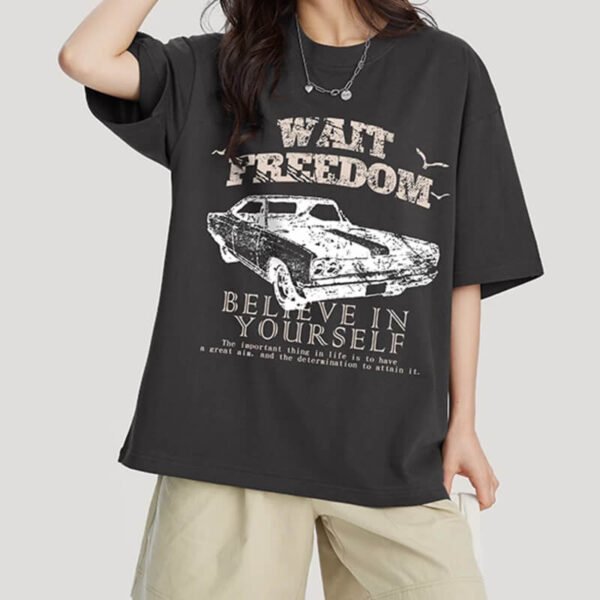
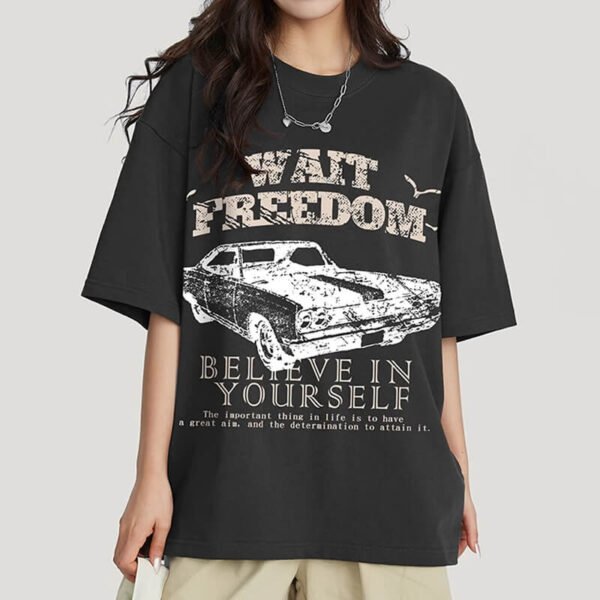
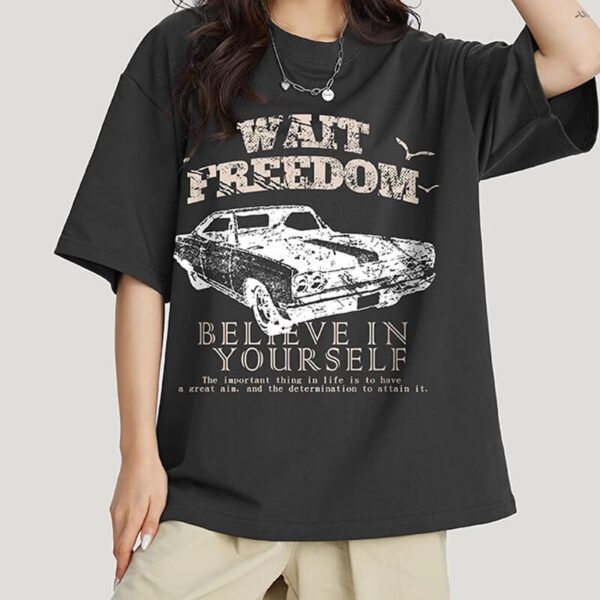
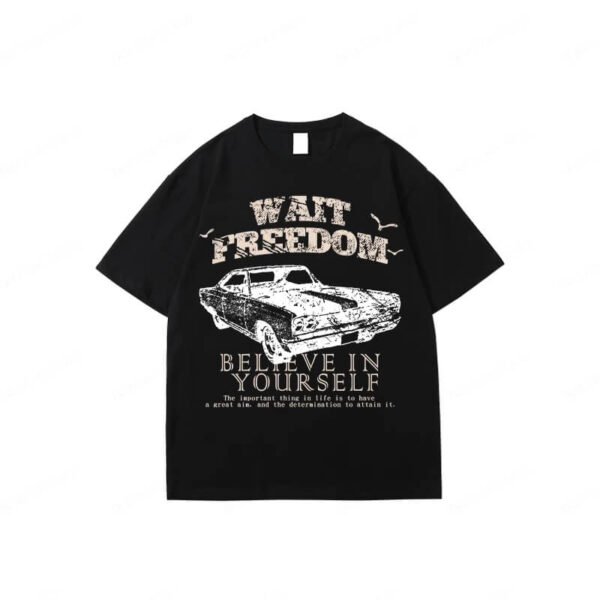




This black graphic T-shirt reference is valuable for a zipper-ready adaptation because its large front print and ribbed crew neck leave little tolerance for construction drift. The 230 GSM source reference offers a substantial starting point, while the collar junction controls the final engineering decision.
The Visible Collar Sets the Adaptation Boundary
The supplied image shows a ribbed crew neckline with a clean circular opening, while no zipper appears in the reference. Converting this area into a quarter-zip or short center-front opening changes the neckline load, seam direction, and wearing behavior at the exact focal point.
A zipper cannot simply be inserted through the existing rib without controlling extension, tape width, and seam allowance. The buyer should first choose whether the collar remains ribbed, becomes a self-fabric stand collar, or uses a hybrid finish around the opening.
Why the 230 GSM Reference Matters
The source wording identifies 230 GSM cotton, which indicates a substantial reference weight for a graphic T-shirt, but it does not establish exact composition or stability. A heavier base can support zipper insertion, yet excessive thickness at the neckline may create an uncomfortable ridge.
The sample should confirm actual panel thickness, stretch recovery, and seam behavior where the zipper tape meets the front body. These checks matter because a stable-looking collar can still flare, twist, or pull the print out of alignment during wear and finishing.
Protecting the Front Graphic
The front graphic occupies a broad central area from the upper chest toward the abdomen, leaving the neckline as a critical alignment reference. A zipper opening introduces a vertical interruption, so artwork must be redrawn or zoned to avoid teeth, tape, seam allowance, and slider clearance.
Keep the print's most important lettering or image detail outside the zipper construction zone. The buyer should approve a marked artwork template on the actual pattern, confirming that the graphic remains visually centered when the zipper is closed and naturally worn.
Controlling Bulk at the Intersection
At the collar-to-zipper intersection, rib thickness, zipper tape, topstitching, seam turn, and reinforcement can stack into a concentrated ridge. That bulk may press against the neck or force the collar edge outward, especially on a relaxed garment with a broad front panel.
A controlled construction can use narrowed seam allowances, a clean zipper shield, carefully selected topstitching, and a collar pattern that distributes tension into the shoulders. The correct solution depends on the chosen zipper length and opening shape, so both must be frozen before grading.
VeeWen Workflow for This Adaptation
VeeWen's product-development workflow should translate the crew-neck reference into a revised neckline pattern before decoration is finalized. The pattern review should map zipper length, collar height, seam intersections, topstitch paths, and a protected print zone directly onto the front panel.
A physical prototype should then be assessed closed, partially open, and fully relaxed on a body form. Buyer feedback should record neck comfort, collar lay, slider position, print balance, and seam appearance before the construction is carried into size grading.
Approval Gate for the Zippered Version
Approve the adapted style only after the buyer reviews a sewn sample with the intended zipper, collar material, print scale, and finishing sequence. The checkpoint should confirm that the opening operates smoothly without dragging the neckline or disturbing the graphic.
If the junction looks bulky, lower the collar height, revise the zipper shield, shift the opening, or simplify nearby topstitching. The final tech pack should identify zipper specifications, seam allowances, artwork exclusion limits, and inspection standards for every graded size.
Buyer Questions
Does the supplied reference already include a zipper?
No. The image shows a ribbed crew-neck T-shirt without a visible zipper, so the zipper-ready neckline is a proposed development adaptation requiring sampling.
Is 230 GSM a complete fabric specification?
No. The source wording states 230 GSM cotton, but exact composition, knit structure, stretch recovery, shrinkage, and finished thickness require confirmation.
How should the graphic be adjusted for a zipper?
Place critical lettering and imagery outside the opening zone, then approve a pattern-based artwork template showing teeth, tape, seam allowance, and slider clearance.
What is the key production approval?
Approve the physical zippered sample for collar lay, neck comfort, seam bulk, zipper operation, print centering, topstitching, and consistent balance across graded sizes.
Develop the Zipper Intersection With VeeWen
Share the graphic file, preferred opening length, collar direction, zipper details, and size range. VeeWen will coordinate pattern, print, sewing, and approval checkpoints around the neckline.


Reviews
There are no reviews yet.