




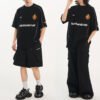
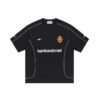
This black unisex sports jersey is developed around fabric relaxation before cutting, a control point that matters when a loose body, curved hem, contrast piping, and centered graphics must remain visually balanced after assembly and laundering.
Why Relaxation Matters on This Silhouette
A loose jersey can conceal movement during fitting because generous ease absorbs small changes. Once laid flat, however, uneven relaxation may shift shoulder lengths, side seams, sleeve openings, and hem curves, making a relaxed garment appear twisted or inconsistent across production sizes.
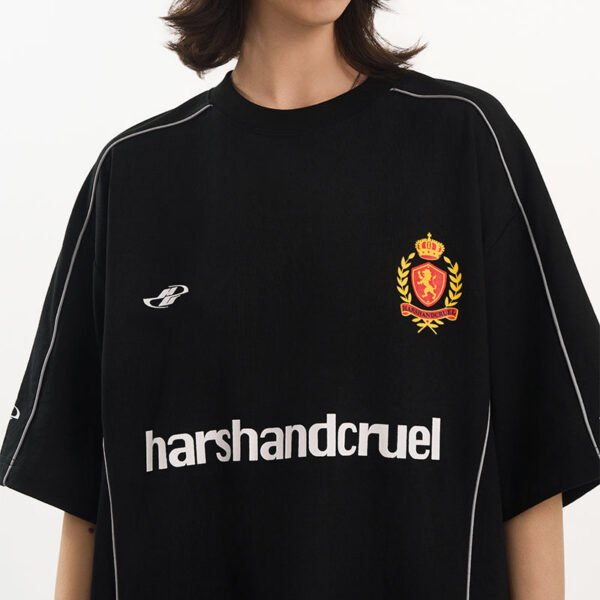
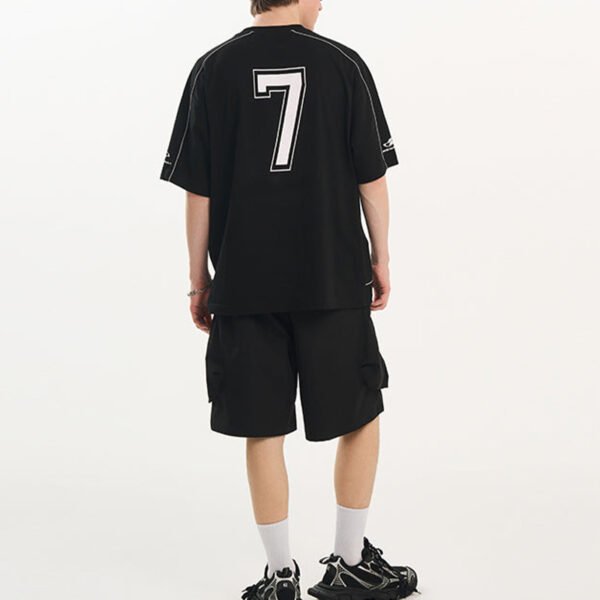
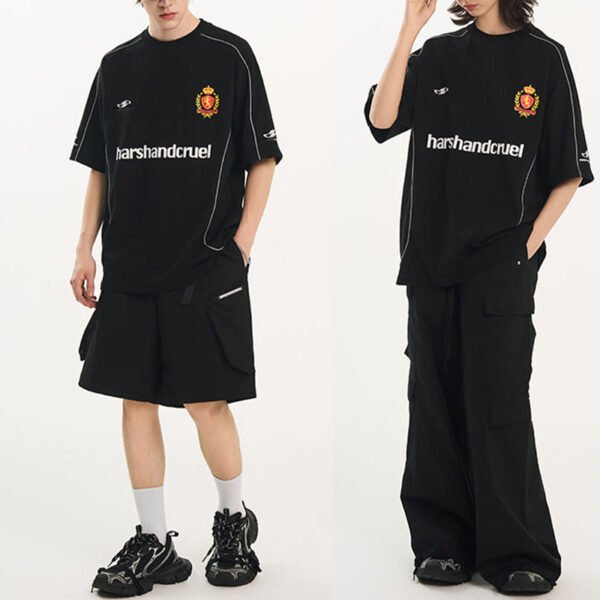
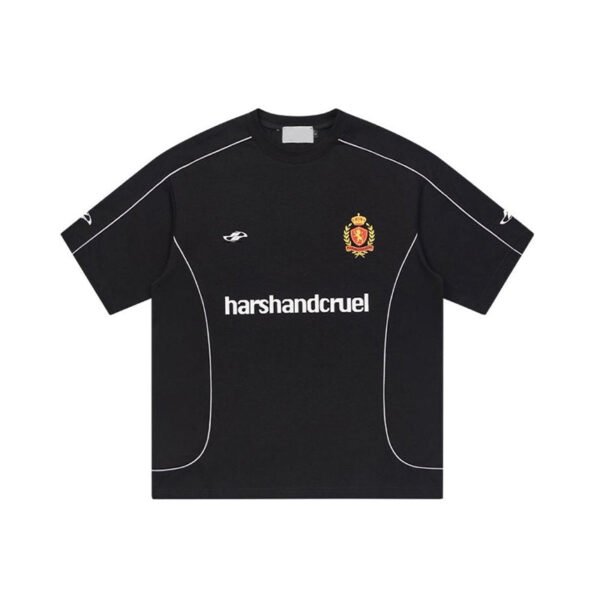
The supplied image makes those risks easy to inspect: piping tracks the shoulder and side contours, while the chest crest and lettering sit on a broad, mostly uninterrupted front. If panels move before cutting, seam symmetry and artwork placement can drift together rather than independently.
Reading the Supplied Construction Cues
The front view shows a black short-sleeve body with light lines running from the shoulder through the sleeve and toward the lower side. Those lines function as visual rulers, so even modest panel distortion can become noticeable when buyers review a sample or compare size sets.
The curved lower hem and roomy torso suggest a pattern intended to fall away from the body, not cling through the waist. Development should therefore preserve the intended drape while checking that relaxation does not shorten, widen, or rotate the garment unpredictably.
Fabric and Pattern Trade-Offs
Relaxing fabric before cutting can improve repeatability, but it consumes planning time and may expose uneven roll tension, directional growth, or surface distortion. A more stable fabric may cut cleanly yet feel less fluid, while a softer jersey may drape attractively but require tighter controls.
The buyer should balance visual looseness against measurement discipline. Confirm the fabric's relaxation behavior on a representative roll, then record resulting length and width changes before finalizing pattern allowances, piping lengths, artwork placement, and the measurement tolerance table.
Graphics and Piping Need Shared Control
The chest artwork is positioned between curved piping paths, creating a composition where decoration and construction must cooperate. Graphic placement should be checked from the actual cut panels, because a nominal centerline can change when the shoulder slope, side seam, or hem shape is adjusted.
The piping itself may introduce additional handling tension during sewing, especially along curved routes. Approve a construction sample that records seam sequence, piping feed, graphic registration, and pressing direction, then compare those results against the relaxed fabric panel measurements.
How VeeWen Develops the Control Point
VeeWen's workflow can place fabric relaxation at the beginning of this jersey's development: receive the nominated material, condition a test length, measure movement, and use those findings to establish cutting allowances before approving the production pattern.
The next checkpoint links the relaxed pattern to a sewn sample with piping and artwork. VeeWen can review shoulder balance, sleeve symmetry, curved hem shape, and decoration position together, giving the buyer one approval record for the complete visual system.
Buyer Approval Checkpoint
Before bulk approval, request a documented comparison between pre-relaxation and post-relaxation measurements for body length, chest width, shoulder span, sleeve length, and hem opening. These values should be reviewed alongside the actual artwork and piping sample, not treated as isolated technical figures.
Approve the style when the relaxed fabric produces the intended loose drape and the visual lines remain balanced across the size range. If movement is excessive, decide whether to revise fabric, allowance, construction, or grading before confirming the production specification.
Buyer Questions
Why is fabric relaxation important for a loose jersey?
Generous ease can hide dimensional movement during fitting, while piping and curved hems reveal it later. Relaxation establishes a more reliable cutting baseline before grading and assembly.
Does relaxation guarantee identical finished measurements?
No. It reduces one source of variation, but fabric construction, sewing tension, finishing, laundering, and grading still require measurement checks and buyer approval.
Can the piping and artwork be changed?
Yes, both can enter the development specification. Confirm artwork files, placement, colors, piping width, seam route, and any required durability evaluation before approving the final sample.
What should the buyer approve first?
Approve the material behavior and relaxed measurement record first, then review a complete sample showing silhouette, piping, graphics, hem balance, and graded proportions together.
Approve the Relaxation Trial
Send the target fabric, size range, artwork, and measurement tolerances to VeeWen for a focused relaxation and construction review before confirming this jersey for bulk development.


Reviews
There are no reviews yet.