


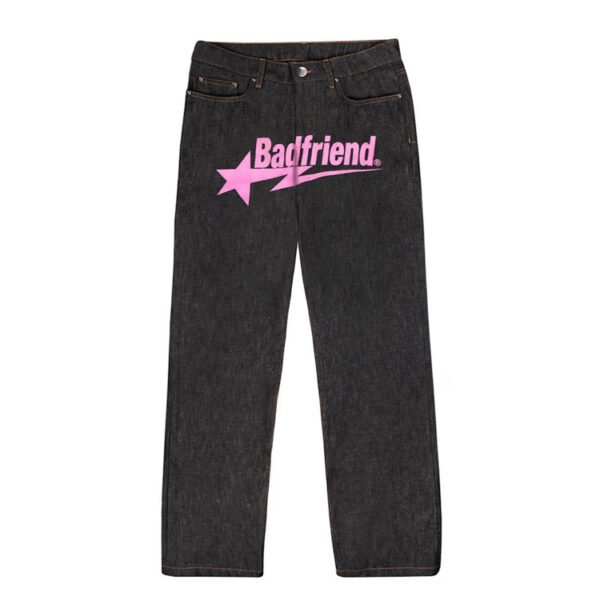




This development record translates the supplied visual into a black denim jean centered on pocket placement, hand access, and reinforcement at stress points. The front image shows a relaxed leg, conventional waistband, and oversized graphic across the upper thighs, so pocket engineering must preserve both utility and artwork clarity.
Front Pocket Coordinates
The visible front construction places the main entry pockets at the upper hips, where the opening must remain reachable without interrupting the graphic panel. A slightly controlled opening angle can support hand entry while limiting gaping when the wearer sits, bends, or carries small essentials.
For sampling, VeeWen should mark pocket opening start, end, and angle directly on the approved pattern, then test the pocket bag against the front artwork placement. This links usability to decoration control: shifting the pocket can expose seams, distort print spacing, or reduce comfortable capacity.
Load Reinforcement Map
The image indicates a traditional five-pocket visual language, although only the front view is supplied for this record. Front pockets therefore require confirmed bartack or stitch reinforcement at the opening ends, while rear-pocket construction, yoke details, and seat reinforcement remain approval items.
Load reinforcement should be specified as a placement decision, not an automatic decoration. Dense stitching can stabilize pocket corners, but excessive concentration may create stiffness, needle damage, or visible ridging. VeeWen can compare reinforcement layouts on the same denim before locking production details.
Graphic And Pocket Clearance
The hot pink upper-thigh graphic is a dominant visual anchor on the black ground, and its position appears to stop short of the pocket openings. That relationship gives the pattern team a measurable boundary: artwork, pocket curve, and side seam need shared placement tolerances.
Screen-print registration should be reviewed after pocket bags, topstitching, and pressing, because each operation can alter the apparent balance across the front. The approval sample should show the complete garment, close pocket details, and a flat artwork view, allowing decisions from construction rather than title language.
Denim Behavior At Openings
Stretch denim is stated in the source wording, but fiber content, weight, recovery, and shrinkage are not verified here. Those variables affect pocket bag stability: a softer or more elastic base may need different opening support than a rigid denim with the same visual silhouette.
VeeWen's development workflow should therefore place pocket engineering beside fabric approval: confirm the selected denim, build the pocket assembly, wash or finish the sample as intended, and inspect opening recovery afterward. The checkpoint is functional stability without sacrificing the graphic's clean front presentation.
VeeWen Development Workflow
At VeeWen, this style should enter development through a marked technical pack showing pocket coordinates, opening measurements, reinforcement locations, graphic clearances, and unresolved back-view points. That document turns the supplied image into reviewable decisions and prevents visual assumptions from silently becoming production specifications.
The first sample review should focus on reach, opening shape, corner security, and print-to-pocket spacing, followed by a written correction round. Before size grading or bulk cutting, the buyer should approve the front pattern, reinforcement map, and artwork relationship as one integrated package.
Approval Trade-Offs
The principal trade-off is between generous pocket access and controlled front appearance. Larger openings improve reach but can compete with the graphic or flare under tension; tighter openings look cleaner but may restrict use. The correct choice depends on the intended wear test and carry expectations.
Approve this jean when the pocket openings sit comfortably on the body, reinforcement remains unobtrusive, and the artwork stays balanced after handling. Confirm the final denim composition, weight, wash behavior, back construction, grading, and decoration method before releasing the style for production planning.
Buyer Questions
What material information is verified for this jean?
The supplied image supports black denim and a relaxed silhouette, while stretch behavior is stated only in the source wording. Fiber composition, GSM, recovery, and shrinkage must be confirmed from the selected fabric.
Which pocket details should the technical pack specify?
Specify pocket opening coordinates, angle, bag depth, corner reinforcement, stitch type, and graphic clearance. Review these against a complete sample so utility and decoration are judged together before approval and grading begins.
How should pocket reinforcement be selected?
A reinforced corner can reduce seam strain, but concentrated stitching may add stiffness or visible ridging. Compare reinforcement positions and stitch density on the approved denim before selecting the production construction.
When is this jean ready for production planning?
Approve the style after checking hand access, opening recovery, corner security, print alignment, wash response, and front balance. Back-pocket construction and size-grade behavior should also be reviewed before production planning.
Approve The Pocket Engineering Direction
Send the target denim reference, size range, artwork file, and pocket priorities to VeeWen for a focused development review. We will organize the open construction decisions into a sample-ready approval checkpoint for your team.


Reviews
There are no reviews yet.