


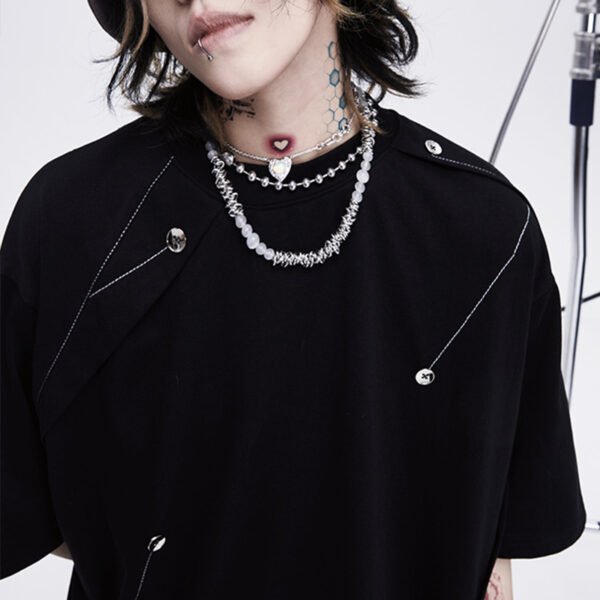


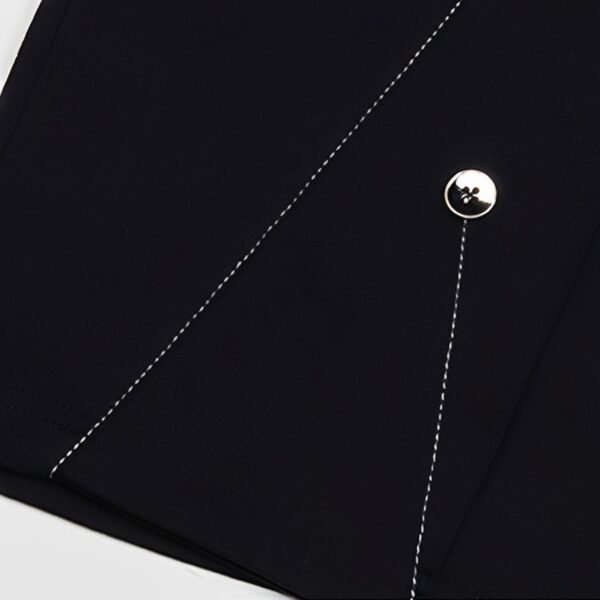
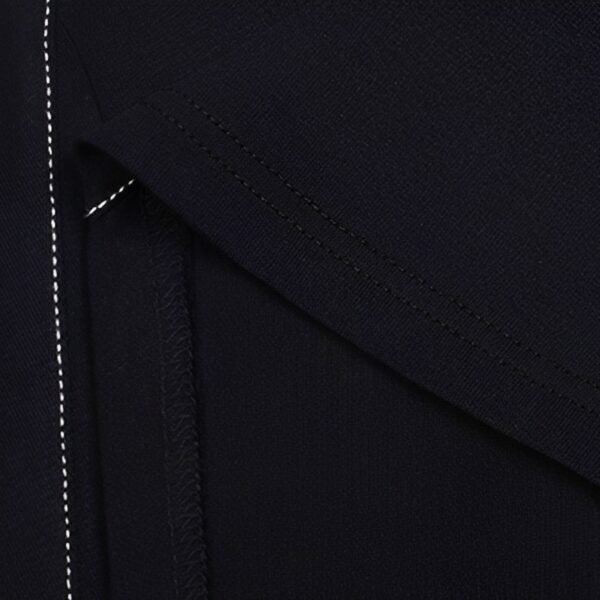





This custom black T-shirt develops a familiar round-neck base around controlled pleat mobility. The supplied image confirms a ribbed neckline, clean seam topstitching, and compact dark jersey appearance, while the source wording directs attention toward reshaping and decorative button placement for a measurable development brief.
How the Pleat Creates Mobility
A pinch pleat works by storing a controlled fold within the garment panel, then releasing fabric as the wearer moves. Its usefulness depends on fold direction, stitch length, and placement, because excess suppression can restrict the chest while insufficient release disappears visually.
For this design, the pleat should be tested across sitting, reaching, and arm-lift positions before styling approval. The image does not prove the pleat geometry, so the development sample must establish whether shaping belongs at the front, side, or another engineered location.
Neckline Construction Sets the Base
The supplied close-up shows a round rib neckline with a broad, even band and a visible parallel seam. That construction gives the product a clear reference point for collar height, edge coverage, and topstitch consistency when the body is revised around mobility.
A stable neckline matters because pleat-driven shaping can pull the front panel and alter collar balance. VeeWen's pattern review should therefore evaluate neckline circumference, shoulder alignment, and seam recovery together, keeping the collar visually quiet while the engineered detail carries the argument.
Black Jersey Makes Irregularity Visible
The close-up presents a consistently black surface with a fine, compact texture and little visual distraction. That quiet field can make a shaped fold more legible, but it also exposes uneven pressing, seam torque, puckering, and shade variation across panels or trim.
Fiber content, GSM, stretch, and finishing are not verified by the supplied evidence. Development should compare candidate jerseys for fold memory, drape, opacity, and wash response, then record the approved reference before costing or bulk cutting proceeds.
Decorative Buttons Need Functional Control
The source wording identifies bright-line decorative buttons, adding a hardware-led accent to a product otherwise defined by dark jersey and restrained construction. Buttons should reinforce the pleat's visual endpoint rather than sit where they interrupt flex or create pressure during wear.
Button diameter, material, color, attachment method, and spacing remain development variables. The sample review should include pull resistance, backside comfort, laundering exposure, and alignment against the pleat, because decorative hardware becomes a quality risk when its placement is treated as purely graphic.
VeeWen Development Workflow
VeeWen can translate this argument into a focused pattern package: mark the proposed pleat, define its closed and released measurements, pair it with neckline specifications, and identify button positions on the technical drawing. The central approval is movement performance, not simply visual resemblance to the reference.
After the first sample, review the garment on a size set and document fold behavior, collar balance, seam appearance, and hardware comfort. The approved block can then carry the chosen detail into private-label colorways or graphics without losing the mobility mechanism.
Buyer Approval Checkpoint
Buyers should approve this style when the pleat remains intentional at rest, opens naturally during movement, and does not distort the round neckline. A useful review compares front, side, and raised-arm views under the same lighting and on the intended wearer profile.
The final decision should also confirm jersey handfeel, black shade, topstitch appearance, button security, and care requirements. If the pleat adds complexity without visible mobility or controlled shaping, revise its depth before approving the production specification.
Buyer Questions
Is the pleat construction confirmed by the supplied image?
No. The close-up confirms neckline details, while pleat location, fold depth, stitching, and mobility require technical sampling and buyer approval.
What fabric should buyers specify for this T-shirt?
Specify the desired drape, opacity, stretch, and recovery first; fiber composition and GSM remain To Confirm until a jersey reference is approved.
Can decorative buttons be moved during development?
Yes. Their spacing and location should be adjusted around movement, comfort, and pleat balance before the technical package is finalized.
What is the minimum order requirement?
The commercial minimum is MOQ: 100 pieces per style, with final quantities and production planning based on approved specifications.
Approve the Mobility Brief
Send your target measurements, jersey preferences, and button direction to VeeWen. We will organize the pleat, neckline, and movement checkpoints for sample approval.


Reviews
There are no reviews yet.