
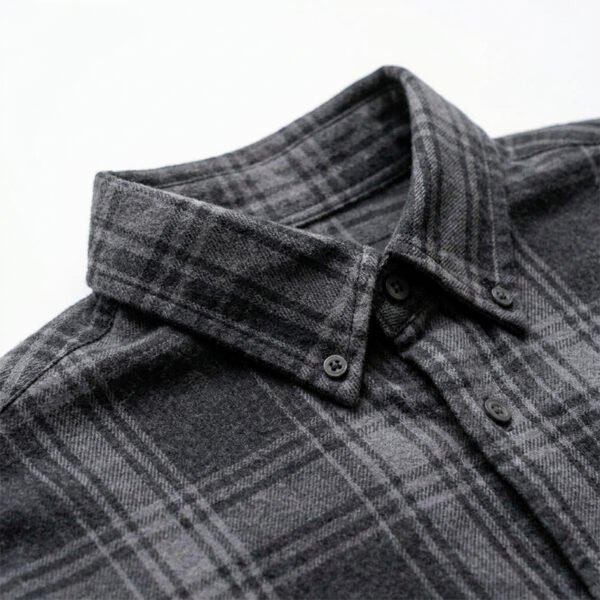
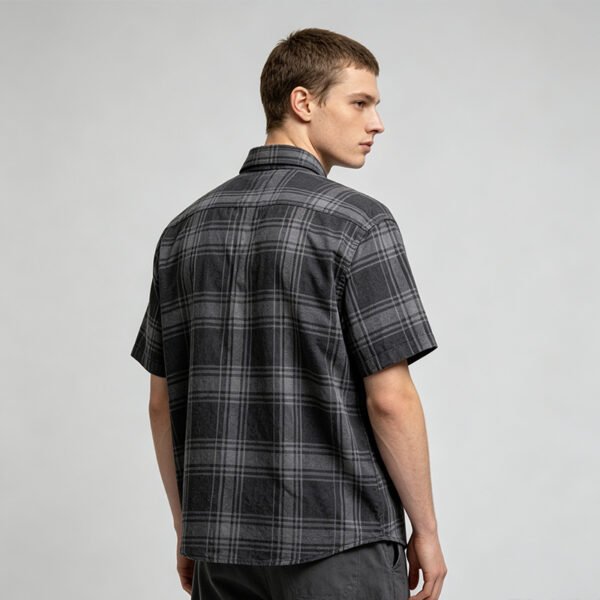
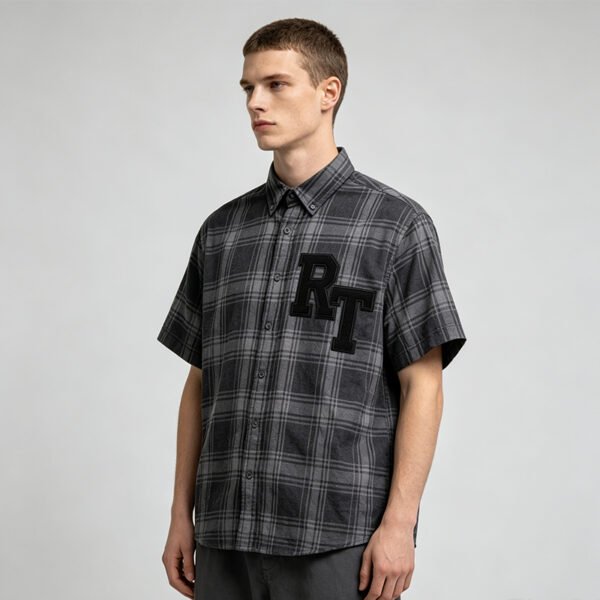
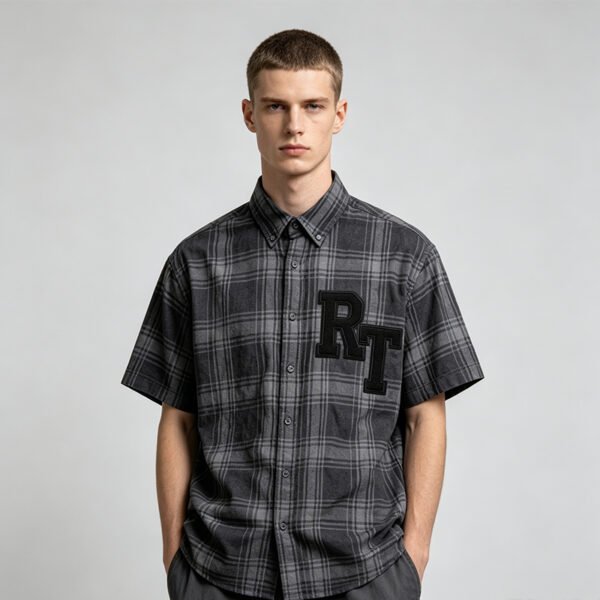
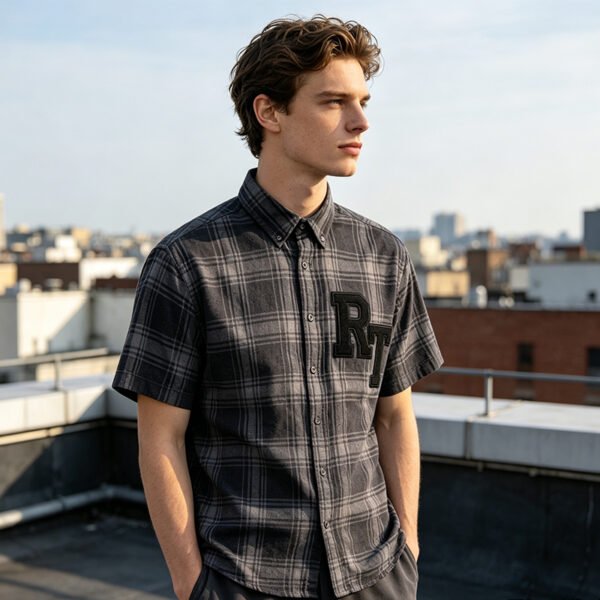
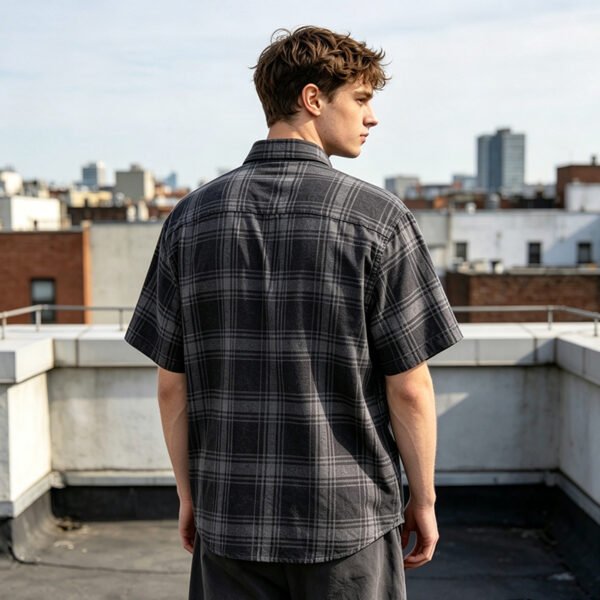
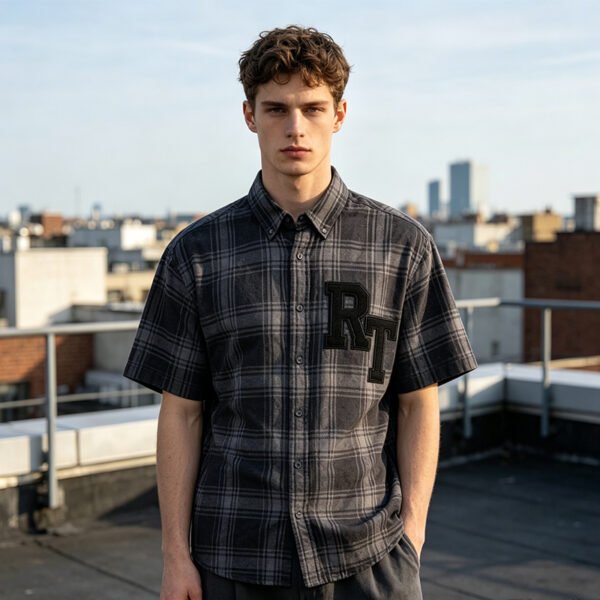
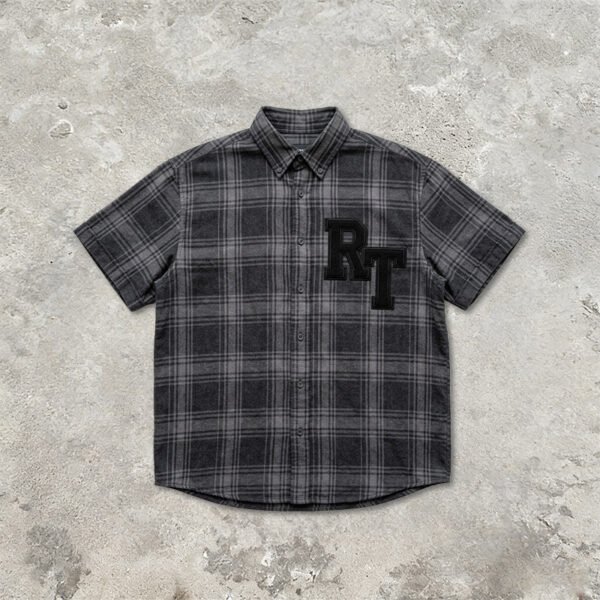

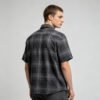
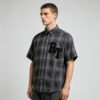




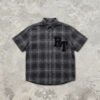
This custom plaid shirt is a development study in relaxed proportion: the visible sleeve hem and tonal plaid establish the surface language, while shoulder balance and sleeve pitch determine whether the boxy block looks intentional. VeeWen can translate that relationship into an approval-led cut-and-sew program.
The Proportion Problem
A boxy shirt distributes volume across the chest and body, but that volume can overwhelm short sleeves when the shoulder line drops too far. Shoulder balance sets the visual center, while sleeve pitch controls how the sleeve hangs from that center during movement.
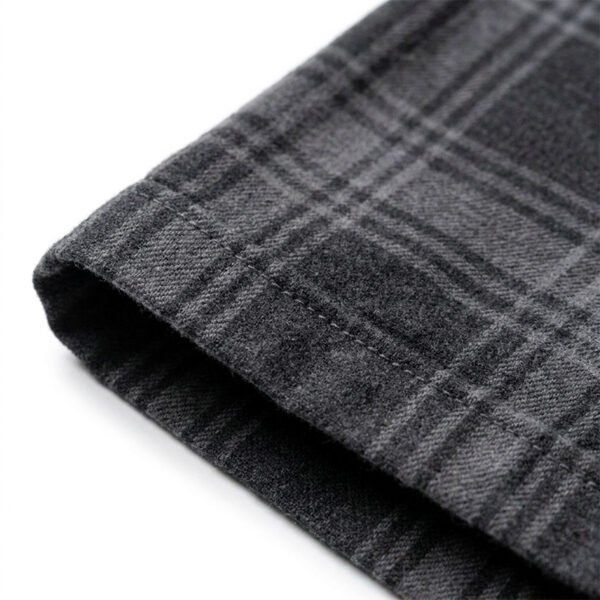
The supplied wording confirms a loose, boxy intention, while the close-up confirms a short sleeve with a structured folded hem. Together, those clues support a proportion-first brief, but they do not verify the shoulder seam, armhole depth, or finished sleeve angle.
How Sleeve Pitch Changes Wear
Sleeve pitch is the angle connecting the sleeve to the armhole and shoulder. A forward pitch can follow natural arm position, while an overly rotated sleeve may pull the plaid off line; an overly flat pitch can restrict movement and create diagonal drag lines.
For this style, the approval sample should be reviewed standing, with arms relaxed and slightly raised. The buyer should inspect whether the sleeve opening remains level, whether the hem rolls inward, and whether the plaid appears visually stable across the upper arm.
Reading the Plaid Evidence
The supplied close-up shows a charcoal and black plaid with intersecting lines, a softly textured face, and a darker interior beneath the folded sleeve edge. Those observations indicate that line continuity and face-versus-inside contrast will influence perceived precision at every opening.
Plaid matching should therefore be judged around the shoulder, sleeve join, side seam, and hem rather than only across the front. Exact matching expectations depend on the selected fabric width, repeat size, cutting layout, and acceptable yield trade-off.
Applique Placement and Balance
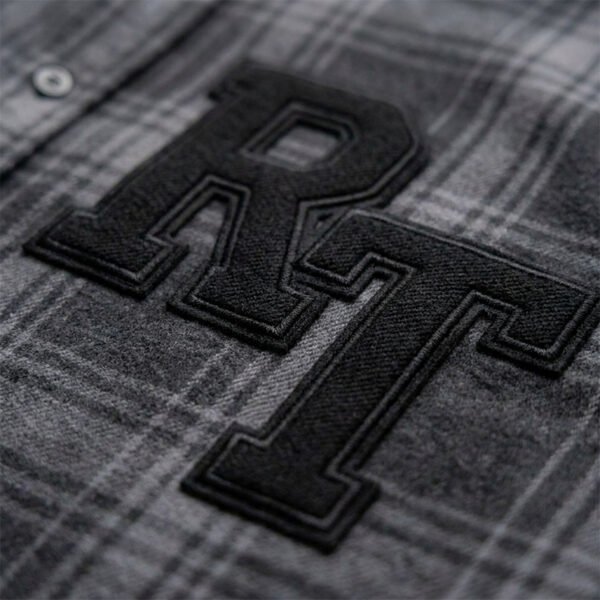
An applique introduces localized weight and visual emphasis, so its position must work with the shoulder line instead of pulling attention toward an unstable sleeve. The source wording identifies an applique detail, but the supplied close-up does not reveal its scale, location, or attachment method.
During development, the buyer should lock the applique artwork, dimensions, edge treatment, and placement reference after the base block is approved. This sequence prevents decoration from masking a shoulder imbalance and keeps the final technical package measurable for cutting and sewing.
VeeWen Development Checkpoint
VeeWen's workflow should begin by converting the relaxed silhouette into a measurement block, then testing shoulder width, armhole depth, sleeve pitch, and opening circumference together. The plaid repeat and visible hem construction become review references, while composition and weight remain open technical fields.
The practical checkpoint is a fit sample reviewed against the intended stance and movement range. Buyer comments should distinguish pattern corrections from fabric behavior, because changing pitch, shoulder drop, or material hand can solve different symptoms with different cost and risk implications.
Approval Criteria Before Bulk
Before bulk approval, confirm the shoulder seam position, sleeve pitch, sleeve length, opening level, armhole comfort, and plaid presentation at key joins. Also confirm whether the applique is placed from a graded point or held at one fixed distance across sizes.
The final decision should record tolerances for shoulder and sleeve measurements, acceptable plaid displacement, hem appearance, applique placement, and pressing condition. MOQ: 100 pieces per style applies commercially, while the approved specification determines what production must reproduce.
Buyer Questions
What should be checked first on the fit sample?
Check shoulder seam position, sleeve pitch, armhole comfort, and opening level together before judging applique placement or final plaid alignment.
Is the fabric composition confirmed?
No. The supplied evidence shows a plaid woven surface only; fiber content, fabric weight, and finishing should remain To Confirm.
Can this shirt support graded sizing?
Yes, grading can be developed after the base block is approved, with shoulder drop, sleeve pitch, and applique placement reviewed across sizes.
What is the minimum order?
The commercial minimum is MOQ: 100 pieces per style, with final production dependent on approved materials, measurements, artwork, and construction details.
Approve the Shoulder and Sleeve Block
Send the target size range, plaid reference, and applique artwork for a focused fit review. VeeWen can then align shoulder balance, sleeve pitch, and measurable production specifications before bulk approval.



Reviews
There are no reviews yet.