
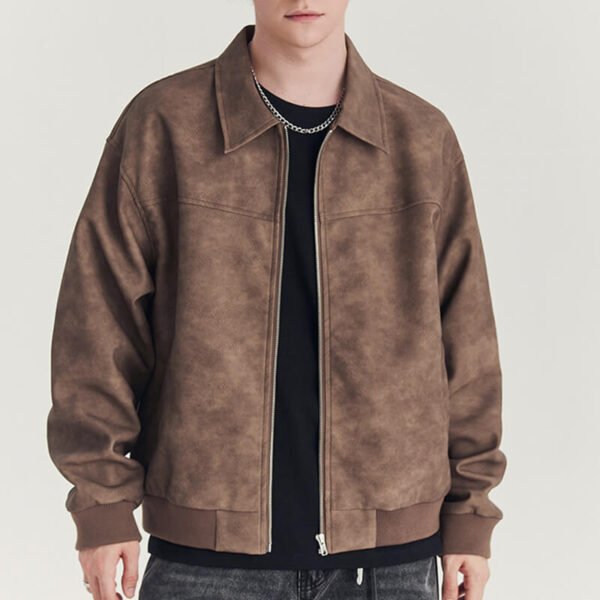
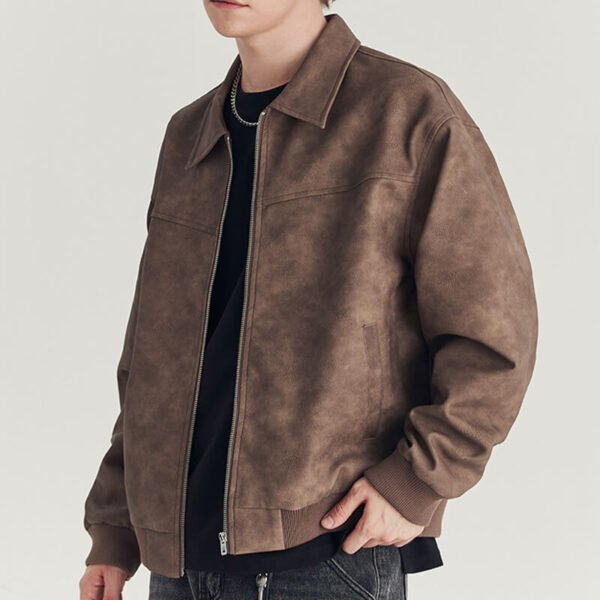
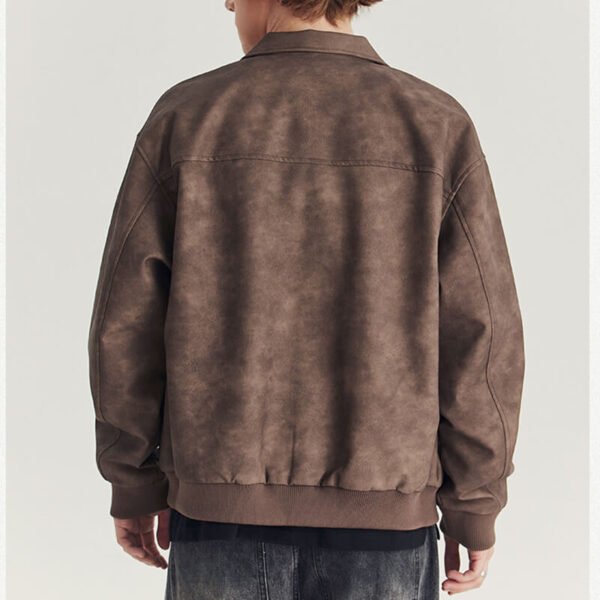
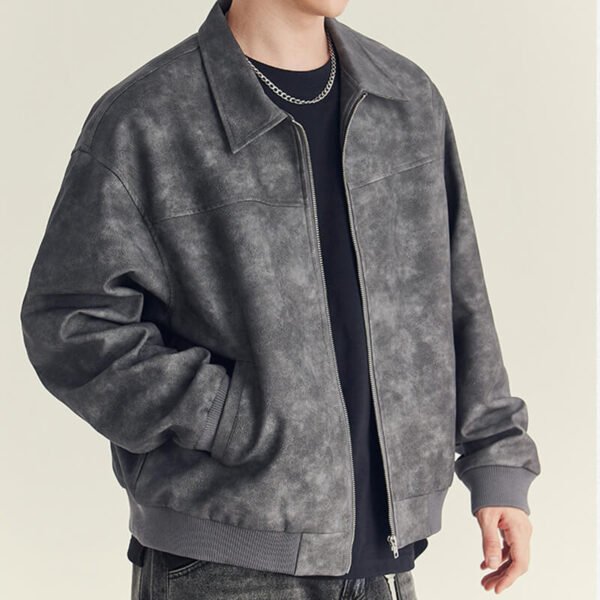
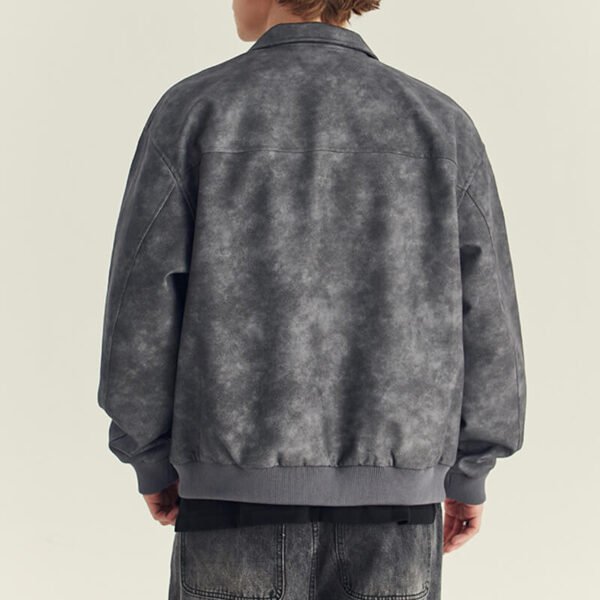
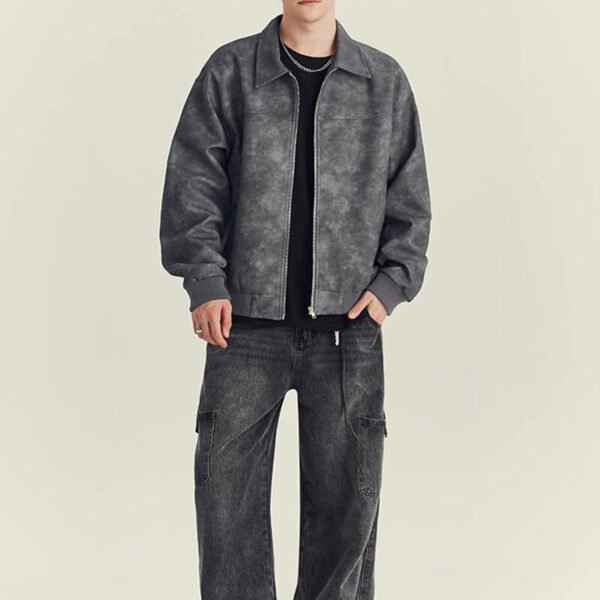
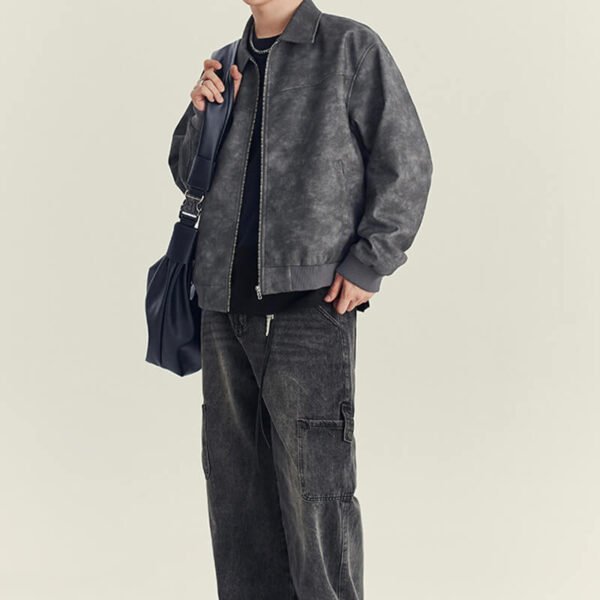
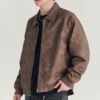
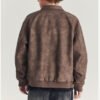
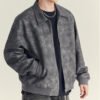
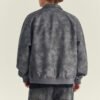
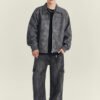
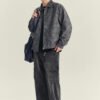
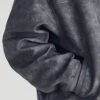
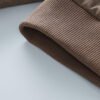
This brown bomber jacket is defined by its mottled, leather-look surface and relaxed utility silhouette. Its development challenge is not decoration alone: pressing must shape panels without crushing visible texture, while handling protects the surface around seams, rib trims, and zipper operations during production.
Surface Character Sets the Approval Standard
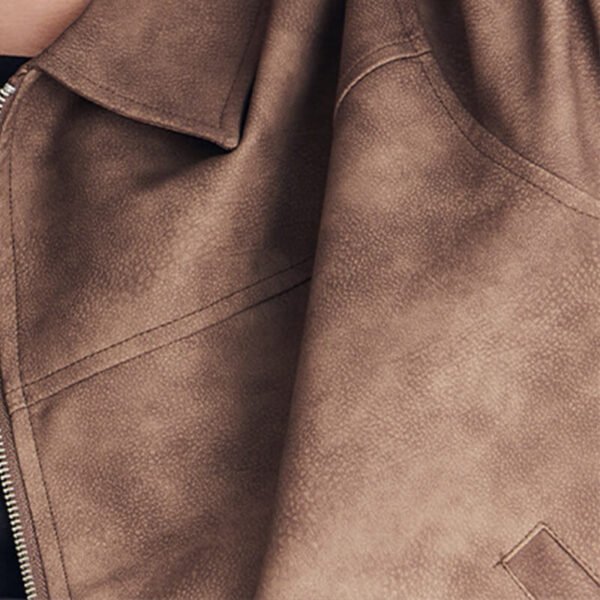
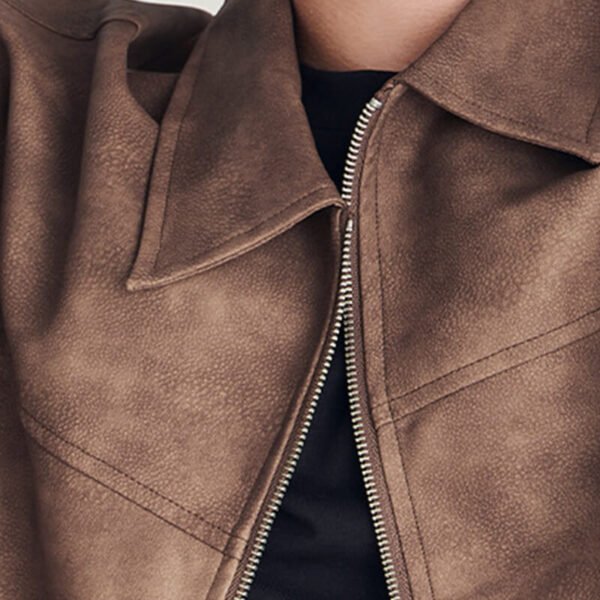
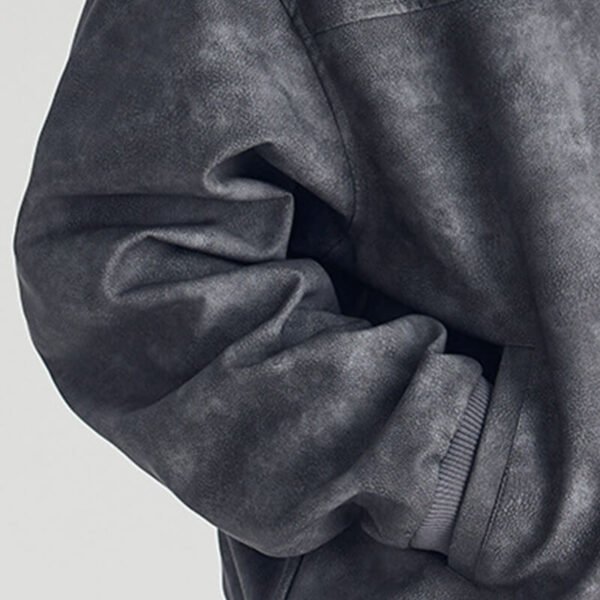
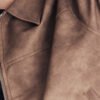
The front image shows a brown surface with cloudy tonal variation rather than a flat, uniform color. That variation is commercially important because it creates the jacket's aged visual identity. A pressing decision should therefore preserve depth and irregularity instead of optimizing only for smoothness.
The visible finish appears suede-like or napped, but the image cannot verify whether the material is genuine leather, coated textile, or another substrate. VeeWen should first identify the surface system, backing, and any directional pile before establishing pressing temperatures, pressure, and contact methods.
Why Pressing Can Change the Appearance
Pressure can compress a raised or brushed surface, producing lighter or darker directional marks when fibers, coatings, or nap reflect light differently. On this design, broad front panels make such changes easy to see, so pressing marks could alter the intended mottled effect across otherwise simple pattern.
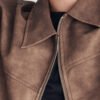
A controlled process should separate shaping requirements from appearance-sensitive finishing. Collar points, zipper facings, sleeve seams, cuffs, and hem bands may need localized support, while large body panels require low-disturbance handling. The correct balance must be demonstrated on representative components before bulk approval.
Panel Transitions Need Separate Handling
The jacket presents broad torso panels interrupted by horizontal seam lines, a center zipper, and sleeve construction. Each transition can receive different pressure from stitching, turning, folding, or pressing equipment. Those accumulated effects may create halos, flattened strips, or inconsistent shading beside otherwise matching components.
The development file should map pressure-sensitive zones directly onto the pattern and operation sequence. Marking nap direction, separating face protection from shaping, and controlling how panels are stacked can reduce accidental abrasion. This map becomes especially useful when the same surface reacts differently after cutting and sewing.
Rib Trims Change the Risk Profile
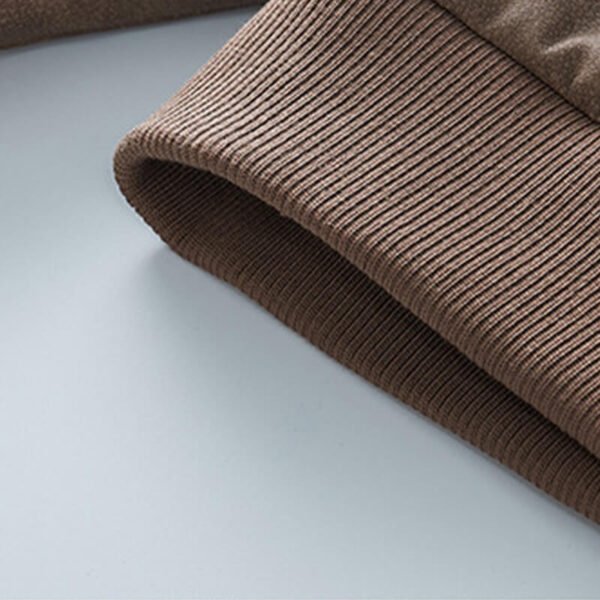
The ribbed collar, cuffs, and hem introduce stretch structures beside the smoother main body. Their compression behavior will not necessarily match the jacket panels, and excessive heat or pressure may distort recovery, flatten rib definition, or transfer texture into adjacent areas. Their treatment must therefore remain distinct.
VeeWen's sample review should inspect the complete assembled garment rather than isolated shell pieces only. The team can compare collar roll, cuff shape, hem balance, zipper alignment, and surface shading after finishing, because these relationships determine whether the bomber reads consistently when worn.
Trade-Offs Between Uniformity and Character
A buyer may want consistent color placement across a size run, yet a distressed or mottled surface naturally contains controlled visual variation. Over-pressing can improve short-term uniformity while removing the depth that makes the garment distinctive. Under-control can preserve character but create unacceptable panel-to-panel differences.
The approval target should distinguish intentional variation from process damage. Define acceptable ranges for tonal movement, nap direction, shine, pressure marks, and edge flattening, then review them under comparable lighting. This creates a practical standard for production decisions without promising identical natural-looking effects on every panel.
VeeWen Workflow Converts the Argument Into Controls
At VeeWen, this product should enter development through a surface-identification checkpoint, followed by component trials for body panels, seams, rib trims, and zipper areas. The approved trial should record pressing conditions, protective layers, handling direction, and finish observations for later production reference.
Before confirming bulk production at MOQ: 100 pieces per style, the buyer should approve an assembled sample against the mapped risk zones. The decision checkpoint is visual and technical: confirm the surface remains dimensional, trims stay balanced, and pressure variation supports the intended finish rather than weakening.
Buyer Questions
Is this jacket genuine leather?
The supplied evidence confirms a leather-jacket reference and leather-like appearance, but genuine leather, coated textile, backing, and fiber composition remain To Confirm during material development.
Why is pressing central to this jacket?
The mottled surface appears appearance-sensitive, so pressure may change reflection, nap direction, or tonal depth. Component trials should establish safe handling before approving production pressing operations.
What should the buyer approve first?
Approve the substrate, surface direction, acceptable tonal variation, protective handling method, and assembled sample appearance before locking specifications for the MOQ: 100 pieces per style.
Can VeeWen adapt the silhouette?
Yes, the relaxed bomber proportions can be developed for revised grading, length, sleeve volume, trim proportions, and branding details, subject to confirmed patterns, materials, and approved samples.
Approve the Surface-Control Development Brief
Send your target measurements, surface reference, trim preferences, and collection quantities to VeeWen. We will align component trials and sample review around protected pressing, balanced construction, and MOQ: 100 pieces per style.


Reviews
There are no reviews yet.