


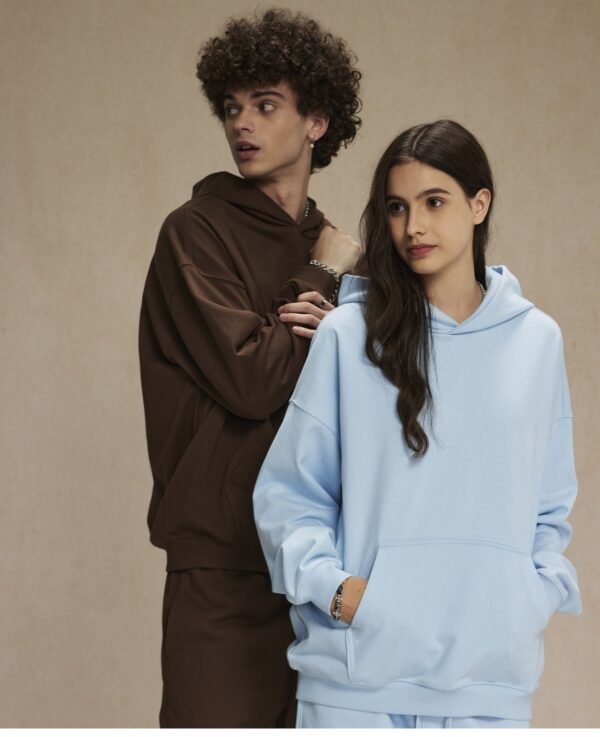





This hoodie is developed around a practical tension: an oversized body needs generous openings, while heavyweight brushed terry can expose loose or distorted binding. VeeWen should therefore control rib width, stitch tension, and recovery together, using the supplied color range as a consistency check.
Why Binding Controls the Oversized Proportion
An oversized hoodie enlarges shoulder, chest, and sleeve volume, but the rib openings still frame the body. If binding is too narrow, the garment looks unfinished; if too tight, it interrupts the intended relaxed proportion and restricts layering comfort.
The supplied image shows long sleeves ending in clearly defined rib cuffs and a substantial lower rib band. Those visible boundaries make width a design variable, not merely a trimming choice, because they determine how the silhouette settles when displayed or worn.
Stretch Recovery Is a Wear Mechanism
Rib binding must extend over hands, head, and layered clothing, then return close to its approved opening. Recovery depends on rib structure, yarn selection, knitting stability, seam allowance, and stitch tension, so the development brief should measure behavior rather than describe softness alone.
For this source direction, compare relaxed and extended measurements after repeated opening cycles. Record whether cuffs flare, the hem waves, or the hood opening loses shape, then set acceptable tolerances before grading the oversized block into production sizes.
Reading the Supplied Color Range
The image presents a broad palette from pale blue and pink through burgundy, cream, brown, navy, green, charcoal, white, and black. A shared binding recipe must preserve opening appearance across light and dark shades without allowing dye or finishing differences to change recovery.
Color approval should therefore include close inspection of rib contrast, edge definition, and post-wash shape for every selected color group. Darker shades may visually sharpen the opening line, while pale shades can reveal waviness or uneven tension more quickly.
Construction Checkpoints for the Hoodie
VeeWen's development workflow should convert the binding axis into a measurement sheet covering rib width, relaxed opening, maximum extension, seam placement, and recovery target. Each point should be checked on the first sample before artwork, labels, or bulk cutting are finalized.
The hood, cuffs, and hem should be reviewed as one opening system because their proportions affect the same oversized impression. A wider hem rib paired with narrow cuffs may look intentional, but only if the approved fit board records that relationship clearly.
Trade-Offs Buyers Should Resolve
More tension can improve recovery but may create pressure at the wrist or hem, especially beside a heavy 430gsm source reference. Less tension improves ease but increases the risk of drooping openings, sleeve flare, and a less controlled presentation after wear.
The correct decision depends on the buyer's use case, layering expectation, and tolerance for relaxed aging. Select the rib width and stretch range from measured samples, not from the apparent drape of the hanging garments in the supplied image.
Approval Gate Before Production
Before issuing a purchase order, approve a sealed sample with documented rib width, stitch construction, opening measurements, and recovery observations. Confirm the same decisions on at least one pale and one dark color, since visual edge behavior can differ across the range.
The final checkpoint is a signed measurement and color approval covering hood, cuffs, and hem. Once those records match the intended oversized balance, VeeWen can carry the approved binding logic into grading, cutting, sewing, and inline inspection.
Buyer Questions
Is the 430gsm specification verified?
The supplied source wording states 430gsm thick brushed cotton terry. Fiber percentages, tolerance, finished weight, and laboratory verification remain To Confirm during development.
What should be measured first?
Measure rib width, relaxed opening, extended opening, recovery, and seam stability on cuffs, hem, and hood before approving the oversized size block.
Can the shown colors be developed together?
They can be reviewed as a coordinated color direction, but each selected shade requires separate approval for appearance, shade matching, and binding behavior.
What is the commercial minimum?
The exact commercial minimum is MOQ: 100 pieces per style. Final color, size, labeling, and decoration allocations should follow the approved order plan.
Approve the Binding Test Set
Send your target measurements, layering intent, and preferred color shortlist to VeeWen. We will organize the rib-focused sample review and confirm the production checkpoint before bulk commitment.


Reviews
There are no reviews yet.