
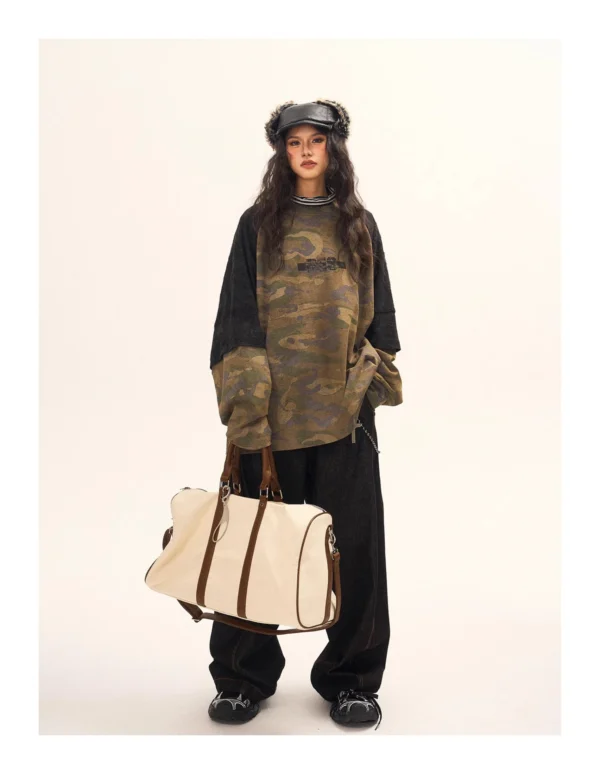
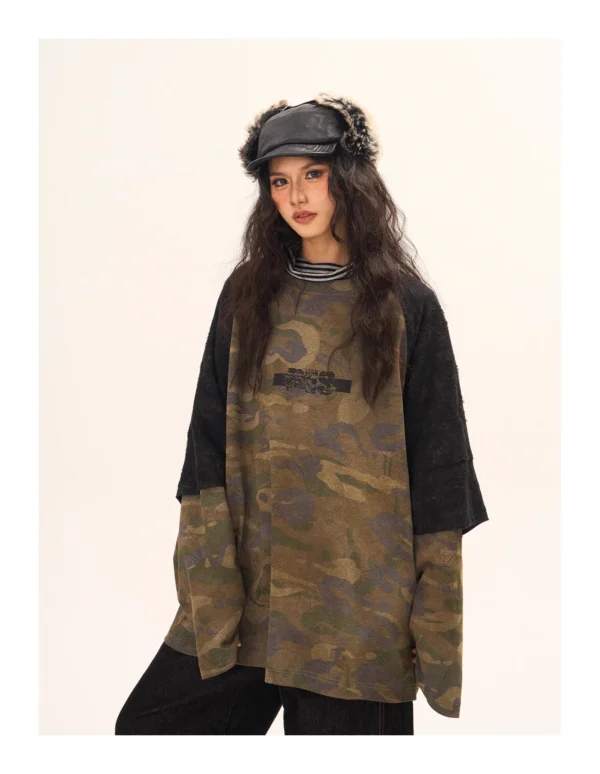


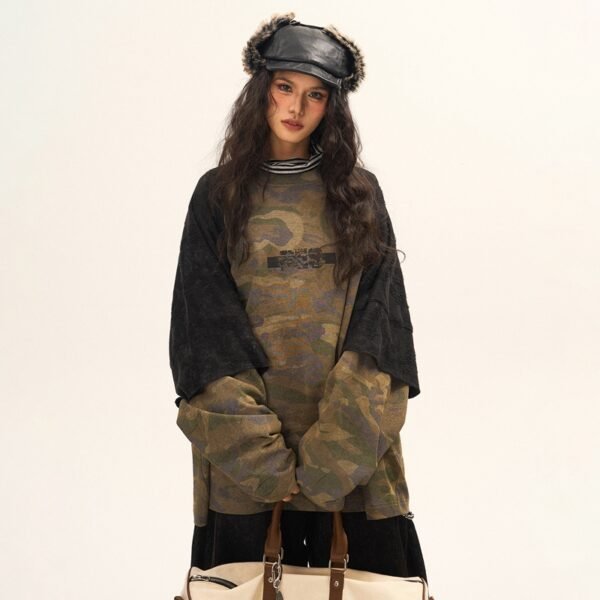



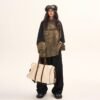

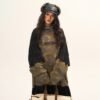
This custom long-sleeve T-shirt is developed around neckline control: a raised, rolled collar must hold its visual height while the oversized layered body remains relaxed. The supplied image supports a camouflage torso, dark sleeves, and a clearly visible striped collar boundary.
Why the collar controls the silhouette
On a large, relaxed garment, the neckline supplies the first fixed point the eye reads. The supplied image shows a raised striped collar against a camouflage chest, giving the loose body a controlled entrance and preventing the proportions from appearing visually unstructured.
The collar should therefore be developed as a dimensional component, not merely a finishing strip. Roll width, rib tension, seam allowance, and attachment alignment will determine whether the neckline stands cleanly or collapses into the oversized body during wear.
Reading the supplied visual evidence
The main image shows a camouflage front, contrasting charcoal sleeves, and a striped crew neckline positioned visibly above the torso. These elements indicate a layered visual language, while the extended hem and sleeve volume require the collar to retain proportion from front view.
The image does not verify fiber content, GSM, stretch percentage, or internal construction. It does support a design brief for a prominent crew collar and generous fit; technical measurements should be established from the approved development sample.
Trade-offs in roll and stand height
A taller stand can sharpen the neckline and reinforce the layered impression, but excessive height may feel restrictive or compete with the face. A softer roll improves comfort, although too little structure can make the collar disappear against the camouflage surface.
The correct balance depends on fabric recovery, rib behavior, and intended layering. VeeWen's sample review should compare at least two neckline profiles, recording worn height, fold behavior, seam appearance, and comfort after movement before final pattern approval.
Pattern decisions around the neck
The neckline pattern must coordinate collar circumference with the oversized shoulder and sleeve geometry. If the collar is drafted too generously, it may gape; if pulled too tightly, it can distort the camouflage chest and raise the shoulder line unintentionally.
Development should lock the neck opening, collar height, roll allowance, shoulder drop, and sleeve attachment together. This product requires proportion testing as a system, because changing one measurement can alter perceived stand height and the garment's overall attitude.
How VeeWen develops this argument
VeeWen can translate the image into a focused approval sequence: first map the collar profile, then build the oversized body around the approved neckline relationship. This keeps the manufacturing discussion centered on the product's defining visual mechanism.
During fit review, the buyer should inspect the collar on a person and a flat lay, checking front height, side balance, seam neatness, and recovery. Only after those observations agree with the intended silhouette should grading, decoration placement, and production specifications proceed.
Buyer approval checkpoint
Approve this style when the collar remains visibly raised without feeling tight, the striped roll reads consistently, and the neckline still balances the camouflage body after ordinary movement. Photographing front, side, and seated views will make the decision more objective.
The final approval should document collar height, finished neck opening, rib or collar material, seam treatment, and tolerance. Confirm the full composition, weight, wash behavior, and color references separately, because the supplied visual evidence cannot establish those technical facts.
Buyer Questions
What is the primary development risk for this T-shirt?
The main risk is a collar that loses height or feels restrictive, causing the oversized layered silhouette to look either collapsed or uncomfortable during wear.
Can the collar appearance be changed during sampling?
Yes. Buyers can review alternative roll widths and stand heights, provided each revision is assessed with the same oversized body and sleeve proportions.
Is the camouflage fabric composition confirmed?
No. The image establishes appearance only. Fiber content, fabric weight, stretch, recovery, and care requirements should be confirmed through the selected development material.
What is the minimum production quantity?
The commercial minimum is MOQ: 100 pieces per style. Final color, grading, decoration, and construction specifications should be approved before production planning.
Approve the neckline direction
Send your target measurements, collar preference, and color references to begin a focused sample review. VeeWen will develop the neckline and oversized body as one coordinated approval decision.


Reviews
There are no reviews yet.