
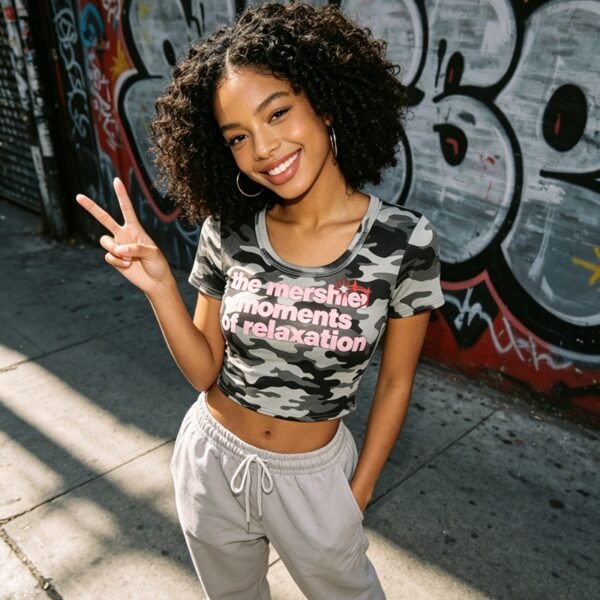
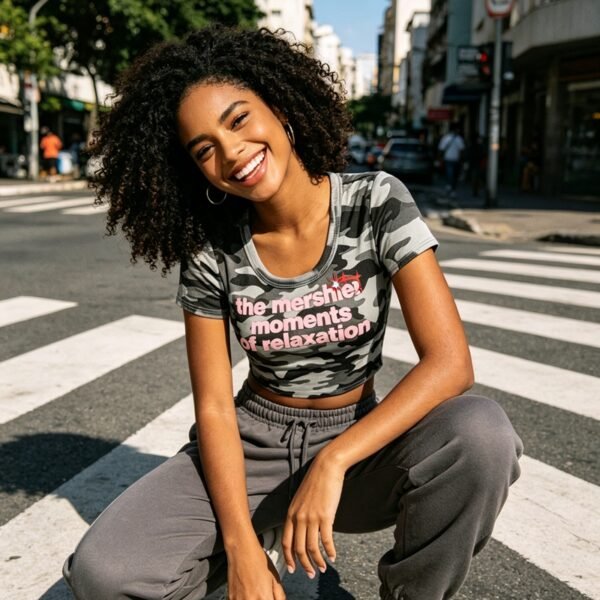
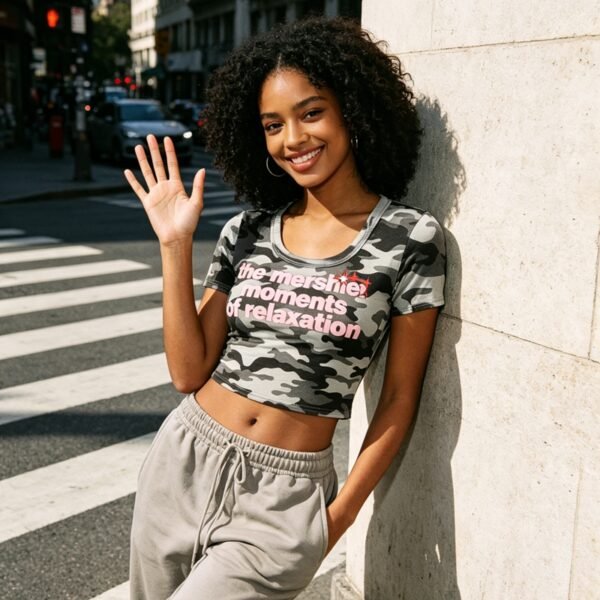
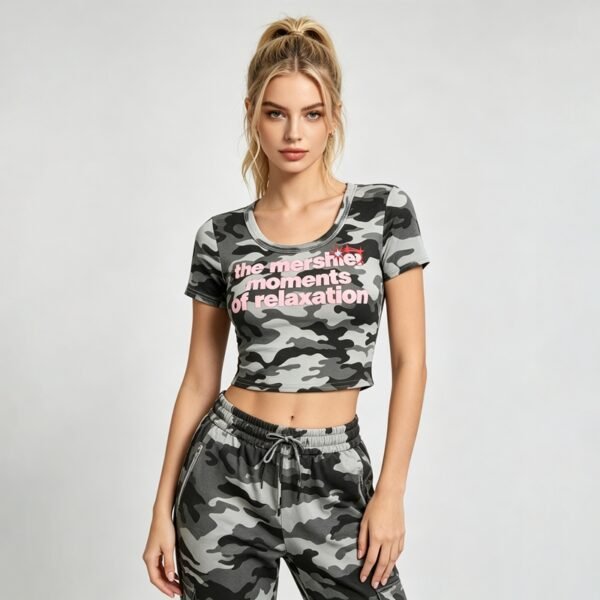
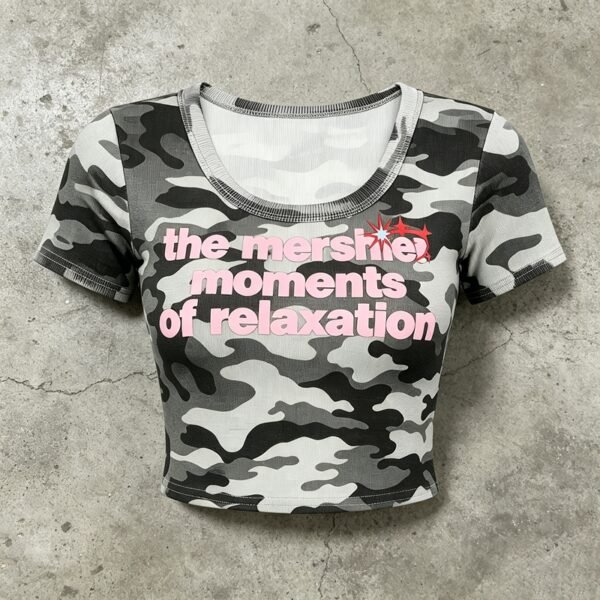





This custom camouflage crop top is a hand-feel decision disguised as a simple graphic tee. Its slim cropped geometry, dark bound edges, and large chest print require a deliberate balance: the fabric should feel comfortable against the body while retaining the short length and close shape that define the product.
Why softness changes the silhouette
A softer finish can improve next-to-skin comfort and make a close-fitting top feel less rigid. However, softness may also reduce the visual crispness of a cropped body if the fabric relaxes, stretches, or drapes differently after laundering and repeated wear.
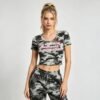
The supplied image presents a compact silhouette with the hem positioned above the wearer's waistband. That short proportion is central to the product, so hand-feel approval must include body length, width, sleeve opening, and the garment's ability to return to shape.
Shape retention at critical edges
The neckline, sleeve cuffs, and cropped hem carry much of the top's structural identity. If these edges lose recovery, the garment can appear wider, longer, or less supported than the supplied reference, even when the base pattern remains unchanged.
Development should compare softness and recovery on the same pattern, using matched construction and finishing wherever possible. Reviewers should handle and measure the neckline, sleeve edges, and hem before and after laundering to identify the acceptable balance.
Graphic scale and fabric movement
The large pale pink and white chest print occupies a broad area across the front torso, making substrate movement visible around the artwork. Stretch, relaxation, or uneven recovery can affect perceived alignment, edge sharpness, and the graphic's relationship to the cropped hem.
The camouflage ground also creates contrast behind the print. Approve the artwork against the final colorway and fabric surface, then check whether the screen print remains legible without making the front feel excessively rigid or visually heavier than the body.
Camouflage as a surface specification
The gray, black, and muted olive camouflage is a core surface feature rather than a minor color detail. Its scale, repeat, contrast, and placement influence how the slim body reads, especially where the print approaches the neckline, sleeves, and cropped hem.
Because the supplied image shows a fitted torso, pattern distortion should be reviewed on a worn sample rather than a flat panel alone. Confirm the artwork repeat, print direction, and acceptable panel variation before approving cutting and production files.
VeeWen development workflow
VeeWen's product-development workflow should treat this top as a comparative hand-feel trial. Build matched samples with the same pattern, camouflage reference, edge construction, and chest artwork, then vary the softness or finishing direction so the buyer can assess the trade-off directly.
The approval record should capture measurements before and after laundering, touch feedback, edge recovery observations, and screen-print appearance. This focused record gives production teams a clear target for the selected finish without separating comfort from the silhouette requirement.
Trade-offs and buyer approval
A very soft result may improve immediate comfort but create greater risk of hem drop, neckline spread, or sleeve relaxation. A firmer result may preserve shape more effectively while feeling less fluid, so the correct choice depends on the collection's wear expectations.
Before approving, compare the top on the body and flat, after care testing defined for development. Confirm crop length, chest graphic position, camouflage contrast, edge recovery, and fabric composition. The decision is complete when comfort and recognizable shape remain compatible.
Buyer Questions
How should softness be evaluated during sampling?
Compare matched samples by touch, measurements, worn appearance, laundering response, neckline recovery, sleeve stability, hem behavior, and graphic surface after the defined care cycle.
Will a softer finish change the crop length?
It can influence drape and relaxation, so approve finished measurements and worn proportions after laundering rather than relying only on the pattern.
Is the chest artwork confirmed as final?
The image establishes a visible screen-print reference, but final artwork, dimensions, colors, ink selection, and placement require buyer confirmation.
What is the minimum order quantity?
The commercial minimum is MOQ: 100 pieces per style, while the final size and color breakdown is confirmed during production planning.
Approve the hand-feel and recovery balance.
Share the target measurements, artwork, camouflage direction, and preferred hand feel. VeeWen can structure comparative samples so the buyer approves comfort, edge stability, and crop proportions together.


Reviews
There are no reviews yet.