

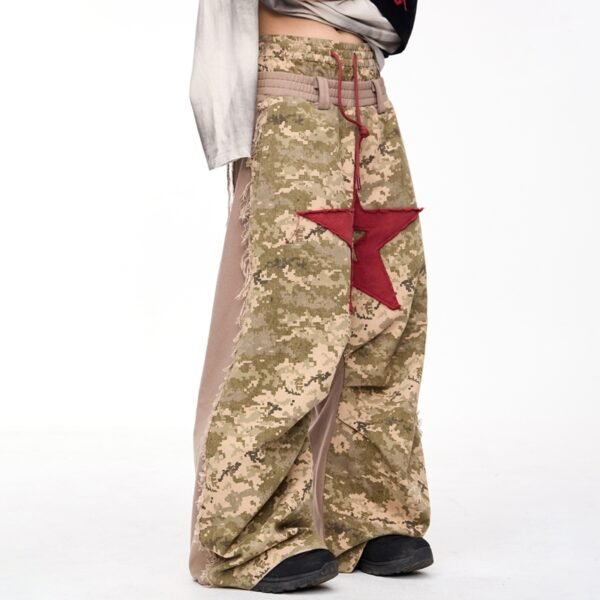
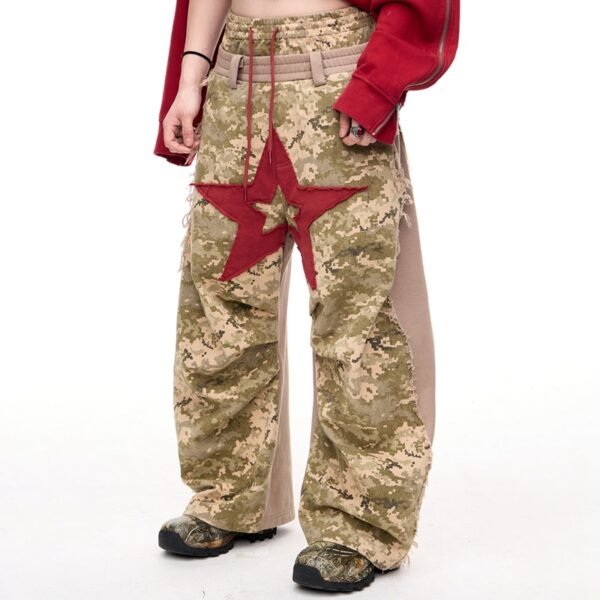
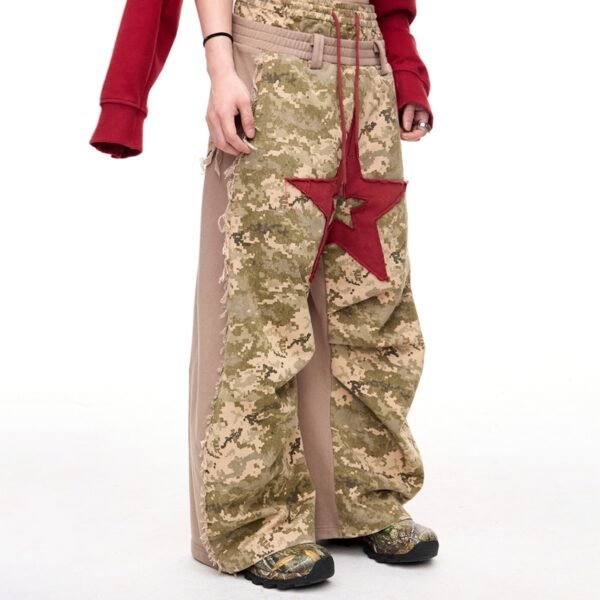


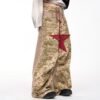
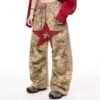


These custom camouflage wide-leg pants are developed around hem level and garment hang. The supplied image shows floor-skimming volume, contrasting patchwork, frayed edges, and a drawcord waist, so the buyer's key decision is whether the finished leg remains balanced after weighting, washing, and movement.
Why Hem Level Controls The Silhouette
The supplied image shows exceptionally broad legs reaching near the footwear, making small inseam differences visually significant. A hem that sits too low can collapse over the shoe, while a shorter hem can remove the intended sweeping proportion and expose uneven leg lengths.
Wide-leg trousers also magnify differences between left and right pattern pieces. The buyer should evaluate the garment worn and laid flat, checking whether both openings reach the same visual level after the fabric, patchwork, and finishing processes are applied.
Patchwork Changes Garment Hang
The red star-shaped patch adds concentrated weight across the upper front, while contrasting side panels alter stiffness and seam behavior. These changes can pull one area forward or outward, affecting how the legs fall from the waistband toward the floor.
Frayed edges introduce another variable because loose threads and softened borders may settle differently after washing. A controlled fray can support the vintage direction, but excessive release may change perceived length, leg balance, and the cleanliness of the final presentation.
Waist And Rise Relationship
The image shows an elasticated waistband with a prominent drawcord above generous body volume. That combination can shift the worn rise depending on tension, and the rise position directly changes where the wide leg begins and how much fabric gathers below the waist.
A stable waistband supports repeatable wear, but tighter elastic can compress the upper body and exaggerate lower-leg volume. Development should therefore assess relaxed and worn measurements together, confirming whether the approved rise preserves the intended proportion across the size range.
Wash And Fray Coordination
The camouflage surface and softened appearance suggest a washed development direction, but wash action can affect shrinkage, seam relaxation, color contrast, and fray length simultaneously. Hem measurements should be recorded before and after finishing so the approved level reflects the final garment.
Reducing wash intensity may protect patch edges and preserve leg symmetry, while stronger treatment can create more character but increase variation. The buyer must decide the acceptable visual range for fraying, shade, and hang before production specifications are released.
VeeWen Development Workflow For This Argument
VeeWen's product-development review should begin with a full-length pattern and a marked hem reference, then map every patch, side panel, drawcord, and frayed zone that may influence weight. The first sample should be assessed worn, photographed straight-on, and checked against the intended footwear relationship.
Revision notes should separate pattern corrections from wash or finishing corrections, because changing inseam cannot solve every hang problem. Once the buyer approves the corrected balance, the technical file should record hem tolerances, patch placement, fray limits, and finishing sequence.
Approval Checkpoint Before Production
Before production approval, inspect the trousers on a model and on a flat surface, checking waistband position, rise, left-right hem level, side-seam fall, and the opening's relationship to shoes. Repeat the review after the intended wash and pressing process whenever possible.
Approve the style only when the wide-leg silhouette remains deliberate rather than collapsed, and patchwork does not pull the body off balance. Also confirm composition, GSM, shrinkage, color standards, grading, and wash limits because the supplied evidence does not verify them.
Buyer Questions
Are these pants made from cotton?
The images show a woven camouflage appearance, but no fiber composition is supplied. Confirm the exact fabric, GSM, shrinkage, and wash response during development.
How should the wide-leg fit be approved?
Review a worn sample from front and side, then lay it flat to compare inseams and hems. Check the opening against intended footwear before approval.
Can the patch shape and color change?
The visible red patch establishes a construction reference, not a fixed artwork requirement. Shape, color, placement, and edge treatment can be revised through technical sampling.
What is the minimum order quantity?
The commercial minimum is MOQ: 100 pieces per style. Final size ratios, wash requirements, patch specifications, and approved tolerances should be confirmed before ordering.
Approve The Full-Length Hang
Share your target inseam, footwear direction, artwork, wash reference, and measurement chart. VeeWen can prepare a hem-and-hang development brief for review before the style enters production.


Reviews
There are no reviews yet.