

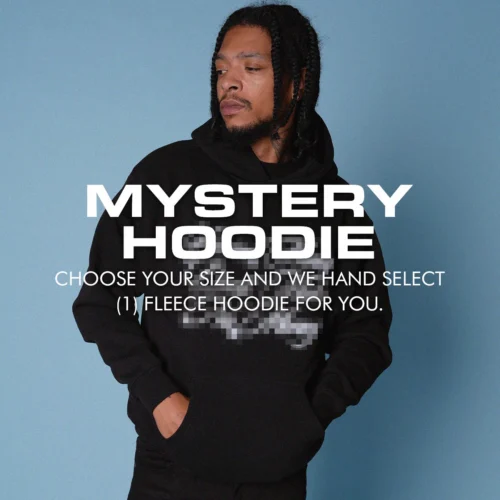
This crewneck is a fabric-planning exercise disguised as a graphic sweatshirt. The supplied image shows a broad black body, long sleeves, ribbed edges, and oversized centered chenille-style artwork, so yield depends on width, marker efficiency, and placement allowances rather than artwork alone. VeeWen can develop the style around those constraints.
Width Determines Marker Efficiency
The image presents a generously proportioned front and long sleeves, creating a marker with several competing rectangles. Before sampling, VeeWen should map usable fabric width against body length, sleeve orientation, rib quantities, and shrinkage allowances to estimate realistic consumption.
A narrow usable width can force alternate sleeve nesting, additional joins, or higher consumption, while excessive width may leave avoidable waste. The approval target is not the widest roll; it is the width that places every panel efficiently without compromising grain direction or silhouette balance.
Graphic Scale Changes Consumption
The centered motif is visually dominant and extends across much of the chest. Its size affects front-panel placement, handling clearances, and the risk of distortion near seams, so the artwork file and garment pattern should be reviewed together before finalizing the marker.
Oversized chenille-style work may also require a stable front surface and careful registration around the rib neckline. VeeWen's development review should test whether the selected graphic scale preserves breathing room, remains centered across sizes, and avoids consuming fabric that could otherwise improve yield.
Sleeves Add Hidden Fabric Demand
The model image shows full-length sleeves with a relaxed volume rather than a narrow, fitted arm. That proportion increases sleeve area and can limit efficient nesting, especially when directional fabric appearance or surface nap requires consistent orientation across all cut pieces.
Sleeve width should therefore be graded alongside the body, not treated as a secondary adjustment. During development, VeeWen can compare sleeve nesting options and identify where a modest cuff or bicep refinement preserves the intended relaxed appearance while reducing unnecessary consumption.
Rib Components Need Separate Planning
Visible ribbing at the neckline, cuffs, and hem creates three component groups that should be measured independently from the main shell. Their dimensions influence total material usage, color matching, and the visual proportion of the finished sweatshirt, particularly around the broad lower body.
The rib plan should include recovery expectations, cut direction, and size grading before a marker is approved. A rib that is too shallow may weaken the intended balance, while excessive depth adds consumption without improving the graphic presentation or wearability.
VeeWen Workflow Checkpoint
VeeWen's product-development workflow should begin with a measurement sheet, graded pattern, artwork placement map, and nominated fabric-width range. Those documents allow the team to calculate consumption by size, identify marker pressure points, and flag assumptions that remain unverified before a sample is authorized.
The buyer's review checkpoint is a coordinated approval of width, yield, graphic position, rib dimensions, and size coverage. Once those variables agree, the style can move toward sourcing and production planning with a clearer understanding of where cost and visual consistency originate.
Approval Before Cost Lock
A preliminary quote for this sweatshirt should remain tied to confirmed width, material specification, graphic method, and graded consumption. The image supports the silhouette and placement discussion, but it cannot verify fiber content, fabric weight, shrinkage, or the final chenille process.
Approve the development direction when the physical sample confirms the intended relaxed proportions and the marker demonstrates acceptable yield. If the sample looks correct but consumption is inefficient, revise width or pattern nesting before treating the style as production-ready.
Buyer Questions
What should be confirmed first for this sweatshirt?
Confirm usable fabric width, graded measurements, artwork dimensions, rib specifications, and composition before approving consumption or production costing.
Why does the chest graphic affect fabric planning?
Its broad centered placement needs clearances from neckline and seams, limiting nesting choices and requiring coordinated pattern and artwork review.
Can the relaxed silhouette be adjusted?
Yes, body width, sleeve volume, cuff depth, and hem proportions can be developed against the approved visual balance and consumption target.
What is the minimum order quantity?
MOQ: 100 pieces per style applies. Final material, artwork, grading, and production assumptions should be confirmed before order placement.
Approve the Width Strategy
Send the target size range, artwork file, and preferred material references to VeeWen for a coordinated marker, consumption, and sample-development review.



Reviews
There are no reviews yet.