


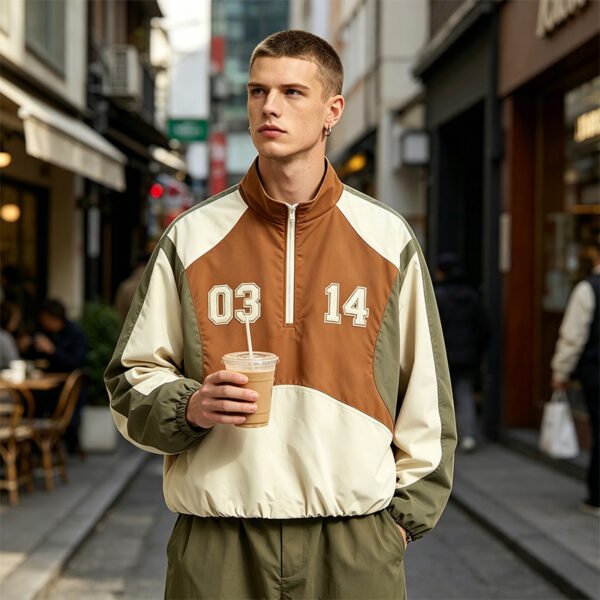
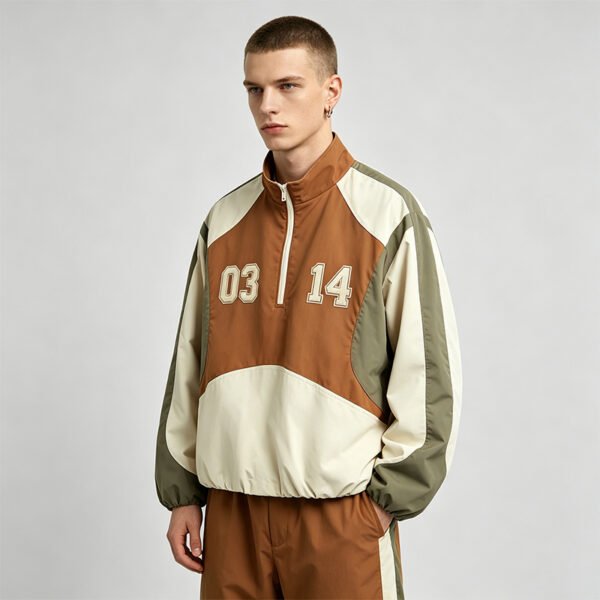
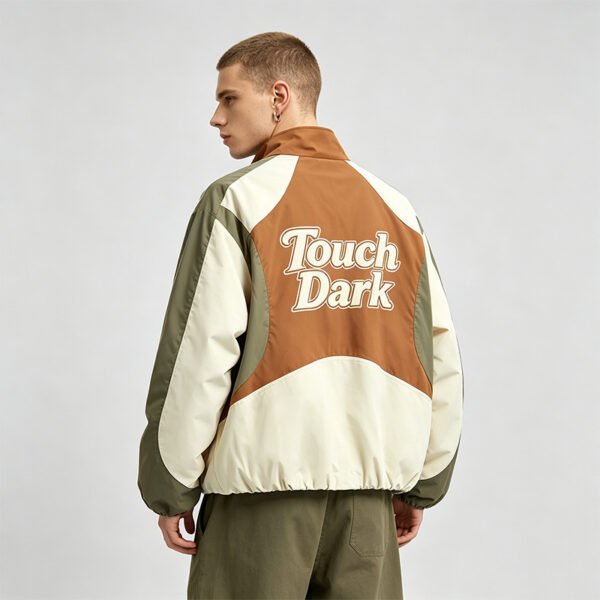
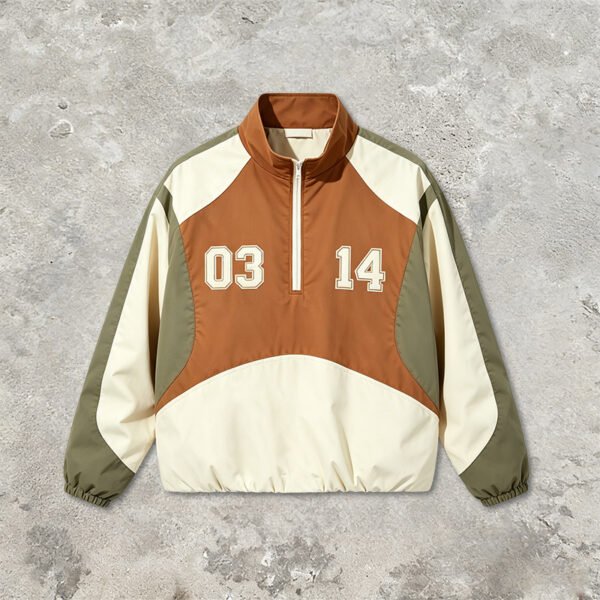


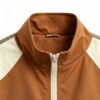






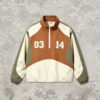
This quarter-zip jacket is a placement-led outerwear concept: its numerals, zipper, and contrasting panels compete for a precise visual center. VeeWen can develop the artwork as a graded map, protecting proportion and alignment as chest widths, sleeve lengths, and panel boundaries change.
Artwork Must Follow Chest Geometry
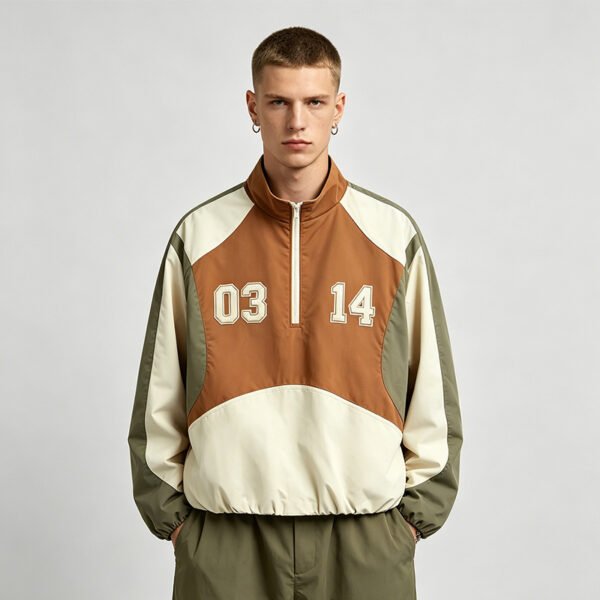
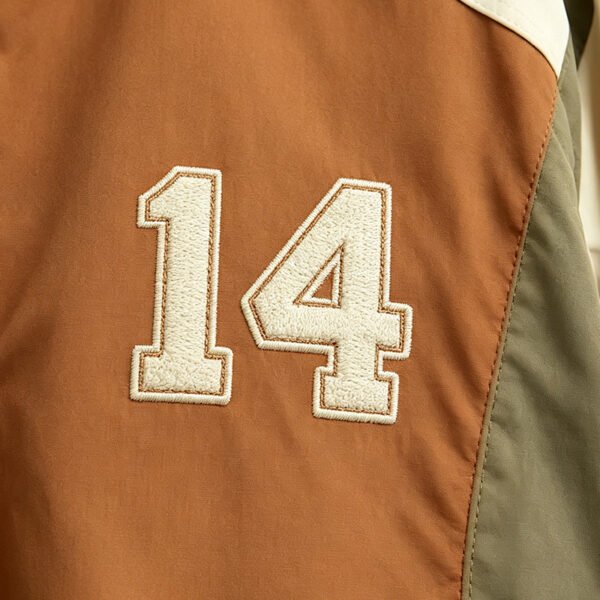
The image places large outlined numerals on the rust chest panel, making their relationship with the quarter zipper immediately important. As the chest expands or contracts by size, a fixed distance from the side seam may create uneven visual balance.
A graded placement map should define the artwork's centerline, zipper clearance, top margin, and side relationships for each size group. This keeps the numerals visually anchored to the panel rather than merely copied from one photographed sample.
Color-Block Boundaries Create Limits
Ivory shoulder panels, rust chest fabric, and the curved ivory lower section divide the front into distinct fields. These boundaries act like built-in framing devices, so artwork that moves too close to a seam can appear compressed or unintentionally interrupted.
The supplied image shows the numerals contained within the rust area, while the zipper cuts vertically between them. Development should preserve that containment across sizes and confirm whether artwork scaling, spacing, or both must change.
Sleeve Proportion Affects The Front
The olive sleeve strips extend from shoulder toward cuff, changing the perceived width of the upper body. If sleeve grading alters the shoulder angle or armhole relationship, the chest graphic may appear off-center even when its measured position remains technically unchanged.
For that reason, placement approval should include front and three-quarter views across representative sizes. The buyer can then judge visual balance against the shoulder panels, sleeve lines, collar height, and lower color-block curve as a complete composition.
Quarter-Zip Clearance Needs A Rule
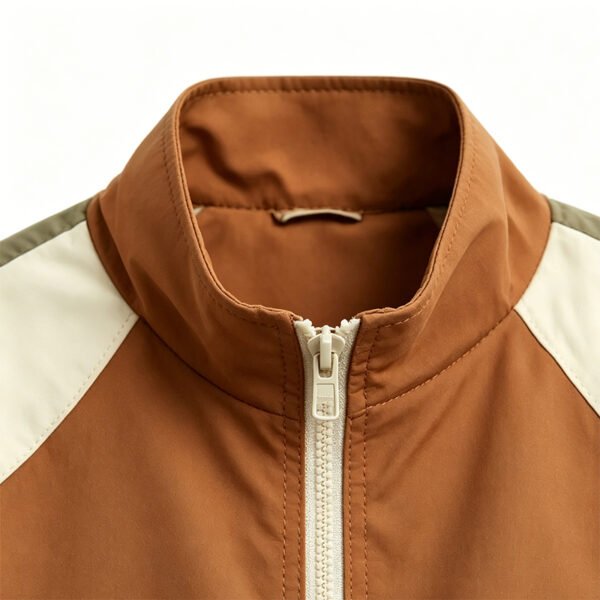
A quarter-zip opening is both a functional feature and a strong vertical interruption. Numerals placed too close to the zipper may lose spacing after sewing, while artwork positioned too far outward can look detached from the garment's center.
The image provides clear evidence of two numerals separated by the zipper channel. VeeWen should lock a measured clearance rule, then verify zipper tape, collar construction, and artwork registration together before approving the next sample iteration.
VeeWen Development Workflow
VeeWen's workflow for this jacket should translate the reference into a panel diagram, artwork file, size placement table, and seam-clearance notes. Each size group can then be reviewed for chest width, shoulder geometry, sleeve proportion, and the changing position of the lower color boundary.
The buyer approval checkpoint is a size-set review rather than a single-sample approval. Compare at least representative smaller, middle, and larger proportions, then confirm the artwork map before cutting and decoration proceed at MOQ: 100 pieces per style.
Approval Criteria For The Size Range
A production-ready placement standard should specify numeral scale, spacing, zipper clearance, seam tolerance, and the point from which grading begins. It should also identify whether the artwork is printed, appliqued, or otherwise constructed, since each method has different edge behavior.
The buyer should approve the complete front composition under consistent photography and physical inspection. Confirm that color boundaries remain intentional, the numerals retain legibility, and the jacket looks balanced without relying on one model's proportions.
Buyer Questions
Is the water resistance verified?
No. The source wording references water resistance, but no test method or result is supplied, so performance remains To Confirm before commercial approval.
Why is grading important for this jacket?
The numerals sit beside a zipper inside a divided chest panel, so unchanged artwork coordinates can look crowded or displaced as garment dimensions change.
Can the color panels be revised?
Yes. Panel colors, boundaries, artwork scale, and placement can be developed from buyer direction, with the final map confirmed through representative size samples.
What is the minimum order?
The exact commercial minimum is MOQ: 100 pieces per style, with final quantities and specification details confirmed during order planning.
Approve The Graded Placement Map
Share your artwork, size range, panel colors, and target placement with VeeWen for a focused quarter-zip development review and size-set approval at MOQ: 100 pieces per style.


Reviews
There are no reviews yet.