


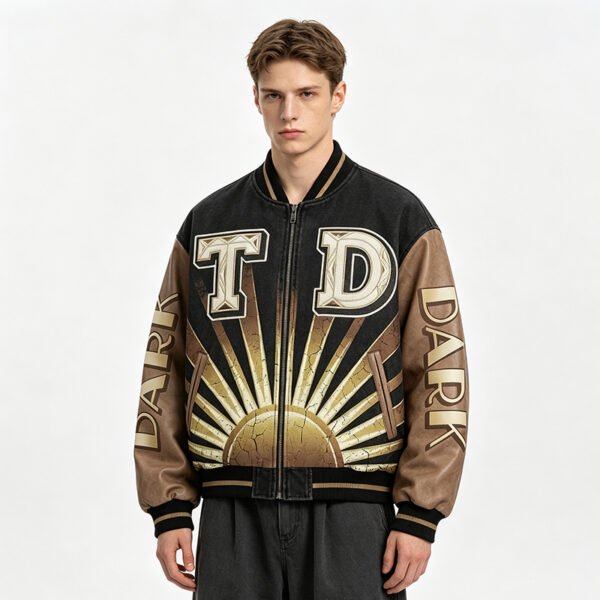


This custom graphic varsity jacket is defined by how its rib boundaries control the energy of a highly segmented front. The black body, tan sleeves, striped bindings, centered zipper, and radiating lower artwork require coordinated stretch and width decisions before production development can proceed.
The Development Argument
The jacket's visual impact comes from many competing directions: vertical zipper, chest appliques, sleeve lettering, and radiating lower panels. Binding width gives those elements a stable frame, while rib stretch determines whether the cropped silhouette stays balanced at collar, cuffs, and hem.
If rib openings relax unevenly, the hem can twist, the collar can spread, and sleeve cuffs can lose their stripe alignment. Therefore, width and recovery should be approved as linked specifications, rather than treated as decorative trim decisions after artwork approval.
Reading The Rib Boundaries
The supplied image shows narrow contrast stripes integrated into the collar, cuffs, and waistband. Those stripes make width variation immediately visible, so the rib specification should include finished measurement, stripe position, seam joining, and acceptable visual tolerance at each opening.
The waistband appears relatively compact against the body length, reinforcing a cropped varsity proportion. Development should check how rib tension gathers the shell without creating excessive puckering, especially where the center zipper, front graphics, and lower radial artwork converge.
Graphic Clearance Planning
Large chest appliques sit on opposite sides of the zipper and create a strong mirrored relationship. Their placement should be measured from the zipper centerline and shoulder landmarks, with clearances that remain consistent after grading and do not disappear beneath the rib waistband.
The lower front artwork spreads outward from a central sun-like motif, while sleeve graphics run along the arms. A technical layout should separate artwork boundaries from collar, cuff, hem, armhole, and zipper seams so stretching does not distort critical edges.
Binding Width And Recovery
Binding width controls the visible transition between shell and rib, while stretch recovery controls how that transition behaves during dressing and movement. Excessive tension may pull the shell inward; insufficient recovery may leave openings loose and weaken the intended cropped outline.
VeeWen's workflow should record rib width at relaxed and extended states, then compare those readings against the approved shell measurements. The fit sample can reveal whether stripe placement, zipper length, and graphic scale remain synchronized when the openings are under normal tension.
Material And Finish Trade-Offs
A dense graphic package may require a stable shell surface, but the supplied images do not verify fiber composition, weight, lining, or applique method. Those unknowns affect how much the body resists rib tension and how cleanly graphics remain positioned after handling.
Distressed tonal variation adds depth to the artwork, yet heavy surface treatment can soften edges or make rib contrast appear inconsistent. Buyers should approve the finish alongside binding tests, because color, texture, and stretch response collectively determine whether the jacket reads as intentional.
Buyer Approval Checkpoint
Before sampling, approve a rib and binding board showing collar, cuff, and waistband widths, stripe arrangement, relaxed measurements, extension measurements, and recovery expectations. Pair it with a graphic map tied to zipper center, seams, and opening boundaries for direct sample evaluation.
The commercial checkpoint is MOQ: 100 pieces per style, while fabric, lining, applique construction, grading, and finish remain subject to confirmation. Proceed when the rib system preserves the silhouette and the artwork remains aligned across the approved size range.
Buyer Questions
Can the rib stripes use another color?
Yes, stripe colors can be developed, but width, spacing, and contrast should be approved together so the binding remains visually consistent across openings.
Why test binding recovery before grading?
Recovery affects opening circumference and shell tension; approving it first prevents size grading from spreading the collar, cuffs, or waistband unevenly.
Can the graphics be simplified?
Yes, the artwork can be revised, provided zipper clearance, seam boundaries, grading behavior, and the intended front-to-sleeve visual balance remain documented.
What is the minimum order quantity?
MOQ: 100 pieces per style. Final feasibility depends on confirmed shell, rib, lining, artwork, construction, grading, and finishing specifications.
Approve The Rib Control Package
Share your measurement chart, rib references, and artwork files with VeeWen for development review focused on binding width, stretch recovery, graphic clearance, and MOQ: 100 pieces per style.

Reviews
There are no reviews yet.